Running a safe, efficient kitchen in Somerville, New Jersey requires a clear, repeatable checklist for exhaust hood cleaning. A good checklist reduces missed steps, standardizes results across shifts and vendors, and produces the documentation inspectors expect. Use the following detailed list as a blueprint you can tailor to your menu, building layout, and volume.
If you need additional support for rooftop access, long duct runs, or simply want a reliable partner to validate results, consider collaborating with a local provider of kitchen exhaust hood cleaning to supplement your in-house routine and strengthen compliance.
Before You Begin: Safety and Planning
- Schedule cleaning during off-hours and notify managers, line staff, and any building stakeholders who control rooftop access.
- Lockout/tagout electrical for the hood, make-up air, and rooftop fan. If needed, shut off gas and post signs.
- Verify fire suppression precautions. Protect nozzles and detectors if they are in the cleaning zone. Coordinate with your suppression vendor if adjustments are required.
- Cool appliances and hood surfaces. Remove or cover nearby portable equipment and food items.
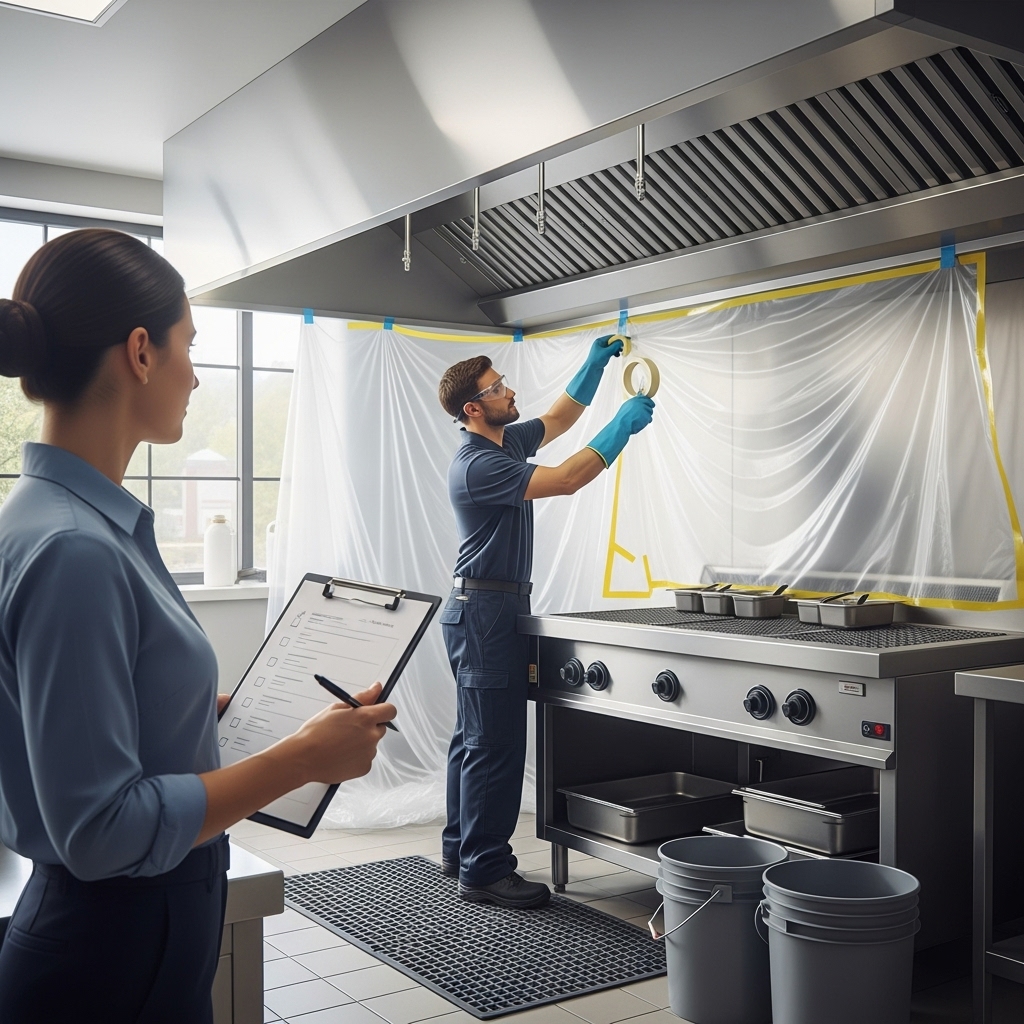
- Lay down floor mats and polyurethane sheeting. Create a drip funnel to direct runoff into buckets or trays.
- Inspect and photograph: filters, plenum, duct entries, elbows, rooftop fan blades, and housing. Note heavy buildup areas.
Supplies and Tools
- Food-safe alkaline degreaser, foamer or sprayer, and warm water rinse source
- Nylon brushes, non-scratch pads, elongated duct brushes, and scrapers
- Magnetic vent covers, tape, drip trays, absorbent pads, and plastic sheeting
- Gloves, eye protection, respirator as needed, and non-slip footwear
- Ladders, work lights or headlamp, and basic hand tools for access panels
- Wet/dry vacuum and containers for spent solution and grease collection
- Camera or mobile device for before/after documentation
Operational Checklist: Hood, Duct, and Fan
- Post signs and confirm lockout. Verify fans and make-up air are off. Ensure gas is secured if necessary.
- Remove baffle filters. Place them in a soak tank with diluted degreaser. Agitate periodically and rinse with hot water.
- Establish containment. Seal gaps with tape and magnets. Position drip funnels to route rinse water safely.
- Apply degreaser to hood interior and plenum. Allow appropriate dwell time to soften polymerized grease.
- Scrub and rinse the hood interior from top to bottom. Use nylon pads and brushes. Control rinse water to prevent splash.
- Open access panels. Apply cleaner to duct sections and elbows. Scrub and wipe residue toward containment.
- Clean the rooftop or wall-mounted fan. Tilt on hinge if equipped. Degrease blades and housing, then rinse lightly and check drain paths.
- Wipe the fan curb and surrounding roof. Remove grease and ensure no pooling chemical or residue remains.
- Rinse and dry baffle filters. Inspect for warping or damage and replace if necessary. Reinstall when dry.
- Reassemble access panels and check gaskets. Polish external stainless surfaces to uniform finish.
- Remove containment. Restore power and test the fan and make-up air for proper airflow and sound.
- Photograph after-clean conditions at the same angles as your before-photos. Update the cleaning log with date, personnel, chemicals used, and notes.
Midway through the process—especially after opening ducts and before moving to the rooftop—compare progress with your photos and checklist. For hard-to-reach runs or time-constrained overnight windows, working with a Somerville team experienced in kitchen exhaust hood cleaning can ensure every grease-bearing surface is addressed without sacrificing quality.
Frequency Guide
Your schedule should match your operation. High-volume fryers or charbroilers may require monthly full-system cleaning. Many Somerville restaurants plan quarterly or semiannual duct and fan work, with weekly or daily filter washing. If inspections reveal rapid film buildup, grease odor, or reduced airflow, tighten intervals and add interim hood wipe-downs and filter rotations.
Quality Control: What to Verify
- Duct interiors should be visibly free of grease, not just thinned. Wipe with a clean, white cloth; it should come away nearly clean.
- Fan blades must be free of deposits to avoid imbalance and vibration. Listen for smooth operation on start-up.
- Hood plenum seams must be dry and tight. Watch for drips that indicate a seal issue.
- Filters should seat flush with no rattling. Airflow at the cookline should feel consistent and strong.
- Roof or wall discharge areas must be free of grease run-off. Check that grease containment and drain paths are clear.
- Documentation should include before/after photos, chemical lists, and any repair notes or recommendations.
Common Issues and Fixes
- Persistent streaks on stainless: Reduce pressure, increase dwell time, and use non-abrasive pads to avoid micro-scratches.
- Water intrusion concerns: Use controlled rinsing and keep electrical components shielded. Dry thoroughly before reassembly.
- Fan imbalance: Remove all residue from blades and check set screws. If vibration persists, schedule a technician to inspect bearings and alignment.
- Leaking access panels: Replace worn gaskets and ensure screws are evenly tightened to avoid gaps.
- Rapid filter saturation: Increase filter cleaning frequency and evaluate cooking methods producing heavy vapors.
Documentation Checklist
- Date and time of cleaning; staff or vendor names; scope of work (hood, ducts, fan)
- Chemicals used with dilution ratios and SDS references
- Before/after photos from consistent vantage points
- Repairs performed or recommended; parts replaced (filters, gaskets, hinge components)
- Airflow observations, noise notes, and any imbalance findings
- Next scheduled cleaning date based on volume and observed buildup
Somerville Considerations
In Somerville’s mix of modern and historic spaces, ducts can travel longer horizontal distances or share rooftops with neighboring tenants. Coordinate access with property management, confirm ladder and safety requirements, and plan for weather that may affect rooftop work. Keep spare filters to rotate during busy weeks, and prepare for seasonal spikes by adding interim wipe-downs and inspections.
Frequently Asked Questions
Q: How long should degreaser dwell on surfaces? A: Follow the manufacturer’s instructions, typically several minutes. Longer dwell softens grease without aggressive scrubbing.
Q: Can my team handle all cleaning tasks in-house? A: Many tasks—filter washing, hood wipe-downs—are suitable for staff. Duct and fan cleaning often require experience, access tools, and safety controls best handled by trained technicians.
Q: What if my kitchen operates late hours? A: Plan an overnight window with containment to avoid contamination and ensure a thorough, uninterrupted process.
Q: How do I prove compliance? A: Maintain logs with dates, photos, chemical lists, and any third-party certificates. Keep these records accessible for inspections.
Q: Are certain menus more demanding? A: Frying and charbroiling generate heavier vapors and typically need more frequent cleaning than baking or light sauté.
Safeguard Your Operation Today
When consistency, documentation, and safety matter most, schedule support from experts in kitchen exhaust hood cleaning. Strengthen your checklist, protect your team, and keep your Somerville kitchen inspection-ready all year long.
