Keeping a commercial kitchen safe and compliant in Somerville, New Jersey hinges on meticulous exhaust hood cleaning. Between high-heat cooking, continuous grease vapor, and frequent service, residue builds up quickly in hoods, filters, ducts, and fans. That residue is more than an eyesore—it is a fire load that can ignite and spread rapidly through the ventilation system. A systematic, well-documented cleaning routine helps protect staff and guests, preserves equipment efficiency, and supports compliance with NFPA 96 and local fire codes enforced by New Jersey authorities and your insurer.
Whether you operate a bustling Main Street eatery or a busy cafeteria near the Raritan Valley line, understanding how to plan, execute, and verify a thorough clean is essential. For operations that need a reliable, code-informed approach or support beyond an in-house routine, partnering with specialists in kitchen exhaust hood cleaning can streamline compliance and reduce fire risk without disrupting service.
Understanding Your Kitchen Exhaust System
Before you clean, map your system. Identify the hood type (wall-mounted canopy, island canopy, proximity hood), the grease filters (baffle, mesh), the duct path (vertical, horizontal, or a combination), and the fan assembly on the roof or exterior wall. Note cleanouts and access panels, fan type (upblast, utility set), and any fire suppression system connections. A clear inventory helps you stage ladders, covers, and tools properly and prevents surprise obstacles mid-clean.
Review manufacturer documentation for your hood and fan. These manuals specify compatible cleaners, safe disassembly points, and torque or fastener details. Keep a laminated schematic onsite showing filter sizes, duct runs, and access panel locations. This simple step reduces downtime on cleaning day and helps ensure every grease-bearing surface is addressed.
Safety, Compliance, and Communication
Cleaning a grease-laden exhaust system demands caution. Lock out and tag out electrical sources for fans and make-up air units. Shut off gas supply valves when needed and coordinate with the fire suppression vendor if nozzles or detection lines will be handled. Confirm that your Ansul or other wet chemical system will not be compromised during the process and that fusible links remain intact unless scheduled for replacement by a licensed technician.
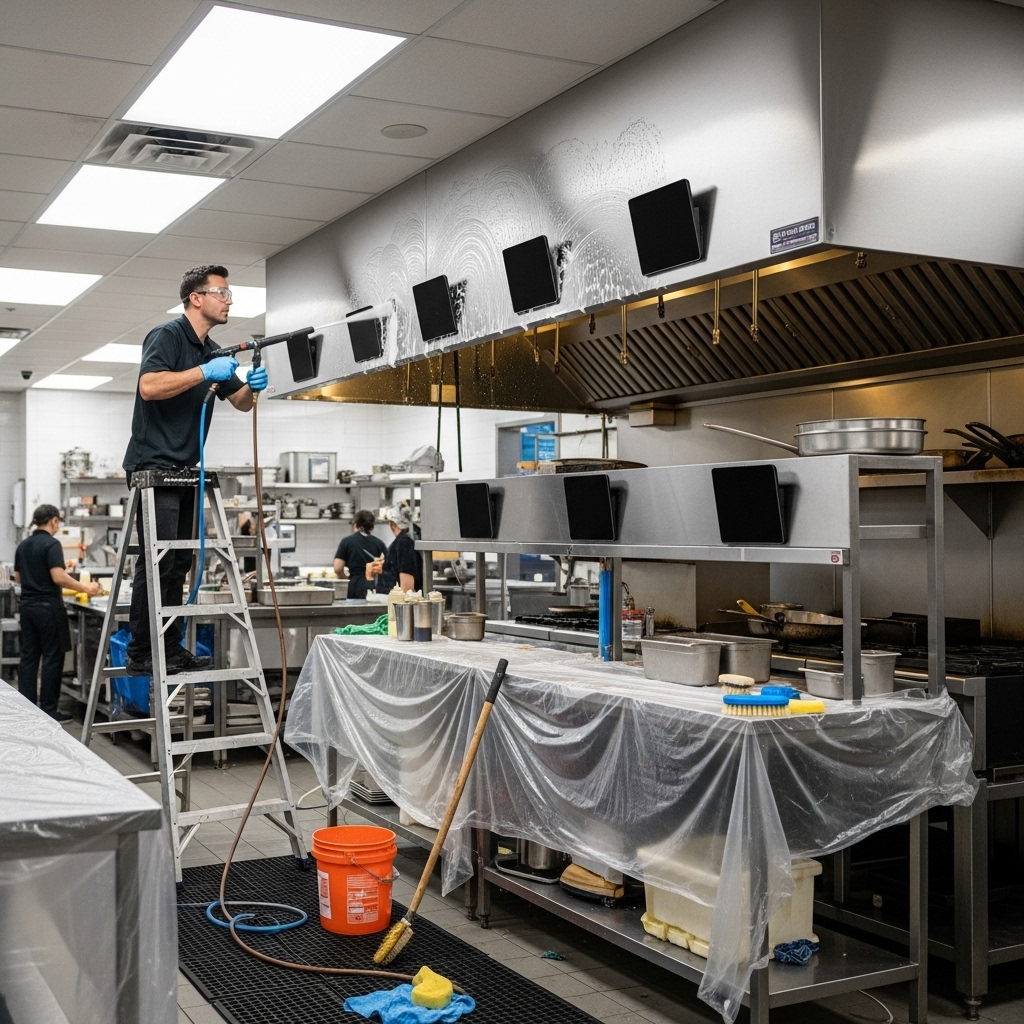
Coordinate with managers to pick low-traffic windows—after close, on a prep day, or during a maintenance block. Notify staff about slippery floors, taped-off zones, and temporary ventilation shutdowns. Post signs at entrances and cooking lines. Wear gloves rated for degreasers, eye protection, non-slip footwear, and respiratory protection if atomized chemicals are used in confined areas. Place absorbent mats and poly sheeting to protect floors, appliances, and prep surfaces.
Tools and Materials Checklist
- Food-safe, heavy-duty alkaline degreaser approved for stainless steel and exhaust systems
- Scrapers, non-scratch pads, and nylon brushes in various sizes for baffles, plenum, ducts, and fan blades
- Low-pressure sprayer or foamer for controlled chemical application
- Hot water source or portable heated washer (observe pressure guidance to protect finishes)
- Plastic sheeting, magnetic vent covers, tape, absorbent pads, and drip trays
- Buckets, microfiber towels, and lint-free cloths for wipe-down and polish
- Headlamp or work lights, ladder, and basic hand tools for access panels and fan hinges
- Wet/dry vacuum and safe waste collection containers for spent chemical and grease
- Camera or mobile device for before/after documentation
Pre-Clean Preparation
Cool appliances and the hood surfaces. Remove portable equipment near the line. Drape poly from the hood to a drip collection point using tape or magnets to channel runoff into buckets. Cover fryers, ranges, and prep tables. If your rooftop fan has a hinge kit, ensure it is operable so the fan can be safely tilted without straining electrical conduits or damaging the roof. Verify cleanout doors are accessible and seals are intact for reassembly.
Perform a visual inspection and take photos of filters, plenum, duct entries, fan blades, and the fan housing. Note heavy buildup, dripping seams, or signs of past leaks that may require sealant or access panel maintenance after cleaning. Confirm that fire suppression nozzles and links are protected from overspray and debris.
Step-by-Step Exhaust Hood Cleaning
- Shut down and secure. Lock out electrical controls for the hood, make-up air, and rooftop fan. Post signage to prevent accidental start-up.
- Remove filters. Carefully lift baffle filters and place them in a soaking bin with diluted degreaser. Agitate intermittently. Avoid harsh abrasives that can pit stainless steel.
- Set containment. Position sheeting, drip funnels, and buckets. Seal gaps to keep chemicals from escaping onto floors. Protect any open food storage zones beyond the line.
- Apply degreaser to the hood interior. Using a foamer or sprayer, apply an even coat to the plenum and interior surfaces. Allow dwell time per product instructions for optimal break-down of polymerized grease.
- Scrub and rinse. Work from the top down. Use nylon brushes and non-scratch pads to dislodge residue. Rinse with warm water, capturing runoff. Repeat on stubborn areas, adjusting dwell time rather than increasing mechanical force that might scratch surfaces.
- Access the duct. Open cleanout panels. Apply degreaser along duct walls, elbows, and transitions. Use elongated brushes. Wipe and rinse toward the containment area. Keep photos of each section for records.
- Clean the fan. Tilt the rooftop fan on its hinge. Apply cleaner to blades, housing, and the drain area if present. Scrub gently to avoid unbalancing the fan. Rinse lightly. Check that the grease catch and drain paths are clear.
- Service the fan curb and roof. Wipe away grease around the curb and ensure no chemical pools on roofing materials. Inspect vibration isolation and electrical connections for visible issues.
- Restore filters. Scrub soaked filters, rinse thoroughly with hot water, and allow to drip dry. Reinstall when the hood interior is dry and clean.
- Polish and detail. Wipe exterior hood faces and surrounding stainless panels to remove fingerprints and streaks. Ensure light lenses are clean and intact.
At the midpoint of your process, confirm progress against your checklist. If you find unexpected heavy deposits, extend dwell time, re-foam difficult areas, and consider spacing the job into phases to maintain safety and quality. For kitchens with limited staff or challenging access—such as long horizontal duct runs common in mixed-use buildings—consider engaging a local expert in kitchen exhaust hood cleaning to support or complete the more complex duct and fan work.
Post-Clean Verification and Start-Up
Perform a final rinse where needed and dry surfaces thoroughly. Remove containment, ensuring that no drips reach appliances or floors. Reinstall panels and confirm gasket integrity. Remove lockout/tagout devices and run the fan to check for abnormal noise or vibration. Verify sufficient airflow at the cookline and confirm make-up air balance. Take after-photos from the same angles as your before-photos.
Walk the line to ensure no chemical odors remain and that all cooking zones are clean and safe. Update your maintenance log with the date, personnel, chemicals used, surfaces cleaned, and any corrective actions taken, such as sealant touch-ups or fan belt inspection. This log supplements invoices or certificates if a third party is involved and supports compliance reviews.
Frequency and Scheduling in Somerville
Cleaning frequency depends on menu, volume, and cooking methods. High-volume or solid-fuel operations may require monthly cleaning of hood, filters, ducts, and fan. Typical line-cook operations in Somerville often schedule quarterly or semi-annual cleaning, while low-volume or seasonal outlets may extend intervals. Filters should be cleaned weekly or more often; many kitchens clean baffles daily on fry-heavy lines. Always align with NFPA 96 guidance and insurance requirements, and adjust based on findings—heavy buildup or noticeable grease odor means increase frequency.
Coordinate with municipal requirements and your landlord if you occupy a shared building. Mixed-use structures may impose additional access rules for rooftop areas. Keep spare baffles on hand to rotate during service weeks, and plan for periodic replacement when fins become warped or permanently stained.
Common Mistakes to Avoid
- Skipping duct interiors and focusing only on visible hood sections, leaving a hidden fire risk.
- Using abrasive pads that scratch stainless, creating crevices where grease adheres faster.
- Over-applying pressure washing near seals and electrical components, forcing water where it does not belong.
- Neglecting rooftop fan drainage, which can cause grease to spill onto roofing and create hazards or code violations.
- Failing to document work with photos and logs, reducing compliance credibility during inspections.
Documentation and Proof of Cleanliness
Maintain a binder or digital folder with your cleaning schedule, logs, chemical safety data sheets, before/after photos, and any work orders for repairs. Include filter replacement dates and notes on airflow or noise changes. If a third party participates, retain their certificate and note the sections cleaned. Thorough documentation supports insurance renewals, fire inspections, and internal audits.
Somerville-Specific Considerations
Somerville’s mix of historic buildings and modern retail spaces often means unique duct runs, shared rooftops, and limited access windows. Verify roof access rules, elevator schedules, and neighbor notifications if fans are near residential units. Weather can impact rooftop work; schedule fan servicing during clear periods to ensure safe footing and proper rinsing without ice risk in colder months. Always secure rooftop panels against wind gusts.
Frequently Asked Questions
Q: How do I know if my exhaust system needs more frequent cleaning? A: Monitor filter weight and color, check for grease odor during peak service, and inspect cleanouts. If you see sticky films within weeks of cleaning, shorten the interval.
Q: Can I rely only on daily filter washing? A: No. While clean filters improve airflow and reduce grease migration, ducts and fans still accumulate residue. Periodic full-system cleaning is necessary for fire safety and compliance.
Q: What chemicals are safe for stainless steel? A: Use food-safe, non-chloride alkaline degreasers designed for commercial kitchens. Always test a small area and follow manufacturer dwell times and dilution ratios.
Q: Do I need to shut down the suppression system? A: Coordinate with your suppression vendor before handling nozzles or detectors. Many cleanings proceed without disabling systems, provided no components are disturbed, but follow your vendor’s guidance.
Q: Is rooftop access always required? A: Yes, if the fan is roof-mounted. The fan housing and blades collect grease and must be cleaned along with ducts for a complete, compliant job.
Q: What records should I keep? A: Keep dated logs, photos, chemical lists, and any third-party certificates. These records demonstrate due diligence during inspections and insurance audits.
Q: How long does a thorough cleaning take? A: Duration varies by system length and buildup. Small systems may take a few hours; larger, complex runs can require most of an off-day or an overnight window.
Q: Will cleaning affect kitchen operations? A: Plan for work during closed hours or low-traffic times. Proper containment and scheduling minimize disruption and protect food safety.
Protect Your Kitchen and Team
If you want the assurance of a meticulous, code-aligned result without tying up your staff, schedule professional support from experts in kitchen exhaust hood cleaning. You will reduce fire risk, improve airflow, and keep your Somerville operation inspection-ready—service after service.
