Commercial Kitchen Exhaust Hood Cleaning in Somerville, New Jersey
In Somerville, New Jersey, commercial kitchens are the heartbeat of hospitality, serving guests, supporting employees, and sustaining local reputation. At the center of safe and efficient kitchen operations is a well-maintained exhaust and ventilation system. From the canopy hood over the cookline to the ductwork and rooftop fan, every component plays a direct role in removing grease-laden vapors, heat, and smoke. That is why prioritizing routine kitchen exhaust hood cleaning is crucial for compliance, safety, performance, and peace of mind. With thoughtful planning, documented procedures, and an eye toward prevention, your team can reduce fire risk, improve air quality, optimize energy use, and present an operation you are proud to show any inspector or guest.
Whether you manage a single Somerville bistro or a multi-unit portfolio across Somerset County, the fundamentals remain the same: eliminate fuel sources for fire, sustain proper airflow, and maintain a verifiable record of service. Clean ventilation is much more than a checklist item; it is a culture of safety and professionalism that starts on the line and extends to the roof. This guide explains what matters, how to structure a cleaning program, and the practical steps that keep your hood system ready every shift.
Why Exhaust Hood Cleaning Matters for Commercial Kitchens
Grease vapors generated during cooking condense on cold surfaces inside hoods, filters, ducts, and fans. Over time, that buildup becomes a combustible layer that can ignite from a flare-up or high heat. Proper cleaning reduces this fuel load, directly lowering the likelihood, intensity, and spread of a fire. It also improves capture efficiency, keeping smoke and odors out of dining areas, reducing wear on HVAC, and helping maintain comfortable temperatures on the cookline. A clean system supports employee morale, food quality, and customer experience, all while aligning your operation with widely adopted fire safety standards and local expectations in Somerville.
Understanding the Full Exhaust System
A commercial exhaust system includes more than the visible hood. It also comprises baffle filters, grease cups or troughs, ductwork, access panels, exhaust fan, fan hinge kit, and rooftop grease containment. Grease tends to accumulate most heavily at turning points, horizontal duct runs, and fan blades. Effective cleaning reaches the entire system, not just the hood canopy. Any program that cleans only the hood and filters but neglects ducts or the roof fan leaves significant risk in place and may fail inspection.
Compliance, Documentation, and Inspection Stickers
Most authorities require clear documentation of the cleaning interval, accompanied by a visible service sticker or tag noting the date completed and the next due date. Keep organized records including service reports, photos, and recommendations for repairs. Proper documentation streamlines fire marshal visits, insurance audits, and landlord reviews. It also protects your business by showing diligence and timely action, especially if you operate in a mixed-use building or a historic area where roof access and grease containment receive added scrutiny.
Indicators That Service Is Due
- Persistent cooking odors or haze on the line, particularly during peak service
- Grease drips, streaks, or residue on filters, hood edges, or walls near the cookline
- Visible grease in duct access panels or around the roof fan and curb
- Louder-than-usual fan noise, vibration, or unstable fan housing
- Poor capture of steam and smoke, requiring higher fan speeds to achieve the same effect
- Staff complaints of heat stress, eye irritation, or excessive humidity on hot stations
Setting the Right Cleaning Frequency
Frequency depends on cuisine, volume, equipment, and hours of operation. High-volume fryers and solid-fuel cooking typically require more frequent service than light-duty steaming. Consider seasonality, catering spikes, and promotional events. The safest approach is to begin with a conservative schedule and adjust using inspection data and grease thickness measurements. Aim to keep system surfaces free of flammable residue so they remain within recommended cleanliness thresholds at all times between services.
What a Professional Cleaning Should Include
- Pre-inspection and planning: Review system layout, access points, and areas requiring additional panels. Photograph baseline conditions for the report.
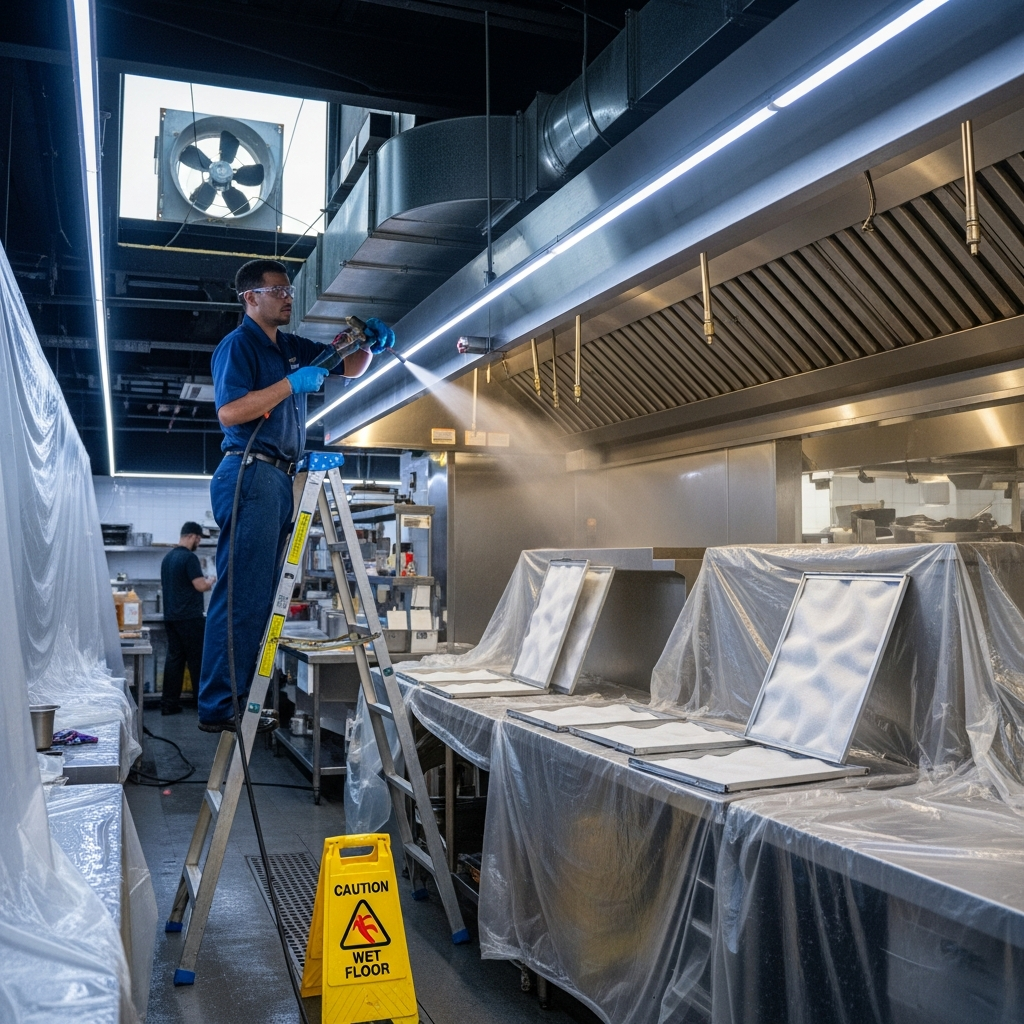
- Protective prep: Cover appliances and floors, set up plastic sheeting and funnels to control wastewater, and place signage for safety.
- Power and suppression coordination: De-energize the fan if required, protect or disable fire suppression components per best practice, and ensure safe reactivation later.
- Filter removal and degreasing: Soak baffle filters in approved degreasers and hot water to break down oils without damaging metal.
- Hood interior cleaning: Scrape and degrease the hood plenum, channels, and troughs, rinsing thoroughly.
- Ductwork cleaning: Access and clean all vertical and horizontal runs, including turning vanes. Add access panels where needed for full reach.
- Fan and roof cleaning: Clean blades, housing, and shroud; check hinge kit; service grease containment; and remove residue from the roof surface.
- Polishing and finishing: Reinstall filters, polish hood exterior, and return the area to service-ready conditions.
- Reactive testing and reactivation: Verify fan operation, air capture, and suppression readiness, then document final results.
- Reporting: Provide before-and-after photos, any repair recommendations, and a sticker with next service date.
Roof Fans and Grease Containment
Roof-mounted exhaust fans require special care. Hinged fan kits help prevent damage to wiring and duct collars during cleaning and inspection, and effective containment captures grease before it can stain or degrade roofing materials. Left unmanaged, rooftop grease can create slip hazards, attract pests, and void roof warranties. A thorough program includes periodic checks on pads, absorbents, and drainage, plus follow-up to any weather-related damage after storms. This attention preserves the roof integrity and ensures your system performs safely from cookline to sky.
Scheduling Service Without Disrupting the Line
Commercial kitchens in Somerville often prefer late-night or early-morning service windows. This scheduling reduces downtime, respects quiet hours for neighboring tenants, and allows space for plastic sheeting and equipment. Coordinate with managers to power down cooking equipment, cool fryers, and remove portable items before the crew arrives. Communicate lockout procedures so everyone understands when appliances and fans can be safely restarted. A predictable rotation, aligned with delivery days or staff meetings, enhances compliance and minimizes surprises for your team.
Mid-Cycle Inspections and Adjustments
Even with a set schedule, conduct mid-cycle checks. Examine filters weekly, review the roof fan visually, and open a duct access panel to spot-test grease thickness. If your team notices quicker-than-expected buildup, adjust the frequency or add an interim cleaning focused on the heaviest-use ducts. Balance labor, service visits, and risk by addressing root causes such as overfilled fryers, incorrect oil temperatures, or blocked makeup air. Practical mid-cycle discipline ensures your next full service is efficient and effective, and it keeps the facility always exam-ready for any visit by fire officials or property managers.
Working With Inspectors and Landlords
Collaboration avoids last-minute panic. Share your maintenance plan, sticker dates, reports, and any corrective actions. When inspectors see proactive management, site visits are typically faster and smoother. For properties with multiple tenants, follow building guidelines for roof access and waste handling. Maintain a secure storage area for degreasers and tools, and document how wastewater is collected and disposed of according to facility rules. Clear communication and recordkeeping uphold your brand and help neighboring businesses trust that shared spaces remain safe.
Common Pitfalls to Avoid
- Cleaning only visible surfaces while neglecting ductwork and the fan assembly
- Skipping roof protection, leading to stains, damage, and costly repairs
- Allowing filters to become caked, which compromises airflow and increases fire risk
- Forgetting to reactivate or test fire suppression systems after service
- Failing to add needed access panels, which prevents full cleaning and proper inspection
- Delaying recommended repairs to hinges, belts, or fan motors until they escalate into downtime
Empowering Staff With Daily and Weekly Tasks
A professional cleaning program is strongest when paired with simple staff routines. Instruct teams to wipe hood exteriors and change or wash filters regularly, empty grease cups, and report any unusual fan sounds. Train leads to conduct quick visual checks at shift changes and to log anything out of the ordinary. Establish a culture where employees celebrate a spotless line and understand how their actions protect everyone in the building. These habits reduce the workload during full service and extend the lifespan of major components.
Middle-of-the-Program Reinforcement
During the middle of your service cycle, reaffirm expectations for housekeeping, confirm that the exhaust fan is operating within normal sound and vibration ranges, and verify that grease containment is not nearing saturation. This is also a good time to evaluate if high-volume events or menu changes are affecting grease output. If you add a fryer bank or a charbroiler special, proactively tighten your schedule for kitchen exhaust hood cleaning so your system stays ahead of new demand rather than chasing it after buildup appears.
Aftercare and Continuous Improvement
Post-clean, review the service report with your culinary leadership and facilities manager. If technicians recommend hinge upgrades, new access panels, or adjustments to makeup air, plan those changes promptly. Build a simple calendar for the year, align it with staff onboarding, and revisit it quarterly. Over time, you will refine frequency by station, reduce emergency calls, and standardize documentation so any auditor can quickly understand your program. Continuous improvement is not about perfection; it is about consistent, measurable progress that keeps your team protected and your operation running smoothly.
Frequently Asked Questions
How often should a commercial kitchen in Somerville schedule exhaust cleaning?
Frequency depends on volume and fuel type. High-grease operations, including frying and charbroiling, typically need more frequent service than low-grease methods like steaming. Start conservatively, monitor grease thickness at access points, and adjust based on findings, menu changes, and seasonal demand. The goal is to prevent flammable buildup between services.
What areas of the system must be cleaned?
Effective service includes the hood plenum, baffle filters, gutters, horizontal and vertical ductwork, access panels, the exhaust fan, and rooftop grease containment. Cleaning only the visible areas leaves hidden risk and can invalidate your documentation during inspections.
Can our kitchen staff handle any of the cleaning?
Yes, staff can perform daily and weekly tasks such as wiping accessible hood exteriors, washing filters, and emptying grease cups. However, internal duct and fan cleaning require specialized tools, safe rooftop access, and trained technicians. Blending staff routines with professional service yields the best results.
How do we prepare for a service visit?
Cool down cooking equipment, remove portable items from the line, clear space around the hood, and ensure roof access is available. Communicate lockout and suppression procedures so the crew can work efficiently and safely. Share any concerns or recent issues so they can target problem spots.
What proof of cleaning should we expect?
You should receive a detailed service report with before-and-after photos, technician notes, and repair recommendations, along with a visible sticker noting the service date and the next due date. Keep these records filed and accessible for inspections and audits.
What are signs that our frequency needs to change?
If filters quickly become saturated, if you notice grease streaks reappearing on the hood soon after cleaning, or if the fan struggles to maintain capture, reassess your schedule. Menu changes, promotions, or new equipment can increase grease output, requiring more frequent service.
How does rooftop grease containment factor into safety?
Effective containment prevents greasy runoff that can damage roofing, create slip hazards, and raise environmental concerns. It also supports fire safety by reducing flammable residue on hot roof surfaces. A thorough program maintains absorbents, pads, and drainage to keep the roof clean and protected.
What if we have difficult-to-reach ducts?
Technicians can add access panels at strategic points to reach every surface. Without proper access, complete cleaning is not possible. Plan panel installation as part of your long-term maintenance strategy, especially for older or complex duct layouts.
How can we reduce grease at the source?
Maintain correct oil temperatures, avoid overfilling fryers, use lids when possible, and keep cooking surfaces clean. Ensure makeup air is balanced so smoke and steam are effectively captured at the hood. Small process improvements upstream reduce the load on your exhaust system downstream.
What is the best way to coordinate with multiple tenants?
Establish shared protocols for roof access, elevator use, and waste handling. Communicate schedules early, document each service, and share inspection-ready records with property management. Clarity and transparency minimize conflicts and build trust among neighboring businesses.
Move Forward With Confidence
Your Somerville kitchen deserves a ventilation program that protects people, property, and brand reputation. Commit to a documented schedule, empower staff with simple routines, and partner with trained professionals who clean the entire system, not just the visible parts. When you are ready to elevate safety and reliability, contact a trusted local provider to schedule comprehensive kitchen exhaust hood cleaning and keep your operation inspection-ready every day.
