Operating a commercial kitchen in Somerville, New Jersey demands rigorous safety, cleanliness, and efficiency standards. Few tasks are as vital to that mission as routine kitchen exhaust hood maintenance. In the first moments of a busy service, the ventilation system quietly works to capture smoke, vaporized grease, and heat, protecting your staff, equipment, and guests. The most reliable way to keep this system performing at its best is through professional kitchen exhaust hood cleaning delivered on a consistent schedule by trained specialists who understand your equipment and the local code environment.
In Somerville, where restaurants, hospitals, schools, hotels, corporate cafeterias, and specialty food producers operate side by side, each facility’s grease load and ventilation design is unique. That means a one-size-fits-all approach will not suffice. When cleaning is tailored to your operation—based on menu type, cooking volume, equipment, and hours—you help reduce fire risk, improve indoor air quality, extend equipment life, and maintain a safer, more productive workspace for your team.
Why Commercial Hood Cleaning Matters
Every time your cooks sauté, fry, grill, or broil, a portion of grease aerosolizes and rides the air stream through hood filters into the ductwork and exhaust fan. Over time, a sticky film forms along the metal surfaces. This buildup:
- Increases the chance that a flare-up or spark could ignite a grease fire inside the duct.
- Restricts airflow, which traps heat and smoke in the kitchen and stresses HVAC and refrigeration systems.
- Harbors odors and contaminants that can impact staff comfort and perceived cleanliness.
- Forces exhaust fans to work harder, increasing energy consumption and wear on belts and bearings.
- Can lead to code violations, shutdowns, or insurance complications after a loss event.
Routine, methodical cleaning reduces these risks. It’s more than wiping visible surfaces; it’s a comprehensive service that addresses the hood, plenum, filters, horizontal and vertical ducts, and the rooftop fan assembly.
What a Professional Cleaning Includes
A qualified team follows a proven workflow to ensure your system is returned to safe, efficient condition. A typical visit for a commercial kitchen in Somerville includes:
- Pre-inspection: Mapping of the exhaust system’s full run, taking photos of access points, fan curb, and transitions to plan the cleaning.
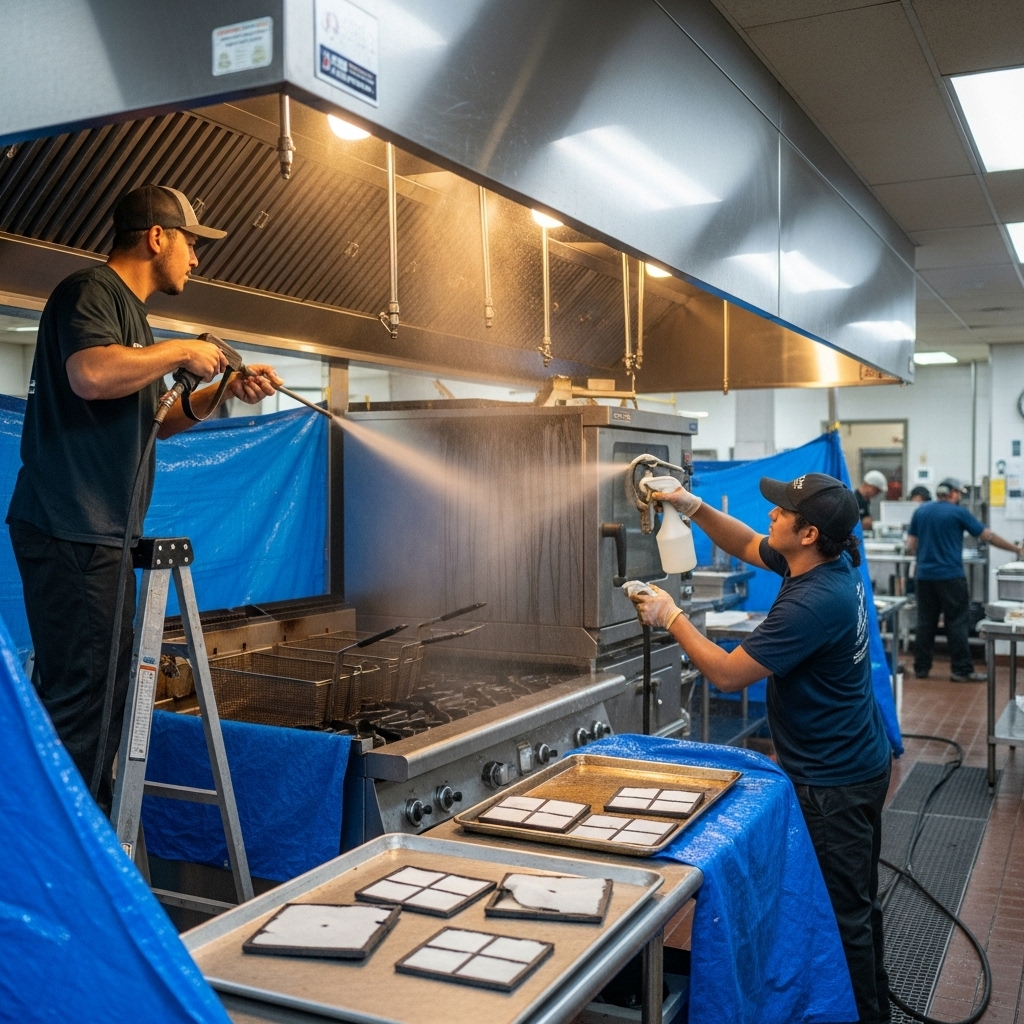
- Protection: Covering appliances, fryers, and prep surfaces; setting containment to capture wastewater and prevent splash.
- Filter Removal: Degreasing, hot water pressure cleaning, and drying filters or replacing if needed per your maintenance plan.
- Hood and Plenum: Application of food-safe degreasers and heated water pressure cleaning to remove tough films and carbon.
- Ductwork: Accessing horizontal and vertical runs to clean to bare metal, adding or servicing access panels if required.
- Exhaust Fan: Lockout-tagout, belt inspection, degreasing fan blades and housings, checking bearings, and confirming correct rotation.
- Rooftop and Surroundings: Cleaning the fan curb and monitoring for grease discharge that could damage roof membranes.
- Final Rinse and Polish: Restoring stainless surfaces and ensuring no residue remains on cooking equipment or floors.
- Post-inspection and Photos: Verifying cleanliness to bare metal where applicable and documenting service for your records and insurers.
Somerville, New Jersey Considerations
Somerville’s vibrant food scene ranges from high-volume quick-service to chef-driven concepts and institutional kitchens. Seasonal tourism and events can create spikes in cooking volume that accelerate grease accumulation. Local climate introduces humidity swings that influence how quickly deposits form and how fans perform. A local partner who understands these dynamics can align service intervals with seasonal peaks, adjust for menu changes, and help you schedule cleanings around staff shifts and delivery windows.
Cleaning Frequency and Triggers
Cooking intensity is the best predictor of how often your system needs service. If your kitchen uses solid fuel or deep frying throughout the day, you will likely need more frequent attention than a facility that uses ovens and light sauté. Triggers that indicate it’s time to schedule include:
- Visible grease on the hood edges or behind filters soon after wipe-downs.
- Lingering smoke or heat in the line area, even with the fan running at high speed.
- Unusual fan noises, vibration, or belt slippage.
- Grease drips or stains on the rooftop near the exhaust discharge.
- Recent menu changes that increase frying or grilling volume.
An experienced provider will help you calibrate a cadence that balances safety and downtime, and can combine hood service with other ventilation tasks like make-up air testing and fan belt replacements.
How Thorough Cleaning Supports Kitchen Performance
Beyond life safety, a clean exhaust system delivers day-to-day operational advantages. Crews report cooler, more breathable line conditions. Equipment holds temperature better when ambient heat and grease aren’t recirculating. Odors dissipate quickly, preserving dining room experience. Maintenance teams gain clearer access to equipment for preventive tasks. And managers avoid last-minute scrambles before inspections or special events.
These tangible gains translate into fewer interruptions, fewer emergency calls, and fewer staff injuries from slippery floors or poor visibility. In a competitive market, the ability to keep service humming through peak hours is a quiet but powerful differentiator.
Mid-Cycle Monitoring and Documentation
Between full-service cleanings, it helps to adopt simple line checks. A weekly look at filters, the plenum lip, and any visible duct access ports can alert you to early buildup. Keep a log with dates, photos, and notes about smoke capture performance, especially after menu changes or promotional events. During the midpoint of your cycle, consider a quick assessment from your provider to validate assumptions and confirm that the interval remains appropriate based on current volumes. If needed, request an on-the-spot filter service or a partial cleaning of high-risk sections. A documented approach also supports inspections and insurance audits.
When you choose an expert in exhaust hood cleaning service, you gain structured reporting, before-and-after photos, and recommendations tailored to your exact system layout.
Coordination, Access, and Safety
Professional crews will coordinate with your managers to minimize disruption, often working during off-hours. They will establish electrical lockout-tagout procedures, isolate gas lines or pilot lights when necessary, and verify that suppression systems are protected during cleaning. Adequate access is essential: where ducts lack panels, technicians can recommend placement to enable thorough cleaning in the future. Proper containment ensures that degreasing and rinse water do not impact your equipment or floors.
Common Pitfalls to Avoid
- Relying on surface shine: Stainless steel can look clean while interior duct runs remain coated with flammable residue.
- Skipping fan maintenance: Dirty or misaligned fans reduce capture efficiency and can spread grease onto rooftops.
- Extended intervals: Waiting too long between cleanings increases risk and typically takes longer to remediate when service finally occurs.
- Unverified contractors: Always confirm training, documentation practices, and knowledge of suppression systems.
- Incomplete records: Missing logs and photos can complicate compliance reviews and insurance claims.
Creating a Site-Specific Plan
Every commercial kitchen in Somerville benefits from a written plan that details cleaning frequency, responsibilities for nightly wipe-downs and weekly filter maintenance, access limitations, roof conditions, and emergency contacts. Include diagrams of each exhaust system, note any transitions or turns, and mark access points. Define acceptable downtime windows and point of contact for walkthroughs. When new equipment is installed or menus change, update the plan promptly so your schedule stays aligned with your workload.
FAQ
-
How long does a commercial hood cleaning take? Duration depends on system complexity and grease levels. Many single-hood systems can be cleaned overnight within a few hours, while multi-hood, multi-story duct runs may require more time.
-
Will cleaning disrupt my kitchen? Providers typically schedule around your operations, using protective covers and containment to avoid mess. You can expect minor odor from degreasers that dissipates after rinsing and ventilation.
-
What signs indicate I need service sooner? Persistent smoke, increased heat on the line, visible grease streaks near filters, rooftop staining, or louder fan noises.
-
Do I need to replace or clean filters? Baffle filters should be cleaned regularly. If damaged or warped, replacement is recommended to maintain capture efficiency.
-
Can I perform this in-house? Staff can handle nightly wipe-downs and filter care, but full-system cleaning to bare metal requires trained technicians, specialized equipment, and safety protocols.
-
How do seasons affect cleaning needs in Somerville? Summer heat and event-driven spikes may increase volume; a mid-season check helps maintain performance.
-
What documentation should I receive? A detailed service report with photos, noted access limitations, recommendations, and a proposed schedule for the next visit.
Ready to Strengthen Safety and Performance
If you operate a commercial kitchen in Somerville, New Jersey, a proactive approach to your ventilation system will pay dividends across safety, compliance, and day-to-day operations. Align your schedule with cooking intensity, document each service, and stay attentive to early warning signs. When you are ready to partner with a local team that understands your environment, contact a trusted provider for kitchen exhaust hood cleaning and keep your operation running smoothly every shift.
