Searching for dryer vent installation near me in Somerville, New Jersey, often begins with a simple question: who can I trust to handle this crucial home safety task? The right installer protects your home from unnecessary moisture, mold growth, and the risk of dryer-related fires, while also improving appliance performance. If you want a team that understands local homes, common building layouts, and regional code requirements, look for experts who specialize in dryer vent installation and are familiar with the unique needs of Somerville neighborhoods. Whether you live in a historic property near Main Street or a newer development, a properly planned and installed vent can make a significant difference in safety, efficiency, and long-term maintenance.
Homeowners in Somerville experience seasonal temperature swings and humidity that can amplify issues caused by an improperly vented dryer. Long duct runs, too many elbows, flimsy materials, and vents that terminate in attics or crawlspaces can all create hazards. A professional approach ensures that the vent exhausts outdoors, uses the right materials, follows the shortest practical route, and meets applicable codes. With the right partner, you will gain peace of mind, reliable airflow, and a system designed to last.
Why Correct Dryer Vent Installation Matters
A dryer generates warm, moist air that must be expelled outside. When the vent path is too long, kinked, or clogged, the dryer must work harder, increasing wear on components and extending drying times. Poor venting also raises the likelihood of lint accumulation inside the duct, where it can trap heat and potentially ignite. Correct installation safeguards indoor air quality by preventing backdrafting and discouraging mold or mildew around laundry areas. It also helps your dryer operate at peak performance, which translates into faster, more consistent cycles.
- Enhanced safety: Proper routing and materials reduce heat buildup and lint traps within ducts.
- Better performance: A clear, direct vent path helps clothes dry thoroughly and consistently.
- Reduced moisture issues: Venting outside prevents damp air from lingering indoors.
- Longer appliance life: Efficient exhaust lessens strain on the motor, drum, and sensors.
- Compliance: Following relevant codes and best practices keeps your home aligned with safety standards.
Signs You Need a New or Improved Vent
Even if your dryer runs daily without obvious problems, there are early indicators that your vent system may need attention. If you are moving into a new home, renovating, or upgrading your laundry appliances, this is an ideal time to assess the vent path and materials. The following signs should prompt a professional inspection and, if needed, a comprehensive installation or reconfiguration.
- Clothes take longer than usual to dry, even after cleaning the lint screen.
- A hot or humid laundry room during cycles.
- A burning smell, visible lint around the vent hood, or debris around the exterior termination.
- Visible kinks, crushed sections, or long spans of flexible foil or plastic ducting behind the dryer.
- Vents that terminate in an attic, crawlspace, or garage rather than outdoors.
What to Expect During a Professional Installation
A professional installer should begin with a thorough assessment of your current setup, home layout, dryer model requirements, and the best exterior termination point. The process will vary depending on your home’s construction, but it generally follows a clear sequence designed to optimize safety and airflow while minimizing disruption to your space.
- Evaluation: Inspect the laundry area, measure the current vent path, and identify code-compliant routing options.
- Planning: Choose the shortest practical run with minimal elbows, and select durable, smooth-wall duct materials.
- Preparation: Protect floors and adjacent areas, move the dryer safely, and remove any unsafe or outdated components.
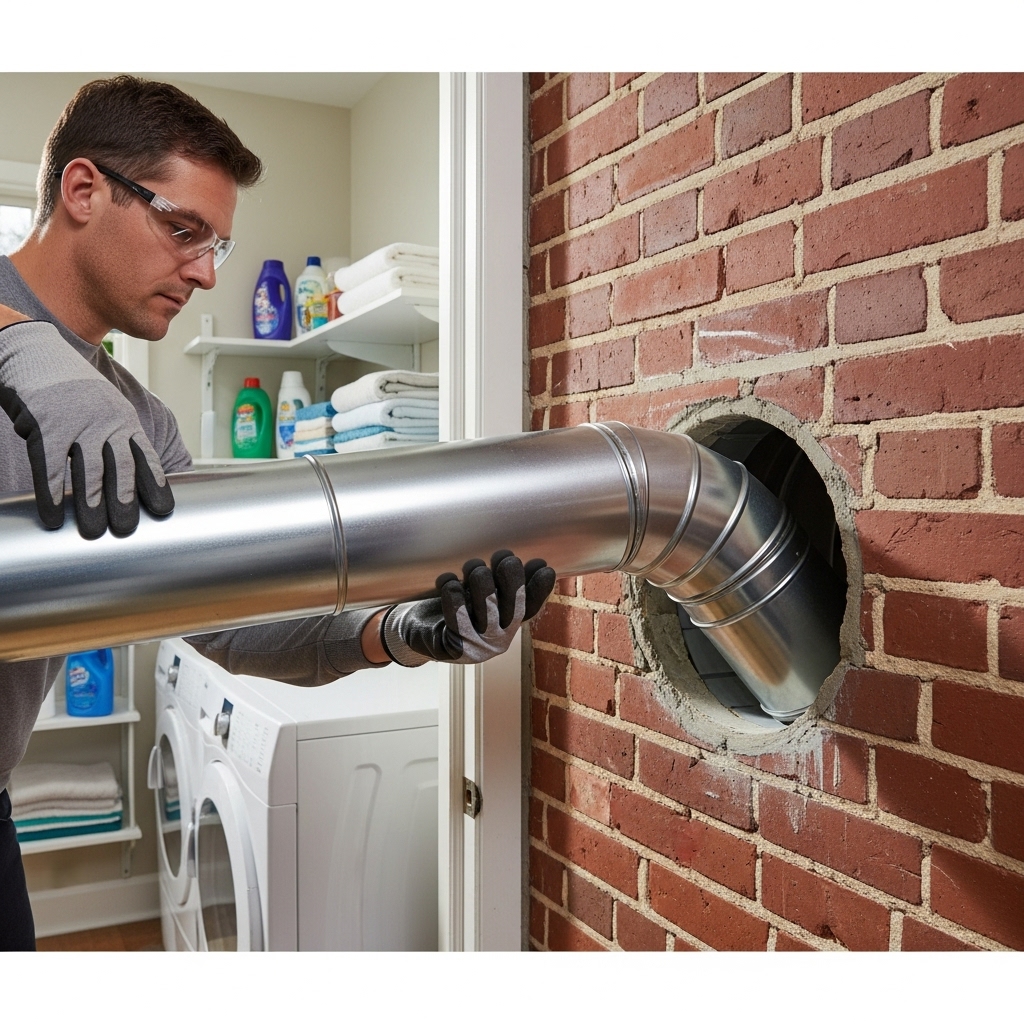
- Installation: Run rigid ducting with secure joints, proper supports, and sealed connections to minimize air leaks.
- Termination: Install an exterior hood with a backdraft damper and pest-resistant design, positioned to avoid re-entering airflow.
- Testing: Verify airflow with appropriate instruments or procedures, confirm the damper moves freely, and check for leaks.
- Education: Review maintenance steps with the homeowner, including routine cleaning intervals and warning signs to watch for.
Quality materials matter. Smooth-wall metal ducting is typically preferred over thin, flexible options because it resists crushing, encourages steady airflow, and reduces lint catching on ridges. Thoughtful routing, careful sealing, and secure mounting brackets collectively help the system perform reliably for years.
Routing Considerations in Somerville Homes
Somerville includes a mix of historic homes and newer builds, each with unique design considerations. Older homes may have limited wall cavities or longer distances to exterior walls, requiring creative yet safe routing. Newer homes sometimes place laundry rooms centrally for convenience, which can increase duct length if not planned properly. A skilled installer will map the most direct route, avoiding unnecessary bends and ensuring that the vent terminates at an appropriate exterior location.
- Through-wall termination: Often the most direct route; ideal when the laundry room sits along an exterior wall.
- Short vertical runs: Appropriate in some designs, provided the total run respects length limitations and minimizes elbows.
- Avoiding concealed voids: Ducts should remain accessible where feasible and never vent into attics or crawlspaces.
- Weather-aware placement: Exterior hood positioning should minimize wind interference and prevent snow or debris accumulation.
How to Choose the Right Local Professional
Selecting a qualified installer is crucial. Look for a provider with specialized experience in dryer vent systems, clear communication, and a proven record of successful projects in the Somerville area. Ask about materials used, routing strategies, and how they verify airflow upon completion. A reputable team aims to create a safe, efficient system while respecting your home’s design and your time. When you are comparing options, consider those who can address both installation and ongoing maintenance, including cleaning and inspections. Partnering with a team that routinely handles professional dryer vent installation ensures they are ready for the complexities of varied home layouts and can solve unexpected challenges.
- Local familiarity: Teams experienced with Somerville homes know typical wall assemblies and exterior materials.
- Transparent process: You should understand how they plan to route the duct and why.
- Airflow testing: Verification of exhaust performance should be part of the service.
- Maintenance guidance: Pros will outline cleaning intervals and safety checks.
- Responsiveness: Clear scheduling, punctuality, and respectful communication make the project smoother.
Safety and Code Considerations
Compliance with applicable standards is a core part of a proper installation. This includes the use of noncombustible duct materials, limiting the number of elbows, and maintaining proper clearances from combustible materials. The exterior termination should include a backdraft damper that opens freely when the dryer runs and closes when it stops, discouraging pests and outdoor air infiltration. In multi-family buildings or tight urban lots, careful attention to termination location helps to protect neighboring spaces and prevents exhaust from reentering the home through nearby windows or vents.
Additional safety enhancements can include installing accessible cleanout points for long runs, providing a rigid transition near the dryer, and ensuring that dryer models with sensor technology have the ventilation flow they require for accurate operation. An educated homeowner is the final layer of safety: knowing when to schedule cleaning and recognizing warning signs reduces risk over time.
Maintaining a New Dryer Vent
Once your new vent is installed, consistent maintenance keeps it running at its best. Empty the dryer’s lint screen before or after each load and check behind the appliance periodically to confirm the transition connection is secure. Monitor the exterior hood to ensure the damper opens freely and that lint does not accumulate around the opening. If you notice performance declines or the laundry room becomes unusually warm or humid, contact a professional to evaluate the system promptly.
- Clean the lint screen each cycle and wash it occasionally if fabric softener residue builds up.
- Visually inspect the exterior hood monthly and clear any lint or debris.
- Schedule periodic professional cleanings, especially in homes with high laundry volumes or long duct runs.
- Avoid cramming the laundry area; provide space behind the dryer to prevent crushing the transition duct.
- Consider a reminder schedule so cleanings are not overlooked during busy seasons.
Frequently Asked Questions
How long does a typical installation take? Time varies depending on your home’s layout, the length and complexity of the vent path, and whether old materials must be removed. A straightforward through-wall route can be completed more quickly than a longer path that requires navigating tight spaces.
Can my vent terminate in the attic or garage? No. Dryer exhaust must vent outdoors. Terminating in enclosed spaces allows warm moisture and lint to accumulate, which can damage your home and create a fire risk.
What materials are recommended? Smooth-wall metal ducting is widely preferred for its durability and airflow benefits. Flexible foil or plastic ducts are typically avoided as primary venting due to increased lint buildup and potential crushing.
Do I need a new vent if I upgrade my dryer? It is wise to evaluate the existing vent whenever you replace an appliance. Modern dryers may have different airflow requirements, and an optimized vent path can help the new unit perform as intended.
How often should I schedule cleaning? Frequency depends on usage, duct length, and household characteristics. Homes with frequent laundry cycles or longer runs benefit from more frequent professional cleanings.
What if my laundry room is far from an exterior wall? A professional can design a compliant route using minimal elbows, proper supports, and accessible cleanouts to maintain performance even with longer distances.
Will a new vent reduce drying times? In most cases, yes. Improved airflow allows moisture to exit quickly, often resulting in shorter, more consistent cycles.
Schedule Your Dryer Vent Service in Somerville Today
If you are ready to improve safety and performance, connect with a local team that understands Somerville homes and delivers careful workmanship from start to finish. From planning and routing to final airflow verification, your home will benefit from an installation designed with longevity and safety in mind. For reliable results and knowledgeable guidance, choose specialists in dryer vent installation services who can also support you with ongoing maintenance and cleaning. Reach out today to schedule an evaluation and take the first step toward a safer, more efficient laundry experience.
