Dryer vent installation code requirements exist to protect homes, appliances, and people. In Somerville, New Jersey, most residential work follows widely adopted model codes and manufacturer guidelines that emphasize safe materials, proper routing, and effective outdoor termination. While the sections below summarize common expectations seen in many jurisdictions, always verify the requirements that apply to your specific property. If you prefer an expert-led, fully compliant approach, schedule professional dryer vent installation so your system is designed and executed with code alignment in mind.
Core Principles Behind Dryer Vent Codes
Codes seek to ensure that hot, moisture-laden, lint-bearing air exits the home quickly and safely. They focus on using appropriate duct materials, minimizing resistance with short runs and few turns, preventing lint accumulation, and terminating outdoors in a manner that resists backflow and weather intrusion. Adhering to these principles safeguards structures and supports reliable appliance performance.
Approved Duct Materials
For the permanent vent run, rigid metal duct is commonly specified because of its smooth interior and resistance to crushing. Semi-rigid metal may be acceptable for short transitions in tight spaces. Thin, flexible foil is not appropriate for the permanent run due to its tendency to deform and its rougher interior surface. Joints should be sealed with foil-backed HVAC tape to maintain airtight connections and withstand operating temperatures.
Duct Size and Equivalent Length
Dryers require a specific duct diameter and have maximum allowable run lengths, which often depend on the number and type of fittings used. Each elbow adds “equivalent length,” effectively shortening the permissible straight-run distance. Codes and manufacturers’ instructions typically work together here: you must respect both the code and the appliance guidelines. Long-radius elbows reduce resistance and help maintain airflow within allowed limits.
Prohibitions and Restrictions
- Do not vent into attics, crawlspaces, garages, or interior rooms. Exhaust must discharge outdoors.
- Avoid screens at the termination; they can clog with lint. Use a damper-style hood that opens and closes freely.
- Do not use screws penetrating the duct interior; they catch lint and restrict flow.
- Do not share the dryer vent with other systems such as bathroom fans or kitchen exhausts.
Termination Requirements
The termination hood should match the duct size, allow free damper movement, and close when the dryer is off to prevent drafts and pests. Placement must consider clearances from windows, doors, and other openings, as well as local conditions like snow accumulation. For roof terminations, proper flashing and weather sealing are mandatory to prevent water intrusion.
Support and Accessibility
Horizontal runs should be supported at appropriate intervals to prevent sagging that could trap lint and moisture. The system should be accessible for inspection and cleaning. Where the vent passes through walls or ceilings, fire-blocking and insulation details must remain intact and compliant with broader building codes.
Transition Duct Guidance
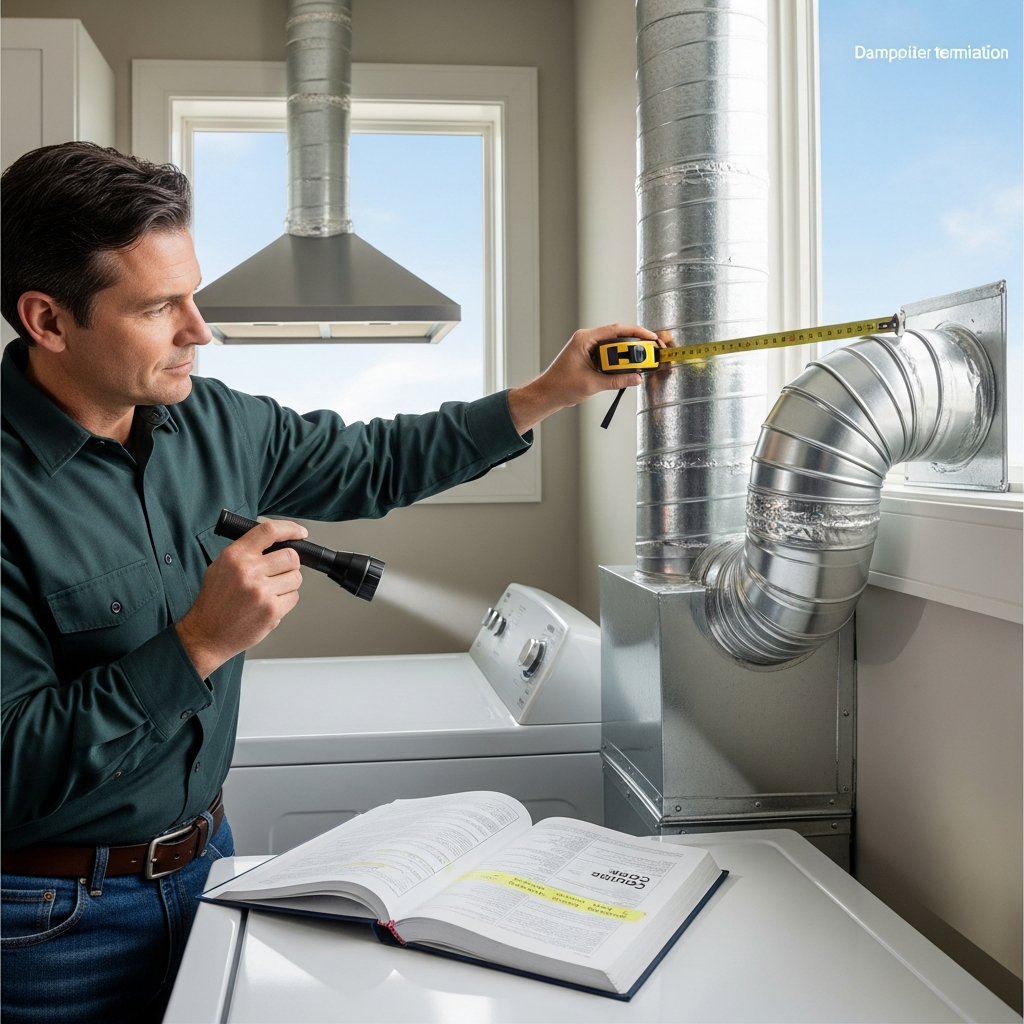
The short connector between the dryer outlet and the wall should be metal and as short as practical, allowing the dryer to sit without crushing the duct. Low-profile or periscope connectors can help manage tight spaces while keeping the pathway smooth. The goal is to avoid kinks and maintain a clear, unobstructed route into the permanent duct.
Multi-Family and Fire-Rated Assemblies
In multi-family buildings or mixed-use structures, additional fire-resistance and routing rules may apply. These can address duct enclosures, protection where vents pass through fire-rated assemblies, and the use of specialized components. Property owners and managers should confirm requirements with building officials to ensure full compliance across shared walls and ceilings.
Manufacturer Instructions Take Priority
Codes often state that where manufacturer instructions are more restrictive than the general code, those instructions govern. Your dryer’s installation manual will specify duct size, maximum equivalent length, and acceptable fittings. Following those directions, alongside local code, ensures the appliance operates as intended.
Somerville Considerations
Somerville’s seasonal changes place added emphasis on robust exterior components. Choose a termination hood that resists icing in winter and remains easy to inspect and clean year-round. Place the hood where it avoids snow piles and splashback while providing convenient access. In older homes, confirm framing and wall materials before cutting penetrations; in newer builds, coordinate with existing insulation and air-sealing strategies.
Inspection and Testing
At completion, run the dryer to confirm strong exhaust and verify damper movement. Check joints for air leaks and ensure supports keep the duct aligned. An installation that meets code should also perform well in real-world operation, with shorter cycles and a comfortable laundry space.
Common Mistakes to Avoid
- Choosing long, winding routes with unnecessary elbows that reduce airflow.
- Mixing incompatible materials or leaving old, damaged sections in place.
- Using cloth duct tape, which degrades with heat and humidity.
- Failing to verify clearances or ignoring a stuck exterior damper.
Maintenance Expectations Under Code
Codes anticipate regular maintenance. Cleaning the lint screen before each load and scheduling periodic vent cleaning based on usage patterns are essential. Inspect the termination hood seasonally for free movement. If dry times increase or the laundry area grows unusually warm, have the system evaluated to catch issues early.
Frequently Asked Questions
Q: Can I increase duct size to reduce resistance? A: Follow your dryer’s instructions. Using larger duct than specified can affect performance and may not be allowed by the manufacturer.
Q: Are booster fans permitted? A: Many codes have strict conditions for booster fans, and manufacturers provide specific guidance. In most homes, designing a shorter, straighter run removes the need for fans.
Q: Is it acceptable to paint the exterior hood? A: Painting must not interfere with damper movement. If you paint, avoid edges and moving parts, and verify the damper opens freely afterward.
Q: Can I connect multiple dryers to one vent? A: Typically no. Each dryer should have its own dedicated vent to maintain airflow and safety.
Q: Do I need a permit? A: Permit requirements vary by jurisdiction and project scope. Check with local authorities or consult a professional who is familiar with Somerville processes.
Q: What about screens to keep pests out? A: Avoid screens. Use a proper damper hood designed for dryer exhaust; it opens under pressure and closes afterward.
Q: How do elbows affect allowable length? A: Each elbow adds equivalent length. Long-radius elbows reduce resistance compared with sharp, 90-degree bends.
Q: What indicates a compliant installation? A: Correct materials, respect for manufacturer limits, secure joints without internal screws, proper support, and a free-moving exterior damper are strong indicators.
Your Path to a Compliant, High-Performance Vent
Safe, code-aligned dryer venting is achievable with thoughtful design, quality materials, and careful workmanship. If you want an installation that checks every box—compliance, performance, and durability—partner with a Somerville pro who understands both guidelines and real-world conditions. For start-to-finish guidance and verified results, schedule professional dryer vent installation and enjoy the confidence that comes with a system built the right way.
