
Introduction
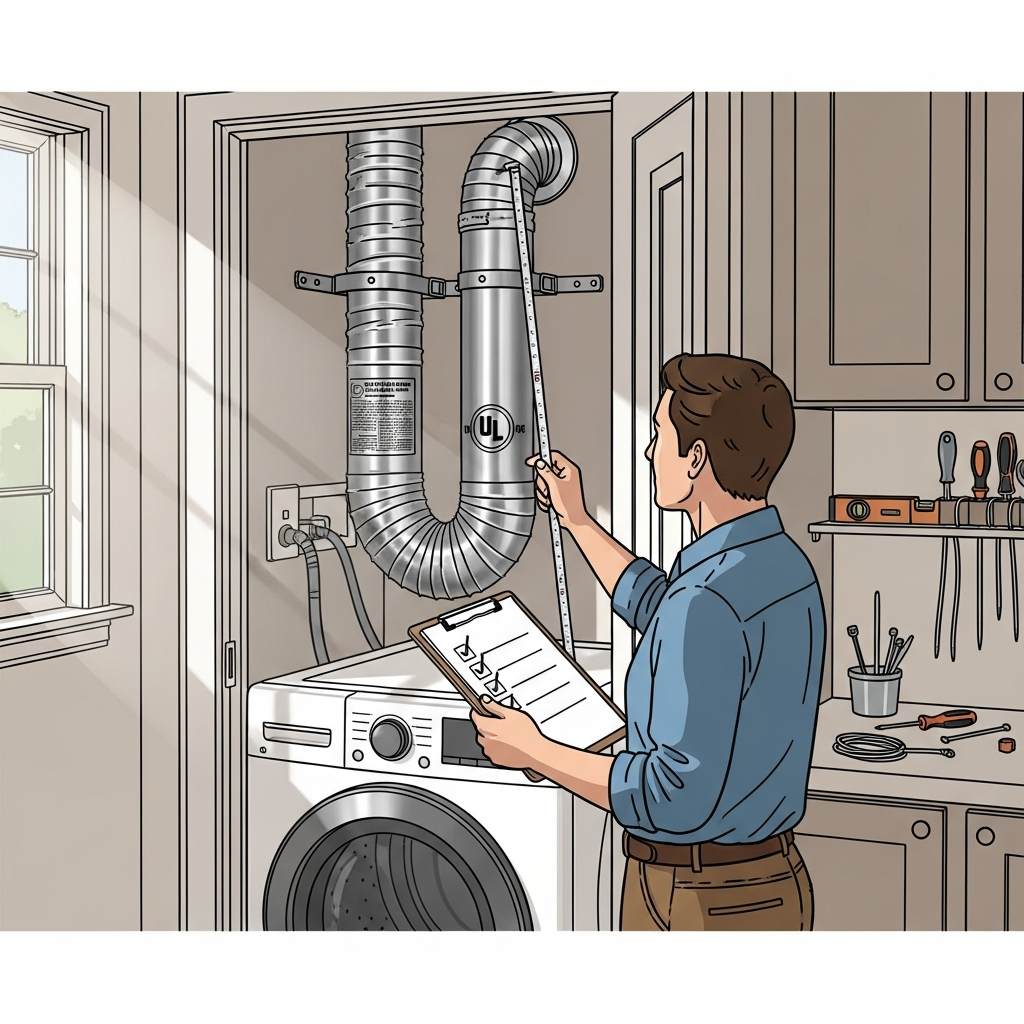
A thorough checklist turns dryer vent installation from an uncertain weekend project into a confident, safety-first upgrade for your Somerville, New Jersey home. This guide supplies a start-to-finish list you can print, walk, and verify as each step is completed. You will find planning prompts, code reminders, materials requirements, route design tips, and post-installation tests to ensure excellent airflow. If at any point you prefer expert guidance, local specialists can provide code-compliant dryer vent installation and performance validation so you can check every box with peace of mind.
Pre-Installation Planning
- Confirm dryer type and outlet size. Most residential models use a 4-inch duct; verify manufacturer specifications.
- Locate the nearest suitable exterior wall or roof surface for termination, balancing total length against accessibility.
- Identify framing, plumbing, and electrical obstacles in the proposed route using stud finders and visual inspection.
- Note whether the route crosses unconditioned space and whether insulation sleeves will be required.
- Gather manuals for both the dryer and termination hood to confirm compatibility and length limits.
Permits and Compliance Reminders
- Check with Somerville’s building department regarding permits for new or altered exhaust ducts.
- Review the International Residential Code and manufacturer charts for maximum equivalent length and elbow counts.
- Plan for the termination to discharge outdoors only—never into attics, crawlspaces, or garages.
- Ensure the termination has a backdraft damper and is designed for dryer use, not a generic vent or fine-mesh screen.
Tools and Materials Checklist
- Rigid metal duct sections (smooth interior) sized to the dryer outlet, with crimped ends oriented for airflow direction.
- UL 2158A–listed transition duct for the short connection between dryer and in-wall fitting.
- Low-radius elbows to minimize equivalent length penalties where turns are unavoidable.
- Foil-backed or mastic-rated HVAC tape; compliant clamps for transition connections.
- Support straps or hangers to secure the duct every few feet and prevent sagging.
- Exterior dryer termination with integrated backdraft damper and appropriate pest guard.
- Hole saws, tin snips, drill/driver, and safety gear (gloves, eye protection, dust mask).
- Sealants compatible with siding or roofing materials for weatherproofing the termination.
Route Design Checklist
- Choose the shortest, straightest path to the exterior. Every foot and elbow adds airflow resistance.
- Count elbows and note their types. Replace tight 90s with long-sweep elbows when possible.
- Maintain a slight pitch toward the exterior to discourage condensation pooling.
- Provide adequate clearances around the duct, avoiding crush points behind the dryer or within wall cavities.
- Plan access points or service loops for inspection and cleaning in longer runs.
Framing and Penetrations
- Mark stud and joist locations. Do not notch or drill structural members without following code and engineering guidance.
- Cut clean, properly sized openings for the duct and termination to ensure a snug fit and reliable sealing.
- Protect combustible materials as required by code and the dryer manufacturer’s instructions.
Installing the Termination
- Mount the exterior hood with fasteners suitable for siding or roofing type.
- Weatherproof with flashing or sealant per manufacturer directions to prevent water intrusion.
- Verify the damper swings freely and is not obstructed by trim, shingles, or fasteners.
Duct Assembly and Sealing
- Orient the crimped ends in the direction of airflow so lint cannot catch at joint lips.
- Dry-fit the entire run before final sealing to confirm alignment and support points.
- Use listed tape or mastic to seal exterior joints. Do not use screws that intrude into the airstream.
- Install hangers or straps to support the duct at consistent intervals, avoiding sags or rattles.
Transition Connection
- Keep the transition duct as short and straight as possible.
- Use listed clamps at each end; verify there are no kinks or crush points.
- Push the dryer into final position carefully while watching the hose to avoid deformation.
Mid-Project Verification
Before you close any walls or finalize finishes, walk your checklist again. Confirm that the elbow count matches your plan, that the total equivalent length is within the dryer manufacturer’s limit, and that each joint is seated, sealed, and supported. Check that the termination is oriented correctly and the damper fully opens. If the route crosses an attic or crawlspace, verify insulation coverage and clearances around heat sources. For homeowners who want an independent eye on performance, a pro experienced in dryer vent installation can measure airflow and identify hidden restrictions before you button up the space.
Post-Installation Testing Checklist
- Clean the lint screen and start a warm cycle with a small load.
- Observe the exterior hood: the damper should open fully and steadily.
- Feel for leaks at joints; reseal any spots where warm air escapes.
- Listen for rattling or vibration indicating loose supports or misaligned elbows.
- Time a typical load (towels or denim) and compare to prior performance; sustained long dry times indicate obstructions or excessive equivalent length.
Safety and Performance Red Flags
- Burnt-lint smell or unusually hot dryer surfaces suggest restricted airflow.
- Condensation on walls or windows near the laundry area may indicate a leak.
- Exterior damper that sticks open or closed needs cleaning or replacement.
- Lint visible on siding near the hood could signal backdrafting or an obstructed damper.
Maintenance Checklist
- Clean the lint screen before every load.
- Vacuum behind and under the dryer seasonally.
- Inspect and clean the termination monthly during peak laundry months.
- Schedule an annual full-duct inspection and cleaning, more often for long or elbow-heavy runs.
Somerville-Specific Considerations
- Account for winter snow lines when choosing the hood location; keep it above typical accumulation and accessible.
- Trim shrubs and landscaping in summer to maintain clear airflow around the termination.
- In older homes, survey for legacy ducts or blocked chases that might tempt an indirect route—resist and aim for the most direct path.
- If routing through an unconditioned attic, insulate the duct and maintain a slight pitch to the exterior to reduce condensation.
Frequently Asked Questions
Q: Can I reuse an old vent line? A: Only if it is smooth metal, within length limits, free of damage, and meets current code. Replace if it contains plastic flex or screws protruding into the airstream.
Q: How many elbows are too many? A: Follow manufacturer equivalent length charts. Reduce elbows whenever possible and prefer long-sweep fittings.
Q: Is a booster fan allowed? A: Some listed booster fans are permitted when lengths exceed limits, but they must be accessible and installed per manufacturer instructions. Aim to shorten the route first.
Q: Do I need a special hood for dryers? A: Yes. Use a dryer-rated termination with an integrated damper; do not use fine-mesh screens that trap lint.
Q: What maintenance is most important? A: Regular lint screen cleaning, monthly hood checks, and annual duct inspections are your top priorities.
Final Walkthrough
Before you call the project complete, re-check route length and elbows, verify all joints are sealed and supported, confirm the damper’s movement, and ensure the dryer sits without crushing the transition duct. Keep records of the route, components used, and the date of installation to guide future maintenance. A methodical approach now prevents performance issues later and protects your investment in the appliance and your home.
Get It Done with Confidence
If you want professionals to confirm compliance, optimize airflow, or complete the entire job, schedule expert dryer vent installation. With a practiced eye for Somerville’s housing styles and climate, seasoned technicians can verify each checklist item and deliver reliable, long-lasting performance for your laundry room.
