Understanding Dryer Vent Cleaning Value in Somerville, New Jersey
Many Somerville homeowners wonder what goes into a high-quality dryer vent cleaning and how to evaluate the value of professional work. While the title of this guide focuses on service considerations, the most productive approach is to understand the scope of work, the factors that shape a thorough appointment, and the long-term benefits of doing the job right. By looking closely at process quality and outcomes, you can make a confident, well-informed decision without getting distracted by surface-level comparisons.
In Somerville, residential properties range from historic homes with intricate vent runs to newer condominiums where the laundry closet sits deep inside the floor plan. These layouts influence time on site, tool selection, and diagnostic steps. A reputable local professional will tailor their plan to your home, ensuring complete coverage from the dryer outlet to the exterior termination while keeping your space clean and protected.
The purpose of this guide is to help you recognize the hallmarks of a well-executed service visit, understand the nuances that influence scope, and identify questions you can ask to gauge expertise. When you focus on craft, safety, and verifiable results, you position your household for better performance, fewer headaches, and a safer, more efficient laundry routine.
What a Thorough Dryer Vent Cleaning Includes
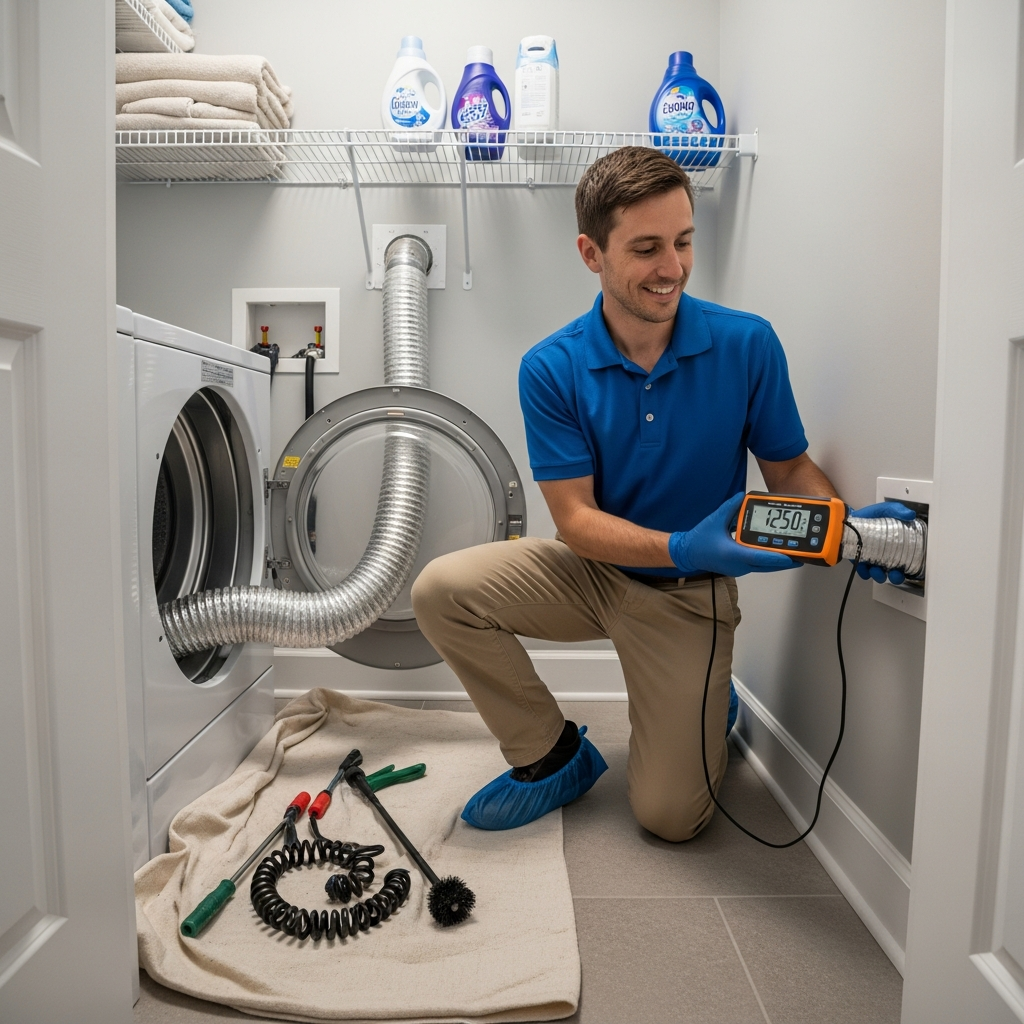
Not all cleanings are the same. A comprehensive visit addresses every segment of the venting pathway and validates performance at the end. The technician should begin with visual and functional checks, then remove lint and debris using specialized agitation and capture tools, and finally verify airflow and exterior function.
- Pre-inspection: Mapping the route, identifying materials, and noting bends, elbows, and terminations.
- Appliance-side prep: Moving the dryer as needed, safeguarding floors and walls, and inspecting the lint trap and transition hose.
- Mechanical cleaning: Using rotating brushes, air whips, and negative air collection to dislodge and remove compacted lint and obstructions.
- Exterior attention: Confirming that the termination flap or louver opens freely, isn’t blocked by nests, and seals appropriately when the dryer is off.
- Connector evaluation: Recommending a safer, more durable connector if the existing one is crushed, kinked, or made of unsuitable material.
- Verification: Testing airflow and temperature behavior to ensure the system vents properly after service.
When this entire sequence is performed meticulously, homeowners gain reliable drying times, lower heat stress on fabrics, and peace of mind regarding fire safety.
Home and Usage Factors That Shape the Work
Several elements of your property and household routine determine the scope of a professional visit. Recognizing these in advance can help you set accurate expectations for the process and duration.
- Run length and complexity: Longer ducts with multiple elbows require more time and targeted techniques to clean thoroughly.
- Access: Laundry closets, stacked units, or tight utility areas may need specialty methods and careful maneuvering.
- Vent materials: Certain materials are more prone to crushing or lint adherence, which can influence cleaning strategy and recommendations.
- Household volume: Frequent loads of towels, bedding, or pet blankets generate more lint and moisture, increasing the need for precise cleaning and periodic maintenance.
- Exterior conditions: A roof or upper-story termination may add safety considerations and additional steps for secure access.
Each of these factors shapes the technician’s approach. The most capable providers adapt quickly and communicate clearly, explaining how your home’s configuration guides their plan.
Why Focusing on Quality Delivers Better Outcomes
It’s tempting to compare options based on surface-level details, but the real value appears in how the work is performed and what results you see afterward. A detailed, methodical cleaning optimizes airflow, reduces appliance strain, and supports fabric care. Fewer repeat cycles mean less time and energy spent on laundry, while consistent exhaust reduces heat buildup and humidity in the laundry area.
Quality also shows up in how providers approach problem-solving. If the technician identifies a crushed connector or a stuck exterior damper, they’ll share corrective recommendations so your results last. Thorough documentation and homeowner education—simple maintenance tips and signs to watch—extend the benefits between appointments.
Somerville-Specific Considerations
Our community features a mix of older homes, townhouses, and multi-unit residences. This variety makes local experience valuable. A pro familiar with Somerville knows how seasonal humidity, winter cold, and building styles influence vent performance and lint behavior. They’ll anticipate tight closets, long interior runs, and roof terminations that require extra care, bringing the right tools and strategies to the job.
In neighborhoods with mature trees and active wildlife, exterior terminations sometimes become havens for nests or debris. A local expert will check these thoroughly, confirm free movement of the damper, and advise on best-practice deterrents that still allow safe exhaust.
Questions to Ask Before You Book
Asking the right questions helps you gauge thoroughness and professionalism. Use the prompts below to better understand each provider’s approach.
- What is your step-by-step process from arrival to final verification?
- Which tools do you use to dislodge compacted lint in long or complex runs?
- How do you contain debris and protect floors, walls, and the appliance during service?
- Do you inspect and test the exterior termination to ensure it opens freely and closes properly?
- What signs do you look for to identify damage, disconnections, or unsafe connectors?
- How do you confirm airflow and performance at the end of the visit?
Clear, confident answers indicate a provider who values quality and accountability. Look for a communication style that’s respectful, transparent, and easy to understand.
DIY Limitations and When to Call a Pro
Homeowners can and should clean the lint trap and keep the area around the dryer tidy. Some also use basic brush kits for short, straight runs. However, DIY tools often struggle with complex duct paths, multiple elbows, and dense, long-standing lint accumulations. Without the right equipment and experience, it’s easy to leave obstructions behind or inadvertently damage thin duct walls.
Professionals bring specialized agitation and capture systems that clear debris thoroughly and safely. They also recognize warning signs—like heat alarms, persistent moisture, or recurring clogs—that point to configuration problems needing more than a quick clean. When drying times are creeping up or odors arise, a skilled Somerville technician can identify root causes and deliver lasting solutions.
Evaluating What You Get for Your Appointment
Instead of fixating on a single variable, consider the full experience and results. Did the technician explain what they found and how they addressed it? Were before-and-after observations provided? Is the dryer now performing consistently, with heat and moisture exhausting smoothly outdoors? Are you leaving the visit with clear maintenance advice and a recommended timeframe for the next check-in based on your usage?
These questions help you separate a surface-level appointment from a comprehensive service that supports safety and performance for the long term.
How a Thorough Visit Pays Off Over Time
When your venting system is clear and properly configured, your dryer runs more efficiently and with less strain. That can translate into shorter cycles, better fabric care, and a calmer laundry routine. Just as importantly, removing combustible lint and fixing airflow restrictions reduces the risk of overheating. Homes with heavy laundry volume—families, pet owners, athletes—see especially strong benefits from consistent maintenance.
The cumulative effect of good practices—professional cleaning at sensible intervals, prompt attention to damaged connectors, careful placement of the dryer to avoid kinks—adds up to a safer, more comfortable home.
Somerville Scheduling Tips and Preparation
Scheduling is easiest when you plan ahead. If your household does frequent towel or bedding loads, aim to book proactively before peak seasons. Before the visit, clear space around the dryer, secure pets, and ensure the exterior termination is accessible. If your laundry is in a tight closet or stacked, mention this so the technician arrives fully prepared. These simple steps make the appointment efficient and smooth.
During the visit, consider asking the technician to show you the vent path and any key turns or junctions. A quick walkthrough can help you recognize early warning signs in the future and understand why specific maintenance intervals make sense for your home.
Mid-Article Reminder for Somerville Homeowners
If you are evaluating options and want a team that emphasizes safety, thoroughness, and clear communication, connect with local experts who specialize in professional dryer vent cleaning. With the right approach, you can enjoy dependable drying performance and a safer laundry space customized to your property’s layout.
Frequently Asked Questions
Q: What’s the difference between a basic and a comprehensive vent cleaning? A: A basic approach may focus on a short section behind the dryer, while a comprehensive service addresses the entire pathway, verifies the exterior termination, and confirms airflow at the end.
Q: How do I know if my vent run is complex? A: Indicators include multiple elbows, long distances to an exterior wall, or a termination on a roof or upper story. A visual inspection or floor plan clues can help you and your technician gauge complexity.
Q: Why does my laundry room feel humid? A: Restricted airflow or a stuck termination can trap heat and moisture. Clearing the vent and confirming proper damper function typically resolves the issue.
Q: Can I rely on the lint trap alone? A: The lint trap captures a portion of lint but not all of it. Fine particles travel into the vent and accumulate over time, making periodic professional cleaning important.
Q: Will cleaning help with odors? A: Yes. Removing lint, moisture pockets, and obstructions often eliminates musty or burnt smells associated with restricted exhaust.
Q: What materials are best for the connector behind the dryer? A: Your technician can recommend a safer, more robust connector that resists crushing and supports optimal airflow.
Q: How often should I plan maintenance? A: Many homes benefit from an annual visit, but heavy laundry use, pets, or long duct runs may warrant more frequent attention. Your provider can tailor a schedule to your needs.
Q: Does weather affect vent performance? A: Seasonal humidity and winter cold can influence lint behavior and damper movement. Local experience helps technicians anticipate and address weather-related issues.
Q: What if my dryer shows an error code? A: Some codes relate to airflow or temperature. A professional can evaluate whether vent restriction or a mechanical issue is the cause.
Q: Are screens on exterior terminations recommended? A: Screens can trap lint and restrict airflow. A properly functioning damper is typically preferred to allow exhaust out while deterring pests.
Book in Somerville for Reliable Results
Ready to enjoy smoother laundry days and a safer home? Choose a Somerville team that prioritizes meticulous inspection, thorough cleaning, and clear follow-up guidance. Schedule professional dryer vent cleaning and experience the difference that careful workmanship and local expertise can make throughout the year.
