Dryer Vent Cleaning Safety Checklist for Somerville, New Jersey Homes
A safe, efficient dryer begins with a clear vent. Lint is extremely combustible, and when it accumulates inside long duct runs or elbows, both performance and safety suffer. This safety-forward checklist is designed for Somerville homeowners who want to protect their families, shorten drying times, and maintain a calm, reliable laundry routine. You’ll learn how to spot early warning signs, prepare your space for service, and adopt habits that keep airflow strong between professional visits.
Somerville’s mix of historic homes, townhouses, and condos means vent configurations vary widely. Some homes have short, direct routes to an exterior wall, while others send exhaust through attics or upper stories with multiple bends. The steps below help you navigate these differences with confidence, emphasizing prevention, careful observation, and smart scheduling.
Safety-First Mindset and Quick Wins
Before diving into detailed tasks, start with habits that pay off immediately. Clean the lint trap after every load, avoid overpacking the drum, and keep the area around the dryer free of clutter. These basics reduce lint generation, limit heat buildup, and give you a clear view of the appliance and its connections so you can spot problems early.
- Clean the lint screen before each load.
- Do not run the dryer when you are sleeping or away from home.
- Keep flammable items away from the dryer and vent path.
- Position the dryer to avoid crushing the connector behind it.
- Periodically feel for steady exhaust at the exterior termination when the dryer runs.
These quick wins require little time but make a real difference in safety and day-to-day performance.
Visual Checks Around the Appliance
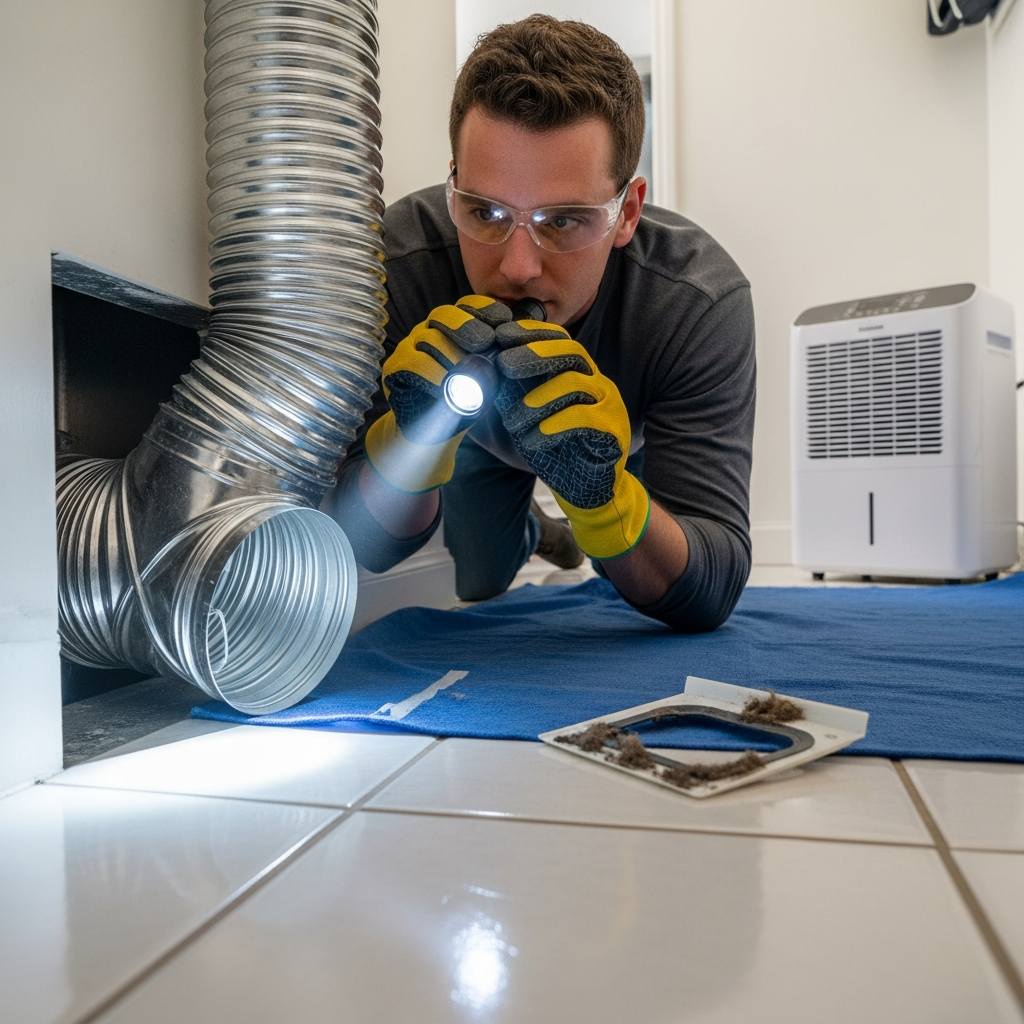
Spend a few minutes each month inspecting the immediate area around the dryer. Look for lint buildup behind the machine and along baseboards. Examine the connector for kinks, crushing, or damage. If the laundry room feels unusually hot or humid, airflow may be restricted. Addressing these signs early helps prevent overheating and component strain.
- Inspect the connector for kinks or crushing after moving the dryer.
- Check for lint accumulation around outlets, baseboards, and the floor.
- Listen for unusual noises while the dryer operates.
- Note any musty or burnt odors—both suggest restricted exhaust.
If you find visible damage, avoid using the dryer until a professional evaluates the situation.
Exterior Termination: Your First Line of Defense
The exterior termination is where exhaust exits your home. A stuck flap or clogged louver restricts airflow and traps heat. Make a habit of checking this point regularly, especially after storms or during seasonal transitions when debris can collect.
- Confirm the flap opens while the dryer runs and closes when it stops.
- Remove visible debris, but avoid installing screens that can trap lint.
- Watch for nesting activity; birds and small animals may be attracted to warm exhaust paths.
- Ensure landscaping or storage does not obstruct the termination.
Proper damper function is essential. If it sticks or fails to seat, schedule service promptly.
Recognizing Red Flags That Demand Prompt Attention
Certain warning signs merit immediate professional evaluation. Waiting can worsen restrictions, increase overheating risks, and put added strain on the appliance.
- Drying times extend noticeably or require repeat cycles.
- The dryer exterior or laundry area becomes unusually hot during operation.
- Persistent musty or burnt smells appear.
- Visible lint buildup around the exterior vent or within the laundry room.
- Airflow from the exterior termination feels weak during operation.
- The dryer displays error codes related to temperature or airflow.
If any of these apply, pause laundry and arrange a thorough inspection and cleaning.
Somerville-Specific Considerations
Local climate and building styles influence vent behavior. Humid summers can encourage lint clumping, while winter cold can stiffen dampers and make marginal restrictions more noticeable. Historic homes may have long or winding runs with multiple elbows, while condos often place laundry in tight interior closets. These situations call for meticulous cleaning and periodic verification to ensure continued performance.
Exterior terminations facing prevailing winds, near dense landscaping, or at upper stories may need extra attention. Plan seasonal check-ins and keep paths clear for safe access.
Professional Cleaning: What to Expect
Professional dryer vent cleaning is a step-by-step process focused on safety, thoroughness, and verification. Technicians assess the route, select tools appropriate for your vent material, and remove compacted lint with controlled agitation and capture. They evaluate the connector, confirm damper function, and verify airflow at the end.
- Preparation and protection of your home and appliance.
- Route mapping and material assessment.
- Agitation of lint accumulations with matched tools.
- Negative air collection and controlled debris removal.
- Exterior damper inspection and functional confirmation.
- Connector evaluation and recommendations for safer components if needed.
- Performance check to validate restored exhaust.
This whole-system mindset helps ensure lasting results and supports a safer, more efficient laundry routine.
Homeowner Tasks You Can Do Safely
While end-to-end vent cleaning is best left to professionals, there are safe, helpful tasks homeowners can perform between visits.
- Clean the lint trap after every load.
- Vacuum visible lint around the appliance and floor.
- Gently wipe the moisture sensors inside the drum per manufacturer guidance.
- Confirm the exterior flap moves freely while the dryer runs.
- Keep the laundry area ventilated to disperse residual moisture.
Avoid inserting tools deep into the duct unless you fully understand the route and materials. Misuse can damage thin duct walls or dislodge connections.
Preparation Checklist for Your Appointment
Set your technician up for success with a few simple steps before the visit. These actions protect your home and streamline the process, allowing for efficient, thorough service.
- Clear a pathway from the entrance to the laundry area.
- Move detergents, hampers, and storage items away from the dryer.
- Secure pets and notify household members of brief appliance downtime.
- Locate the exterior termination and ensure safe access.
- Share any symptoms you’ve noticed: long cycles, odors, heat, or visible lint.
Proactive preparation helps your technician focus on diagnostics and cleaning, not simple logistics.
Maintenance Cadence: How Often to Book
Many Somerville homes benefit from annual professional cleaning. Homes with long duct runs, multiple bends, stacked units, or heavy laundry volume may require a shorter interval—every six to nine months is common in those scenarios. After a visit or two, your technician can recommend a customized schedule based on your home’s real-world performance.
Common Myths, Debunked
Myth: The lint trap captures everything. Reality: Fine particles travel beyond the screen and accumulate in elbows and long runs. Routine cleaning remains essential.
Myth: If clothes are drying, the vent is clear. Reality: Dryers can power through mild restrictions, but it comes at the expense of longer cycles, more heat, and increased wear.
Myth: Screens on exterior vents keep pests out safely. Reality: Screens tend to trap lint and restrict exhaust. A functioning damper is the preferred solution.
Energy, Comfort, and Fabric Care Benefits
A clear vent enables shorter, more effective cycles, which supports fabric longevity by reducing heat exposure. With moisture exiting outdoors properly, the laundry area feels cooler and less humid. Over time, consistent airflow also reduces the chance of musty odors migrating into bedrooms and closets, improving overall indoor comfort.
Documentation and Follow-Up
Ask your technician to explain their findings and recommendations. Understanding the route, any trouble spots, and simple habits to maintain airflow empowers you to recognize early warning signs and book your next visit at the right time. Keep notes so you can compare performance across seasons.
Midway Reminder for Somerville Residents
If you want a thorough, safety-first approach with clear verification, consider booking professional dryer vent cleaning. Local specialists understand Somerville housing styles and seasonal effects and can tailor maintenance to your home’s unique needs.
Frequently Asked Questions
Q: How do I know my vent needs attention? A: Look for longer drying times, a hot or humid laundry area, musty or burnt odors, visible lint accumulation, or a stuck exterior flap. Any of these warrant prompt evaluation.
Q: Can I clean the vent myself? A: While cleaning the lint trap and vacuuming visible lint helps, end-to-end vent cleaning is best left to professionals with specialized tools and verification steps.
Q: What if my dryer is brand-new? A: New dryers still rely on a clear exhaust path. Construction debris or poor connector placement can cause early performance issues.
Q: Are flexible foil connectors okay? A: Some connectors crush easily and restrict airflow. A technician can recommend safer, more robust options suited to your setup.
Q: Will professional cleaning make the dryer quieter? A: Restored airflow often reduces strain, which can lead to smoother, quieter operation.
Q: How frequently should I schedule service? A: Many homes benefit from annual visits; heavier use or complex vent paths may require shorter intervals. Your technician can tailor a plan after inspection.
Q: Is it normal for the exterior flap to open only a little? A: It should open freely during operation. Partial movement suggests restriction or a mechanical issue at the termination.
Q: Do pets increase maintenance needs? A: Pet hair contributes to lint and can shorten the interval between professional cleanings, especially with frequent blanket and bedding loads.
Q: Can weather affect performance? A: Yes. Humidity and cold temperatures influence lint behavior and damper action, making seasonal checks helpful.
Q: What about stacked laundry units? A: Tighter spaces and longer runs often benefit from more frequent professional evaluations to keep airflow strong.
Take the Next Step for a Safer Laundry Room
If you’re ready to safeguard your home and streamline laundry days, schedule expert dryer vent cleaning. You’ll receive a careful, end-to-end service tailored to Somerville homes, complete with verification and practical guidance to keep your vent performing at its best all year long.
