When you search for dryer vent cleaning near me in Somerville, New Jersey, you are really looking for fast, trustworthy help that protects your home from lint buildup, overheating, and reduced efficiency. Quality service is about more than a quick vacuum; it is a safety measure that helps prevent dryer fires and keeps laundry day running smoothly. If you want a clear, local-path solution and a team that understands Somerville’s housing styles, seasons, and typical vent layouts, learning what to expect from professional dryer vent cleaning will help you make a confident, informed decision.
Somerville features a mix of older homes, renovated properties, townhouses, and multi-unit buildings that present unique venting scenarios. Long vent runs from basement laundry rooms, bends around joists in older homes, and compact vent routes in townhomes all demand a careful, thorough approach. Homeowners in this area also face seasonal shifts—spring pollen, autumn leaves, and winter humidity swings—that can influence how frequently vents should be inspected and maintained.
The right local partner will tailor the cleaning approach to your layout and equipment. From selecting the correct rotary brush size to evaluating exterior termination caps and indoor moisture conditions, a Somerville-focused workflow goes beyond what you might get from a generic, one-size-fits-all solution. And because neighborhood familiarity often speeds appointments and improves outcomes, choosing a nearby service can mean quicker response times and technicians who know the quirks of your block, building type, and dryer model.
Why local dryer vent cleaning matters in Somerville, NJ
Local expertise pays off when vents exit through hard-to-reach walls, soffits, or roofs that vary by property age. Many Somerville homes have dryers installed in basements or interior closets, resulting in longer vent runs that require more diligent cleaning. A professional who works in your area on a daily basis will also be aware of how regional weather, exterior landscaping, and common renovation practices affect lint accumulation and airflow over time.
Another reason to choose nearby specialists is accountability. Local companies depend on neighborhood referrals and repeat relationships, which typically drives a higher standard of service and clearer communication. When you can schedule an appointment without long lead times and have technicians arrive on time with the right tools and protective measures, the cleaning is more efficient—and you are more likely to stay on schedule for annual maintenance.
Somerville homeowners also benefit from familiar technicians who can flag related issues, such as compromised transition ducts, crushed hoses behind stacked units, or poorly sealed wall penetrations that let humid exhaust recirculate. Identifying these risks early can reduce wear on your dryer, shorten cycles, and keep indoor air cleaner.
Common signs your dryer vent needs attention
Knowing the warning signs makes it easier to plan service before problems become urgent. Watch for these clues that your vent is due for a professional cleaning:
- Dryer cycles take longer than usual, or loads need multiple cycles to dry.
- Clothes emerge unusually hot, or the laundry room feels warmer and more humid than normal.
- The dryer’s exterior or top panel becomes hot to the touch during operation.
- You notice a burning or musty odor while the dryer runs.
- Excess lint accumulates on the lint screen after a single cycle, or you see lint around the door gasket.
- Visible lint or debris collects around the exterior vent hood or termination cap.
- The exterior damper flap does not open fully while the dryer is on, indicating restricted airflow.
- The machine displays airflow or vent-related error codes, or shuts off unexpectedly.
Risks of neglecting a clogged dryer vent
Lint is highly flammable, and when it collects in kinks, elbows, or long runs, it restricts airflow and forces the dryer to work harder. Heat builds up, cycle times increase, and components such as thermal fuses and heating elements are placed under unnecessary stress. In severe cases, a clogged vent can contribute to dryer fires. Even when the risk never materializes, you may still face accelerated appliance wear, rising energy use, and frustrating delays on laundry day.
Ignoring vent issues can also impact your home’s indoor air quality. If a vent leaks or terminates in an attic or crawlspace, moist exhaust can linger in the building envelope, contributing to condensation and the potential for mold growth. A proper cleaning, combined with a quick inspection of the vent path and termination, helps ensure moisture and lint are expelled fully to the exterior.
How professional dryer vent cleaning works
Professional cleanings are designed to be thorough, minimally disruptive, and safe for your home. While details vary by layout and dryer model, a standard visit typically follows a proven sequence:
- Assessment: The technician asks about drying times, odors, or recent renovations, then reviews the dryer’s placement and the vent’s route to the exterior.
- Airflow test: Baseline airflow readings help confirm the extent of restriction and guide tool selection.
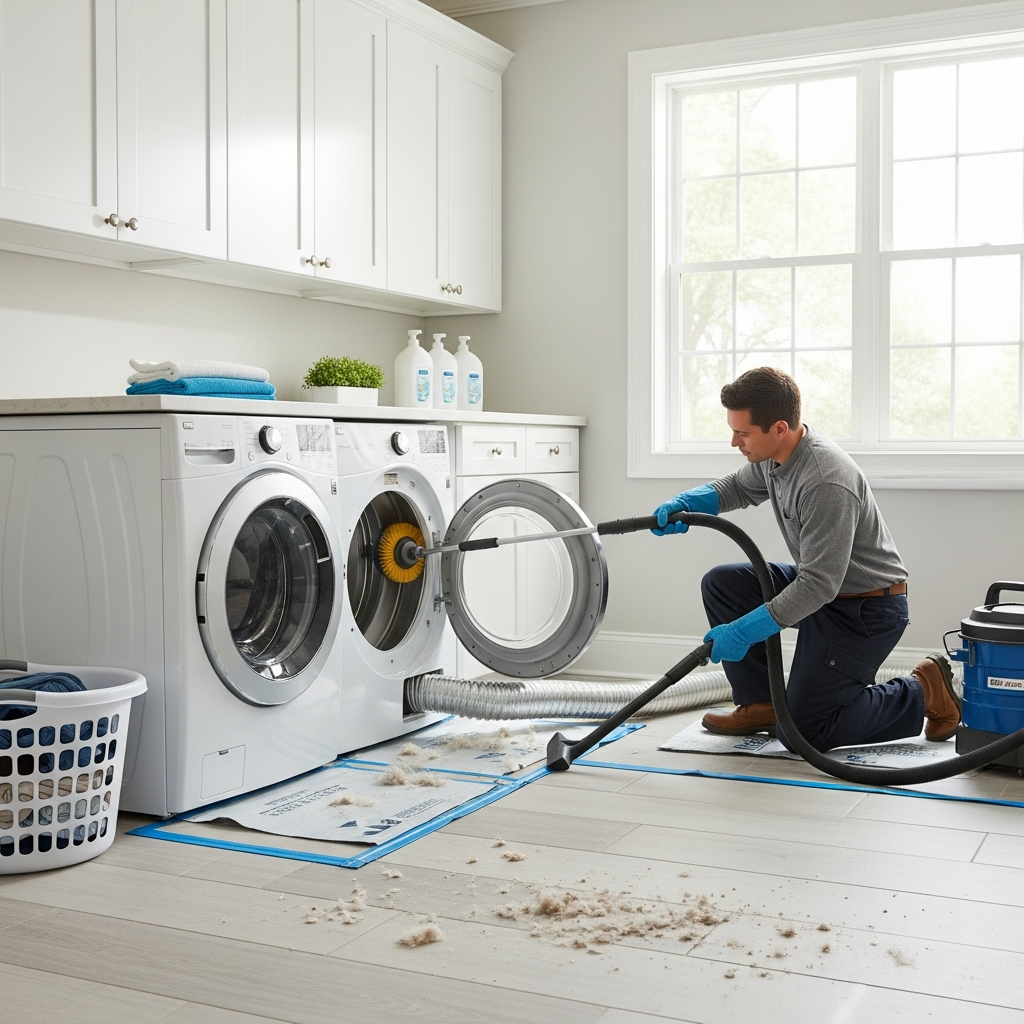
- Machine prep: The dryer is powered down, gently moved to access the transition hose, and protected with floor coverings as needed.
- Tool setup: Depending on the length and complexity of the run, the tech selects rotary brushes, flexible rods, high-powered vacuums, and, when needed, agitation tools built for elbows and ridged ducts.
- Interior cleaning: Lint is loosened and evacuated from the vent path, connectors, and accessible segments behind and beneath the unit.
- Exterior cleaning: The termination cap and damper are cleared of lint, insect nests, or debris that can bind the flap and reduce airflow.
- Reassembly and tune-up: The transition duct is inspected for damage, replaced if necessary with an appropriate material, and reconnected correctly with secure clamps.
- Final verification: Airflow is re-tested to confirm measurable improvement, and the work area is tidied before the dryer is returned to position.
During the appointment, you will also receive practical guidance on how to maintain safer drying habits. Scheduling a mid-year check or aligning service with seasonal to-dos (such as gutter cleaning) can help you remember preventative care. If your layout is complex or you do very frequent laundry, a technician might recommend more frequent inspections to keep performance strong. In the middle of your research or planning, remember that a local, professional dryer vent cleaning can restore proper airflow and peace of mind without guesswork.
DIY vs. professional: what homeowners can safely do
There are sensible ways to support vent hygiene between professional visits. Cleaning the lint screen after every cycle is the first step. You can also vacuum around the lint trap opening and the floor behind the dryer, where stray lint gathers. If the transition duct is short and accessible, you might carefully remove the dryer from the wall to ensure the hose is not crushed. However, avoid inserting improvised tools or using makeshift brushes that can puncture foil ducts, snag inside rigid lines, or push lint deeper into elbows.
Professional technicians bring high-powered vacuums, rotary brushes with variable stiffness, and long, flexible rods designed to navigate turns without damaging the duct. They also know how to test airflow and identify obstructions such as bird nests or hidden crimps that DIY methods rarely solve. When in doubt—especially with long or roof-terminating vents—professional service is the safer, faster, and more thorough choice.
Another advantage of hiring trained help is problem prevention. If the technician discovers non-compliant materials, poorly supported duct runs, or a vent that terminates in the wrong place, you will receive clear recommendations for correction. Addressing these issues can extend the life of your dryer, reduce drying times, and improve everyday comfort in your laundry area.
Unique considerations in Somerville homes
Somerville’s housing mix can create vent layouts that require finesse. In older homes with retrofitted laundry rooms, vent routes may include more elbows than ideal, increasing lint accumulation points. Townhouses and multi-level properties often locate laundry rooms in interior spaces, which can translate to longer ducts that travel to an outside wall. Meanwhile, basement installations sometimes produce upward-venting runs with multiple turns before exiting near a driveway or backyard.
Weather also plays a role. In colder months, warm air exiting the vent can meet cold metal, leading to condensation that bonds lint to interior surfaces. Over time, this forms stubborn layers that basic cleaning cannot dislodge. In spring and summer, outdoor growth and insect activity can reduce the free movement of the exterior damper. A local technician who recognizes these seasonal patterns will tailor maintenance intervals accordingly.
Maintenance schedule and preparation
For most households, annual professional cleaning is a solid baseline. If you do large, frequent loads, dry pet bedding or heavy linens, or share a laundry facility in a multi-unit building, you may benefit from more frequent checks. The best schedule is the one you can keep—tie it to a recurring home task, like testing smoke alarms or replacing HVAC filters, to build a reliable habit.
Before your appointment, clear a pathway to the laundry area and move delicate items that could be affected while the dryer is pulled forward. If the unit is stacked, technicians will plan for safe handling and access. Make a short list of any symptoms you have noticed—longer cycles, odors, or unusual noises—so the tech can investigate quickly.
- Confirm that pets are secured so doors can be propped open for hose routing if needed.
- Locate the exterior termination point to streamline the inspection.
- Have your dryer’s make and model available for quick reference.
- Plan for a brief test cycle after the cleaning to verify improved performance.
Frequently asked questions
Q: How often should I schedule dryer vent cleaning in Somerville? A: Most homes benefit from annual service. Larger households or those with long vent runs may require more frequent visits. A local technician can tailor a schedule based on your use and layout.
Q: Will cleaning the vent reduce my drying time? A: Yes. Restoring proper airflow allows moist air to escape efficiently, which shortens cycles and reduces heat stress on the dryer.
Q: My dryer is new—do I still need professional vent cleaning? A: Even new dryers depend on a clear vent path. Construction debris, remodeling dust, or an improperly installed duct can cause early restrictions. Verifying airflow protects your investment.
Q: Can I clean the vent myself with a store-bought kit? A: DIY kits can help with very short, simple runs, but they may not reach deep obstructions and can damage certain ducts. Professional tools and methods are safer and more thorough.
Q: What if my vent exits through the roof? A: Roof terminations often require specialized tools, safety precautions, and experience to clean effectively. A professional should handle these to avoid damage or incomplete results.
Q: Do I need to be home during the appointment? A: Yes. Technicians will need indoor access to the dryer, and you will want to review findings and test the machine together before completion.
Q: Will cleaning help with lint around the door gasket and laundry room? A: Usually. Proper airflow keeps lint moving through the duct instead of collecting around the door and in the room. It also helps the lint screen capture more debris.
Q: What should I watch for after the service? A: Expect shorter cycles, less heat on the dryer’s exterior, and strong airflow at the outside cap. Keep an eye on the damper flap to ensure it opens freely during operation.
Ready to protect your Somerville home?
If you are noticing longer cycles, warmth in the laundry room, or visible lint outside, now is the perfect time to act. Schedule trusted local help, restore safe airflow, and give your dryer the support it needs to perform day after day. For responsive service from a team that understands neighborhood layouts and seasonal realities, book your professional dryer vent cleaning and enjoy safer, faster drying with confidence.
