Reliable Dryer Vent Cleaning Near Me in Somerville, New Jersey
Searching for dependable help with your laundry appliance can feel urgent when clothes take forever to dry or the laundry room smells hot and dusty. If you are looking for a trusted local solution, reaching out for professional dryer vent cleaning is one of the most impactful home maintenance steps you can take. In Somerville, New Jersey, older homes with long vent runs, newer townhouses with shared walls, and mixed-use buildings all present unique airflow challenges that make expert attention essential. This guide explains why nearby service matters, what to expect from a professional visit, how to prepare, and how to keep your system safe and efficient long after the job is done.
Dryer vents carry hot, moist air from your laundry appliance to the exterior. Over time, lint and fine fibers accumulate along elbows, flex connectors, and terminations, creating resistance that traps heat and moisture. The result is a dryer that runs longer, works harder, and generates higher temperatures inside the duct. Lint is highly combustible, so keeping the pathway clear isn’t just about performance—it is about safeguarding your home against dangerous overheating.
Why Finding a Nearby Specialist Matters
When you search for a local expert, you are not only looking for convenience; you are investing in someone familiar with Somerville’s housing stock, seasons, and code expectations. Local technicians encounter the same repeating patterns: long basement runs in historic houses, rooftop terminations on newer multi-level constructions, and vent terminations near landscaping that can be easily obstructed by leaves or snow. Because they have repeatedly solved these problems in your area, they can diagnose airflow restrictions quickly and recommend practical, compliant improvements tailored to your specific layout.
Being nearby also improves response time for urgent concerns. If the dryer is shutting off mid-cycle, if the laundry room feels unusually hot, or if there is a burning, dusty odor, prompt inspection is critical. A local team can often evaluate the situation quickly, advise on safe shutdown steps if needed, and plan a thorough cleaning to remove obstructions and restore safe airflow.
How Lint Accumulates and Why It’s Risky
Every dryer produces lint. The lint screen captures a portion, but fine particles bypass the filter and settle along the duct’s interior. Several factors accelerate accumulation: long duct runs that demand more turns, ribbed flexible connectors that trap fibers, and any crushed or sagging sections where airflow slows. Moisture from damp loads also helps lint adhere to surfaces, and repeated heating and cooling can bake it into felt-like layers that are hard to dislodge without specialized tools.
As lint thickens, the dryer’s blower faces increasing resistance, which increases temperatures within the appliance and duct. High heat is the primary hazard; it can stress the dryer, degrade plastic flex duct, and elevate the ignition risk of accumulated fibers. Regular cleaning interrupts this cycle, reducing mechanical wear and improving safety, while also trimming the time it takes to do laundry.
Common Signs Your Vent Needs Attention
Watch for these early warnings. Clothes that come out damp after a full cycle indicate reduced airflow. If the outside vent hood flap barely moves when the dryer runs, that suggests a blockage. A hot-to-the-touch dryer exterior or a musty odor after drying can also point to vent issues. Persistent lint around the appliance or on the floor by the transition hose is another clue that air is not moving as it should.
Seasonal shifts can reveal new symptoms. During winter in Somerset County, exterior terminations may be obstructed by frost or windblown debris, and in spring, nesting birds can narrow openings. If you notice sudden changes in drying performance around these times, it is worth scheduling a professional inspection to confirm that the airflow path is clear from end to end.
What a Professional Cleaning Includes
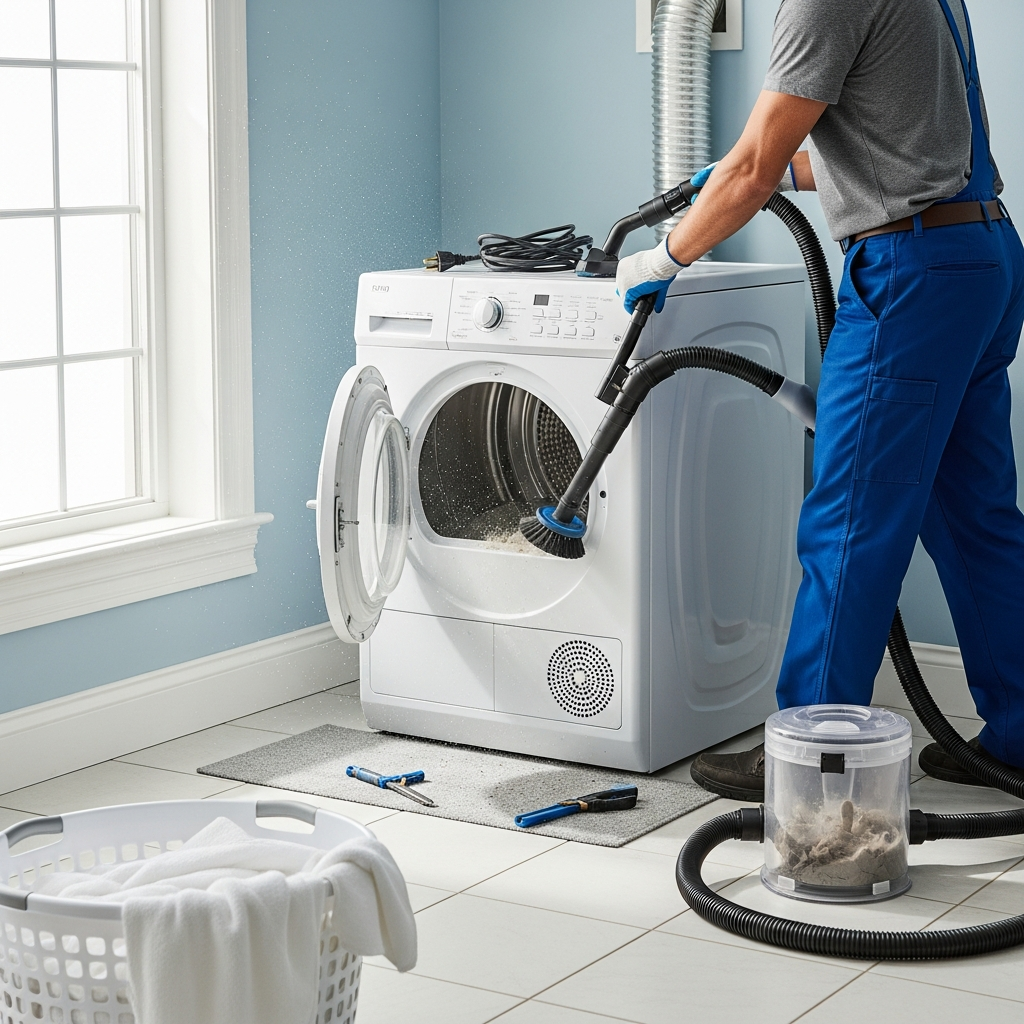
A comprehensive service starts with a visual inspection of the transition hose, duct path, and termination. Technicians will identify noncompliant materials like thin plastic flex, spot sharp bends, and check for screws inside joints that can snag lint. Using rotary brush systems and negative air collection, they loosen and remove packed debris while simultaneously capturing it so that lint does not circulate through your living space. The methodical approach matters: working from the interior to the exterior and back again confirms that every segment is clear and that the exterior hood opens freely under normal airflow.
In addition, a technician may measure air velocity, verify the dryer’s exhaust temperature after cleaning, and confirm that the termination has a proper backdraft damper. In homes where the dryer is relocated from the original position, the pro may recommend removing unnecessary elbows, shortening the run if possible, or upgrading to smoother rigid metal duct to reduce friction and future buildup.
Preparing for Your Appointment
A little preparation makes the visit efficient. Clear the area around the dryer so the technician can pull it forward safely. Remove laundry items from the top of the appliance and ensure a direct path from the laundry room to the nearest exit. If you live in a multi-unit building, notify building management so they can provide access to service rooms or shared roof spaces if needed. Finally, share any recent changes, such as a new appliance installation or a renovation that altered the duct path—these details help the technician understand the system’s history.
If pets are in the home, consider confining them to a quiet room during the appointment. Vacuuming and brushing can be noisy for some animals, and keeping them comfortable reduces distractions. Park access is another consideration, especially in downtown Somerville; temporary parking or loading accommodations can shorten setup time and help keep the job on schedule.
Local Somerville Considerations
Somerville’s blend of historic homes and modern infill housing means vent configurations vary widely. Many older homes route ducts through basements with several turns before reaching an exterior wall, while newer townhouses may exhaust through a roof termination. Rooftop terminations require safe ladder access, and a technician trained in roof safety is essential to avoid damage and ensure a proper seal when inspecting or replacing a cap. In neighborhoods with mature trees, leaves and seeds can collect around ground-level terminations; a simple seasonal check can prevent those accumulations from becoming obstructions.
Local weather matters too. Winter winds can blow snow against exterior hoods, and ice can hold a damper stuck shut. Spring and early summer can attract birds to warm, sheltered vent covers, especially if the damper doesn’t sit flush. Somerville homeowners should consider pest-resistant, code-compliant terminations that allow airflow while discouraging nesting without using fine mesh that can rapidly clog.
DIY Versus Professional Service
Homeowners can and should perform basic maintenance, such as cleaning the lint screen after every load and vacuuming around the lint trap opening with a narrow attachment. However, the internal duct often extends far beyond easy reach. Store-bought brushes can help with short, straight runs, but they may struggle with multiple elbows or long vertical sections and can occasionally detach, leaving a brush head lodged inside. Professionals use specialized tools designed to navigate complex paths and simultaneously capture debris, reducing the risk of mess and ensuring a fully restored airflow path.
There is also the matter of material upgrades and code compliance. A pro can identify unsafe transition hoses and replace them with UL-listed, rigid or semi-rigid metal connections. If the dryer exhausts into a crawlspace or attic—a configuration that can cause moisture problems and is generally prohibited—an expert can recommend a compliant reroute for better safety and energy performance.
The Middle of the Maintenance Cycle: When to Recheck
Even after a thorough service, lint production continues. For most households in Somerville, an annual cleaning is a smart baseline, though homes with large families, heavy towel or blanket loads, or pets that shed may benefit from more frequent attention. Check your exterior hood monthly; a strong pulse of air should push the damper open when the dryer runs. If you notice weaker airflow or the damper sticking, it is a sign to schedule a mid-cycle check. At this stage, a quick visit can prevent a minor restriction from becoming a serious clog. In practice, building a reminder into your seasonal chores helps—pair your vent check with changing smoke detector batteries or servicing your HVAC filters to keep everything on track. If you observe a mid-season performance dip, consider booking expert dryer vent cleaning before the issue escalates.
After the Cleaning: What to Expect
Most homeowners notice shorter dry times immediately. Towels and sheets should come out fully dry with fewer wrinkles, and the laundry room should feel less humid after cycles. The dryer exterior should be warm but not uncomfortably hot to the touch, and the outside vent hood should open fully while the machine is running. If you track your routines, you may see fewer back-to-back cycles for bulky items and a reduction in the lint left on clothes.
Keep monitoring the system. If performance slips sooner than expected, there may be a hidden issue: a crushed section behind the appliance, an internal dryer problem, or nesting activity at the termination. Report any unusual rattling, persistent odors, or visible lint blowback near the exterior hood. Early communication often resolves the matter with a quick follow-up.
Improving Efficiency Beyond Cleaning
Airflow optimization is not limited to removing lint. Small upgrades can produce long-term benefits. Replacing a ribbed plastic transition with a smooth, semi-rigid metal connector can significantly reduce turbulence at the point where blockages often start. Reducing the number of elbows or converting sharp turns into long-radius bends lowers friction, allowing the dryer to breathe more freely. Ensuring the duct gently slopes toward the outside in horizontal sections prevents condensation pockets that collect lint and moisture. Finally, confirming that the termination has a low-resistance damper helps maintain strong, reliable exhaust flow.
Multi-Unit and Property Management Insights
For condos, apartments, and mixed-use buildings, coordinated maintenance is essential. Shared roof terminations and long vertical runs require specialized tools and extra safety protocols. Staggered schedules can ensure that each unit’s duct is serviced without overloading building access points or elevators. Property managers should maintain clear records of past cleanings, locations of access panels, and the model numbers of appliances in each unit. These details streamline service and make it easier to identify patterns that point to building-wide improvements.
Common Myths About Dryer Vent Cleaning
One frequent misconception is that cleaning the lint screen alone is enough. While it is vital, the lint screen cannot capture everything. Another myth suggests that new dryers do not need vent maintenance. Even the most efficient, modern appliance relies on external airflow; a clogged duct will still cause overheating and poor performance. A third myth is that short runs never clog. In reality, even a short duct can accumulate enough lint to cause problems, especially if the termination’s damper sticks or if pets shed heavily.
Safety and Peace of Mind
Beyond performance benefits, regular maintenance supports a safer home. By clearing lint and confirming the integrity of duct materials and connections, you can reduce the risk of overheating and improve indoor air quality. The added efficiency also means your dryer spends less time running, which can extend its lifespan and decrease wear on mechanical parts such as heating elements and bearings. Over the course of a year, the time saved on laundry is noticeable—especially for busy households balancing work, school, and activities.
Frequently Asked Questions
How often should a home in Somerville schedule service? Most households benefit from annual cleaning, with semiannual checks for heavy usage, large families, or significant pet hair. Seasonal weather influences, such as winter frost or spring nesting, may justify earlier follow-up.
What if my vent exhausts onto the roof? Roof terminations are common in multi-level homes. A qualified technician will use appropriate safety equipment, inspect the cap, verify the damper action, and ensure a proper seal after cleaning to prevent water intrusion.
Can I use plastic or foil flex behind the dryer? Thin plastic or foil material can crush easily and degrade under heat. Rigid or semi-rigid metal transition pieces are generally recommended for durability and smoother airflow.
Why do towels still feel damp after one cycle? Damp towels usually indicate reduced airflow. It could be a long run with multiple elbows, a partially blocked termination, or lint accumulation within the duct. A professional inspection can pinpoint the cause and restore balanced exhaust flow.
Is there a way to check airflow myself? Yes. With the dryer running on a warm cycle, observe the exterior hood: the damper should open fully and maintain a steady position. Weak movement or fluttering suggests resistance that merits a closer look.
What if I smell a hot, dusty odor? Stop the cycle and allow the dryer to cool. Avoid running additional loads until a technician inspects the system to rule out severe blockage, trapped lint, or a failing internal component.
Do pets increase cleaning frequency? Pet hair and dander can accelerate lint buildup. Households with multiple pets or frequent bedding washes typically benefit from more frequent service to keep airflow strong.
Will cleaning make my laundry room less humid? Yes. Restored airflow helps vent moist air outside, reducing humidity and the chance of musty odors after drying.
Take the Next Step in Somerville
If your dryer is running longer, the exterior hood is sticking, or it has been more than a year since your last service, now is the time to act. Schedule trusted local dryer vent cleaning to improve safety, restore fast dry times, and protect your home. A nearby team that understands Somerville’s housing styles and seasons will provide careful inspection, thorough debris removal, and practical recommendations that keep your laundry routine smooth and stress-free.
