When you search for dryer vent cleaning near me in Somerville, New Jersey, you are likely concerned about safety, efficiency, and the reliability of the professionals who will work in your home. A well-maintained vent system helps your dryer run smoothly, keeps energy waste in check, and reduces the risk of overheating or lint ignition. In the first few minutes of using a freshly serviced dryer, most homeowners notice faster drying times and quieter cycles, which are clear signs that the airflow is restored. If you want a straightforward way to improve performance and peace of mind, scheduling expert dryer vent cleaning is one of the most impactful steps you can take.
Somerville’s mix of historic homes, townhouses, and newer builds means vents can vary widely in length, material, and exit points. In some homes the vent runs a short distance to an exterior wall, while in others it snakes through ceilings and attics before exiting through the roof. Those differences matter because longer runs, bends, or older transitions can trap lint and reduce airflow faster. A local approach that accounts for neighborhood building styles, seasonal patterns, and common vent layouts can make a noticeable difference in both results and safety.
Why local expertise in Somerville makes a difference
Dryer vents work best when the airflow is direct, unobstructed, and protected from backdrafts. In Somerville, where summers can be humid and winters cold, temperature and moisture swings influence how lint adheres inside ducts. Humidity encourages clumping, and cold air can increase condensation in certain runs, causing lint to stick more stubbornly. Technicians who routinely work in the area recognize these patterns and tailor their methods and tools accordingly, from brush selection to the way they agitate tight elbows and roof caps.
Local professionals also understand common remodeling choices in the region—like laundry rooms relocated to upper floors during renovations—which often result in longer vent paths. Knowing how to navigate access points, identify hidden elbows, and verify exterior termination dampers are functioning properly is critical. It is not just about removing lint; it is about restoring the vent system to a condition where your appliance operates as designed.
Safety first: the real risks of a clogged dryer vent
Lint is highly combustible. When it accumulates, it restricts airflow, forcing the dryer to work harder and run hotter. Over time, that increased heat can lead to premature wear of components like heating elements and thermostats—and in the worst cases, it can contribute to ignition. Even if a fire never starts, prolonged heat causes stress on wiring, belts, and plastic components. Clean vents lower temperatures and extend the life of your dryer.
Beyond heat, a blocked vent can create moisture problems. If damp exhaust air cannot escape, it may back up into the laundry area, raising humidity, encouraging mildew around the machine, and creating musty odors in nearby rooms. Properly cleared vents let moist air exhaust fully, helping keep laundry spaces drier and cleaner.
Signs you need service soon
Most homeowners first notice extended drying times. A cycle that used to finish in about the time listed on the appliance now requires a second run. You may also notice that clothes are hotter than usual when the cycle ends, the dryer or laundry room feels unusually warm, or there is a burning or musty smell when the dryer operates. Another sign is lint accumulation around the exterior vent hood or a flap that no longer opens fully under airflow.
If you clean the lint trap regularly but still see heavy lint, reduced airflow, or inconsistent performance, it is likely time for a comprehensive cleaning that addresses the entire run, not just the trap. The more quickly you respond to these indicators, the better your results and the lower your risk.
What professional cleaning includes
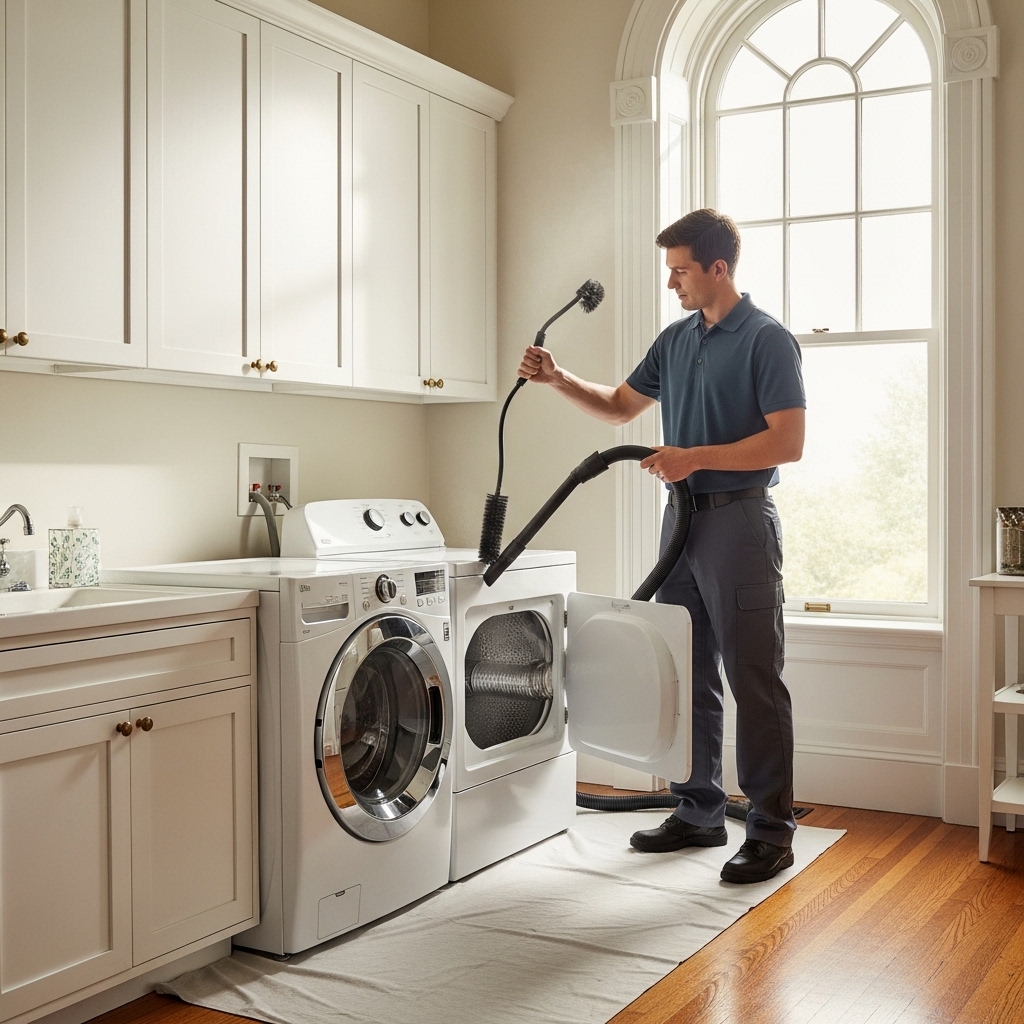
Thorough service is more than just brushing a few feet around the dryer connection. A complete appointment typically includes a visual assessment of the transition hose, the main duct run, and the exterior termination point. The technician disconnects the dryer, protects floors, and uses specialized tools to loosen lint throughout the entire length of the duct. In many cases, a combination of mechanical agitation and high-velocity airflow is used to move debris out of tight bends and past dampers.
Reassembly includes reinstalling the transition with the correct connections, ensuring no crushed areas restrict flow, and verifying that the appliance is leveled and properly positioned to avoid kinking. Finally, the pro confirms that the exhaust hood opens freely, that there is strong airflow, and that the dryer completes a brief test cycle without error codes or unusual heat buildup.
Dryer vent configurations common in Somerville
In historic homes, vents may run through older walls with tight clearances and multiple elbows. Some townhouses have longer vertical runs up to roof exits, which require specialized safety measures during service and careful testing afterward. Newer homes may use rigid metal ducts with fewer turns, making cleaning more straightforward and performance gains immediate. Regardless of your setup, a tailored approach ensures that tools and techniques match the duct material and geometry.
Another local consideration is wildlife intrusion. Birds and small animals sometimes nest in vent terminations, especially when a flap sticks open. A professional will check for intrusion, safely remove any debris, and confirm that the termination is functioning and screened appropriately to prevent reentry while preserving airflow.
How to prepare for an appointment
Before your technician arrives, clear a path to the laundry area and, if possible, move laundry baskets and detergents away from the machine. If the dryer is stacked, note whether it is on a pedestal or tightly enclosed, since additional steps may be needed to access the vent connection. If there are any known issues—like frequent automatic shutoffs or specific error codes—share them, as they can hint at airflow problems in certain parts of the duct run.
Make a quick note of how the exterior vent behaves when the dryer runs. Does the flap open fully, or does it flutter weakly? Is there visible lint around the hood? These observations help the technician focus attention where it is most needed.
Why DIY approaches often fall short
Home kits can help with very short, simple runs, but they are less effective for long ducts with multiple turns. Brush segments can sometimes detach inside the duct, creating a blockage. Even when a kit seems to remove lint, it may simply push debris further down the line, compacting it near an elbow or the termination hood. Professionals use tools designed to navigate bends without leaving obstructions behind and have the airflow equipment needed to fully extract loosened material.
Additionally, pros check the transition from the dryer to the wall. Foil or plastic flex ducts can degrade and are more prone to kinks and crushing. Upgrading to a safer, code-compliant connection improves airflow and reduces the likelihood of future issues.
The benefits you will notice
Improved drying times are often immediate, which saves energy and puts less wear on fabrics. Lower operating temperatures extend the life of the dryer and reduce stress on components. Reduced humidity helps keep laundry spaces fresher, and airflow at the exterior hood becomes visibly stronger. Many homeowners report that lint traps collect a normal amount of lint again—neither empty (a sign of blockage) nor overflowing (a sign of excessive shedding due to high heat).
Just as important is peace of mind. Knowing your vent is clear and your appliance is breathing freely lets you run loads without second guessing whether the machine is overheating or the duct is quietly filling with lint.
Scheduling and frequency
For most households that do several loads per week, an annual cleaning works well. Homes with larger families, heavy bedding or towel loads, or pets that shed may benefit from more frequent service. If your dryer is located far from the exterior or uses a vertical vent to a roof exit, you should pay closer attention to early warning signs like longer cycles. The more complex the vent path, the more worthwhile it is to have a regular maintenance routine.
If you have recently moved, consider a baseline cleaning so that you know exactly what condition the vent is in. This provides a fresh starting point, simplifies troubleshooting, and establishes a schedule based on your usage rather than guesses about past maintenance.
Mid-cycle performance checks you can do
While the dryer is running on a heat cycle, step outside and look at the vent hood. You should see the damper or flap open solidly and feel steady, warm airflow. If the flap only quivers or you barely feel exhaust air, the vent is likely restricted. Check the laundry room too: if cabinets or walls near the dryer feel hot or there is a persistent odor, those are additional signs that the vent needs attention.
Clean the lint filter after every load and rinse it periodically under water to remove any film from dryer sheets or fabric softener. Even a thin coating can reduce airflow through the filter and contribute to heat buildup. If you notice the filter is unexpectedly empty, that can also signal a blockage where lint is getting trapped before reaching the filter.
When to call a professional right away
If your dryer shuts off before the cycle ends, displays airflow or temperature error codes, or if you smell a burning odor, stop using the dryer and schedule service promptly. A trained technician can determine whether the issue is vent-related or appliance-specific. Because airflow problems cause heat stress, continuing to run the dryer when you suspect a blockage can worsen wear and may become unsafe.
Any time you replace a dryer, it is smart to have the vent professionally cleaned and inspected at the same time. Installing a new machine on a congested duct undermines the performance you expect and can void certain manufacturer recommendations related to airflow.
Why “near me” matters for follow-up
Working with a nearby specialist makes communication simple, both during the initial service and for follow-up questions. Local pros know the neighborhoods, traffic patterns, and typical vent layouts, which means they can plan for access, bring the right ladders for roof exits, and anticipate potential obstacles. If something unexpected arises, a provider close to home can often respond more quickly and help you restore normal operation without delay.
Equally important, a local team has a reputation to protect within the community. Consistent, high-quality results and clear communication are the foundation of good word of mouth, and those values benefit you directly in the form of thorough, careful work.
Midway reminder about professional service
If you have been noticing longer cycles or warm laundry rooms, do not wait for the problem to worsen. Your dryer will thank you, your clothes will feel better, and your home will be safer when airflow is restored. Scheduling professional dryer vent cleaning in Somerville ensures that the unique characteristics of your home and neighborhood are taken into account during service.
Frequently asked questions
Question: How long does a typical appointment take? Answer: Most straightforward visits are completed the same day, with time spent on setup, thorough cleaning from the dryer to the termination, and final testing. Longer or more complex runs may require additional time to ensure every bend and joint is properly cleared.
Question: Can I run my dryer while I am waiting for service? Answer: If you suspect restricted airflow—long cycles, hot clothes, burning odor—it is best to pause use until a technician inspects the vent. Continuing to run the dryer can increase heat stress and exacerbate the issue.
Question: What if my vent exits through the roof? Answer: Roof exits are common in multi-story homes and require proper safety equipment and techniques. A trained professional will manage roof access, clear the cap, verify the damper operates freely, and confirm strong airflow after the cleaning.
Question: Do pets or laundry habits affect how often I need cleaning? Answer: Yes. Pet hair, heavy towel or bedding loads, and frequent laundry cycles add to lint volume and can accelerate buildup. Households with those factors often benefit from shorter intervals between cleanings.
Question: What should I do if I see lint around the exterior hood? Answer: Visible lint at the hood typically indicates reduced airflow or a sticking damper. It is a good sign that the vent needs attention soon to restore proper exhaust.
Final steps you can take today
Walk to your exterior vent while running a load and check airflow. Make a quick note of any warning signs and set a reminder to clear the lint filter after every cycle. If those checks confirm you need assistance—or if you simply want peace of mind—book professional dryer vent cleaning with a trusted local provider in Somerville so your appliance can perform safely and efficiently all year long.
