Dryer Vent Cleaning Inspection Requirements in Somerville, New Jersey
Whether you are a homeowner, landlord, or property manager in Somerville, understanding dryer vent inspection expectations is essential for safety and reliability. A proper inspection verifies that the exhaust pathway is clean, correctly sized, and routed to the outdoors with a code-compliant termination. It also confirms that transition ducting is appropriate and that joints are secured without intrusive screws that catch lint. If you have experienced slow dry times, heat buildup, or frequent cycle interruptions, start with a comprehensive evaluation and schedule dryer vent cleaning to restore safe airflow before more serious issues arise.
Inspections are not just about finding visible lint. They also assess whether the system architecture supports good performance: the number of elbows, total equivalent length, types of duct materials, and the condition of the exterior hood. For gas dryers, inspections consider safe clearance from combustibles and the absence of fumes in the laundry area. For electric units, inspections verify proper amperage supply and that heat cycling corresponds to normal back-pressure.
What a Thorough Inspection Covers
- System mapping: The inspector identifies how the vent travels from the appliance to the exterior and notes elbows, vertical segments, and long horizontal runs that increase resistance.
- Material verification: Smooth, rigid metal ducting is preferred for the permanent run. Plastic or thin foil flex is discouraged for concealed sections. Transition ducting should be UL-listed and as short and straight as practical.
- Joint integrity: Connections must be mechanically fastened and sealed with foil-backed tape where appropriate. Screws that penetrate into the airstream are flagged because they trap lint.
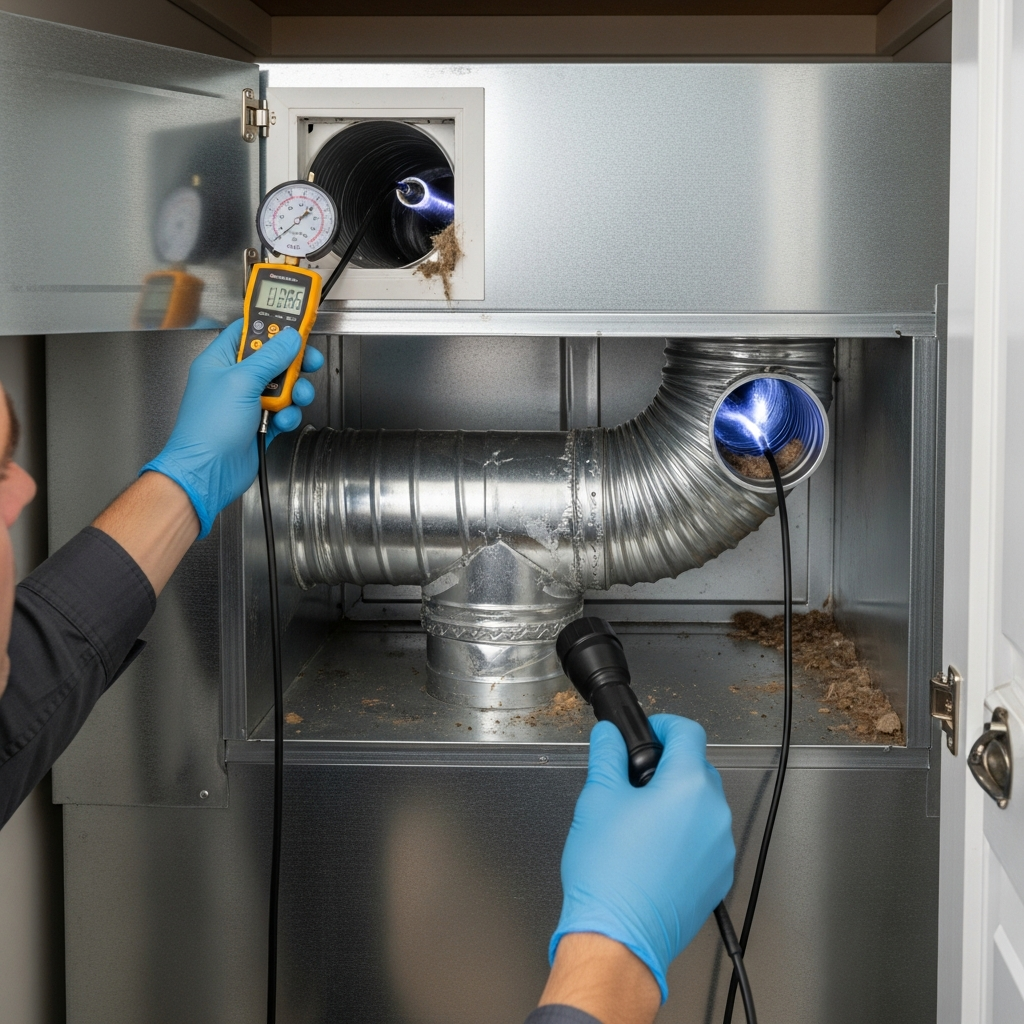
- Back-pressure and airflow tests: Measurements at the dryer connection and exterior termination establish whether restriction exists and help quantify the benefit of cleaning and repairs.
- Lint accumulation: Rotary brushes or inspection cameras may be used to visualize interior conditions and identify problem zones.
- Termination assessment: Louvers or dampers should move freely without screens that can clog. Clearances around the hood are verified, and any nesting or debris is removed.
- Appliance pairing: The dryer’s rated exhaust and the vent’s length/complexity are compared to ensure compatibility. Long or challenging runs may require a booster fan evaluated for maintenance access and safety features.
Common Issues Found During Inspections
- Excessive elbows or crushed ducts behind tightly installed dryers.
- Unsupported vertical runs causing sagging and lint pockets.
- Terminations with bird or rodent screens that quickly clog with fibers.
- Transition ducts that are too long, kinked, or made from non-recommended materials.
- Hidden sections joined with screws that protrude into the airflow path.
- Moisture staining near joints, indicating leaks or condensation.
- Back-drafting or stuck flappers causing constant restriction.
How Inspections Support Safety and Performance
A clean, well-routed vent reduces heat stress on the dryer and the risk of ignition. It also saves time and energy by allowing the appliance to exhaust moist air efficiently. In multi-family properties, thorough inspections help standardize maintenance intervals, document compliance, and identify shared vent sections that require coordinated servicing. For homeowners, an inspection report becomes a practical roadmap for corrective actions—prioritizing cleaning, replacing unsafe transitions, or rerouting problematic sections.
Recommended Inspection Frequency
The right interval depends on household size, pet hair, laundry habits, and vent complexity. As a general guideline, schedule an annual inspection for single-family homes, with more frequent checks if your vent run is long or includes multiple elbows. Landlords and property managers should implement scheduled inspections at least once per year for each unit, and after any tenant turnover or appliance replacement.
Preparing for Your Inspection
- Clear a path around the dryer so the inspector can pull it forward without damaging flooring or baseboards.
- Have recent dryer performance observations ready, such as longer cycles or unusual odors.
- Locate the exterior termination in advance, especially if it exits through the roof or a hard-to-access sidewall.
- Share any prior repair notes or remodeling details that may have altered vent routing.
Inspection, Cleaning, and Documentation
Inspections and cleanings often go hand-in-hand. If restrictions are detected, the technician will typically proceed with a mechanical cleaning to remove lint and debris, then retest airflow. Documenting pre- and post-cleaning readings provides valuable proof that maintenance was effective and helps establish the right service cadence. If unsafe materials or routing are discovered, the report will outline recommended upgrades and the anticipated impact on performance.
For Somerville homes and properties, convenience matters. Coordinating an inspection with a same-visit cleaning limits downtime, streamlines scheduling, and ensures you see immediate improvement. If you are ready to restore safe exhaust flow and confirm code-minded best practices, book a local expert for professional dryer vent cleaning and a full-condition report.
Frequently Asked Questions
Q: What makes a vent “too long”? A: Each dryer model specifies a maximum equivalent length, which accounts for straight runs and the added resistance of elbows. Exceeding that value often leads to slow drying and frequent lint accumulation.
Q: Are rooftop terminations acceptable? A: Yes, with the correct cap and backdraft damper. They must be serviceable and free of screens that trap lint. Regular checks are recommended due to exposure to weather.
Q: Can the vent exhaust into a crawlspace or attic? A: No. Dryer exhaust must terminate outdoors to expel heat and moisture safely and prevent indoor humidity and lint buildup.
Q: How do inspections differ for gas dryers? A: Inspectors verify clearances, confirm that exhaust routing does not leak into living spaces, and remain attentive to any combustion-related concerns.
Q: What if my unit uses a booster fan? A: The fan must be accessible for maintenance, equipped with a pressure or timer control, and installed per manufacturer guidelines. Inspections verify operation and cleanliness.
Q: Do I need an inspection after remodeling? A: Yes. Construction can alter vent routing or compress transition ducting behind the appliance. Post-project inspections ensure the system still meets best practices.
Book Trusted Help in Somerville
Set a clear standard for safety and performance across your property. Arrange a visit for inspection, cleaning, and documentation with local specialists. For a quicker turnaround and measurable results, schedule expert dryer vent cleaning and confirm your system is ready for reliable service.
