
Safe air duct repair starts long before mastic meets metal or a clamp tightens around a flex collar. It begins with a plan: assessing risks, preparing the workspace, and understanding how ducts interact with your home’s air pressure and HVAC equipment. In Somerville, New Jersey, many homes feature a blend of older trunk lines, newer branches from remodels, and tight attic or crawlspace sections that complicate access. A careful, safety-first process protects your home, your health, and the long-term performance of your system. If at any point the work extends beyond your tools, time, or comfort level, consider scheduling a professional evaluation and, when appropriate, targeted air duct repair to ensure safe, durable results.
Understand the system before you start
Begin with a simple map. Identify the air handler, supply and return trunks, major branches, boots, and registers. Note any dampers and label them if they are hard to see. Observe airflow at vents to learn which rooms run hot or cold. This map will guide your inspection and help you prioritize safety-critical areas like return leaks near garages or basements, where contaminants can be drawn into the system.
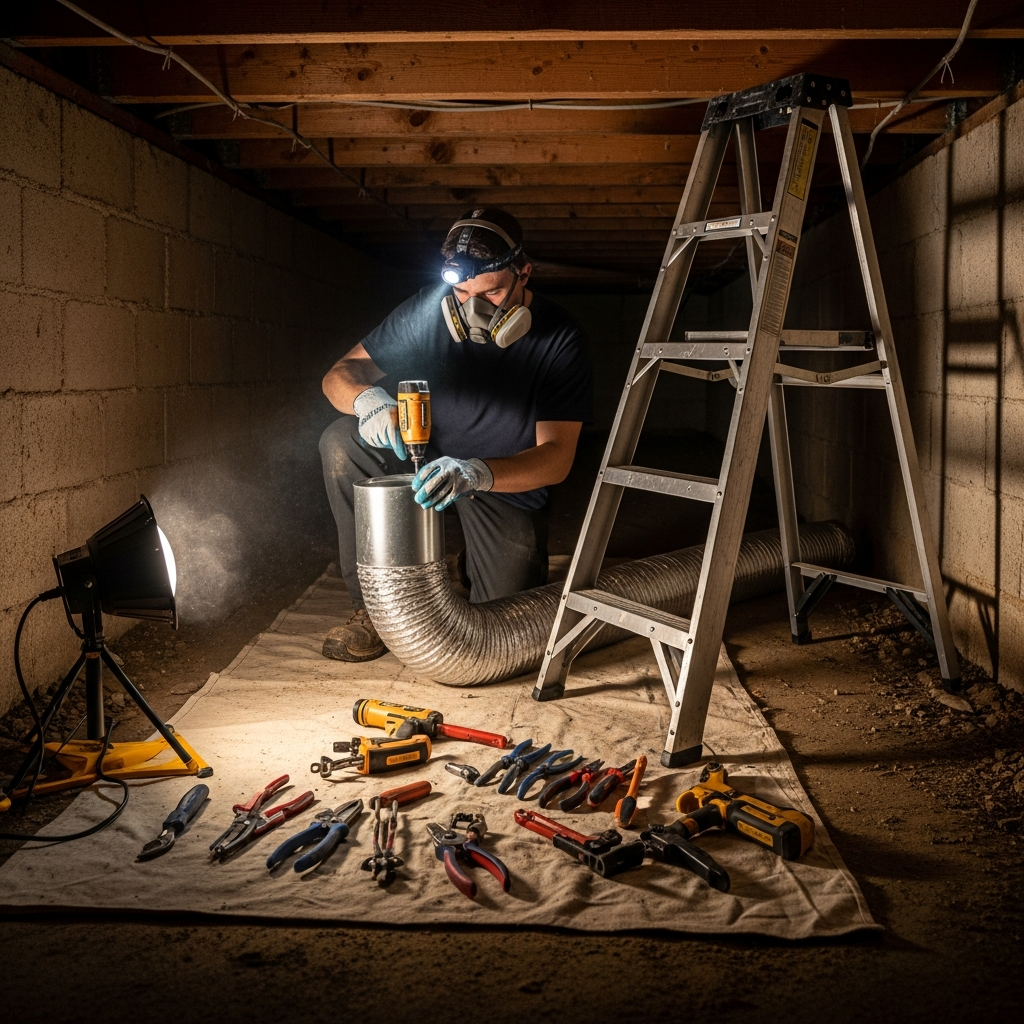
Safety gear and preparation
- Eye protection to guard against insulation fibers and debris.
- Gloves suitable for sheet metal handling and contact with mastic or solvents.
- Respiratory protection if you are working in dusty attics or crawlspaces.
- Knee pads or a cushioned mat for low, tight spaces.
- Headlamp or reliable work lights to keep both hands free.
- Stable ladders with non-slip feet and a helper when accessing high areas.
Clear the area around the air handler and key access points. Lay down drop cloths to protect floors. If you are entering an attic, confirm safe decking and avoid stepping on drywall between joists. In basements or crawlspaces, watch for sharp edges, nails, or low-hanging fasteners.
Power down and confirm safe conditions
Turn off the HVAC system at the thermostat and, if needed, at the breaker. This prevents the blower from starting while you are working. If your home has combustion appliances, ensure adequate ventilation. Avoid blocking combustion air pathways or creating pressure imbalances that could cause backdrafting. When in doubt, pause and consult a professional.
Inspection: the foundation of safe repair
Look and listen. Visual cues include torn or missing insulation, disconnected collars, cracked mastic, sagging flex, crushed elbows, and gaps at boots where ducts meet floors or drywall. Auditory clues involve whistling at seams, rattling at loose straps, and thumping at startup. Mark suspect areas with painter’s tape so you can return to them methodically.
Pay special attention to returns. A leaking return trunk can draw in dust, attic air, or garage fumes—an indoor air quality issue and a safety hazard. Also inspect the plenum connections at the air handler, where movement and vibration often loosen joints over time.
Materials and methods that support safety
- Use UL-listed mastic with mesh where gaps are larger. Apply evenly and allow proper cure time.
- Prefer mastic to generic tape for primary sealing. If using approved foil tapes, clean and dry surfaces thoroughly first.
- Replace crushed or deteriorated flex sections; do not try to tape them back into shape.
- Secure flex to collars with proper bands or clamps; avoid improvised wire ties that can cut material.
- Repair insulation and vapor barriers to maintain temperature control and prevent condensation.
Step-by-step safe repair approach
- Stabilize access. Set ladders securely and check footing in attics or crawlspaces.
- Confirm power off. Verify the blower does not start when the thermostat calls.
- Open workspace carefully. Remove only as much insulation as needed; handle fiberglass gently to minimize airborne fibers.
- Clean surfaces. Wipe dust and debris from metal before applying mastic or tape.
- Seal small leaks first. Address seams, takeoffs, and boot connections to reduce overall leakage.
- Replace failed sections. Where flex is torn or metal is deformed, replacement is safer and more reliable than patching.
- Support ducts properly. Use straps spaced per guidelines to prevent sagging and stress on joints.
- Restore insulation. Rewrap with intact vapor barriers and secure seams to avoid future moisture issues.
- Test airflow. After curing, power on and verify improved performance at several vents.
Dealing with tight spaces and obstacles
In Somerville homes, narrow chases and crowded attics are common. Work slowly. Avoid compressing insulation, which reduces its R-value. When rerouting is necessary, plan gentle curves rather than sharp bends to limit turbulence. If you encounter old materials, particularly those that look suspect or brittle, stop and seek expert guidance before disturbing them. Safety trumps speed.
Protecting indoor air quality during repair
Close interior doors to rooms where dust may travel, and use drop cloths at return grilles to catch debris during sealing work. Replace the HVAC filter after the job is complete to capture any residual particles. If you notice unusual odors after starting the system, shut it down and recheck your work for overlooked return leaks or debris near the air handler.
Mid-project check: verify progress and adjust
Halfway through, review the most significant fixes. Confirm that major return leaks are sealed, that boot connections are tight, and that weak or crushed flex has been replaced. This pause reduces the chance of missing a critical area. If you prefer a professional to handle advanced sealing or balancing, consider bringing in a technician for targeted air duct repair to finish the job with proper verification.
Post-repair testing and safety confirmation
Once materials have cured and insulation is restored, power the system back on. Listen for noise changes—less rattling and whistling is a good sign. Check airflow at multiple rooms. If a previously weak vent now feels stronger and temperatures equalize more quickly, your repair steps are paying off. Observe the system for a complete cycle to confirm that nothing shifts under airflow pressure and that no new vibrations have appeared.
When to call in a professional immediately
- Suspected mold, vermiculite, or other materials that should not be disturbed without specialized procedures.
- Persistent fuel or chemical odors suggesting return leakage from garages or storage areas.
- Severely damaged or collapsed ducts requiring redesign or significant rerouting.
- Complex balancing needs where multiple rooms suffer from chronic temperature issues.
Frequently Asked Questions
Q: Is it safe to use expanding foam in ducts? A: Avoid it. Use approved mastic and tapes designed for duct applications to prevent off-gassing and material failure.
Q: How long should mastic cure before running the system? A: Follow manufacturer guidance; allowing adequate cure time ensures a durable seal and avoids debris being drawn into the system.
Q: Can sealing returns improve indoor air quality? A: Yes. Tight returns reduce infiltration of dust, insulation fibers, and unwanted odors.
Q: What if a boot is loose where it meets the floor or ceiling? A: Secure the boot mechanically and seal gaps around the perimeter to stop air loss and prevent debris from entering.
Q: Should I adjust dampers after repair? A: If airflow changes significantly, minor damper adjustments may help re-balance rooms. Make small changes and recheck results.
Q: Do I need special tools? A: Basic hand tools, proper clamps, and safe access equipment often suffice, but complex systems benefit from professional testing tools and expertise.
Take the safe next step for your Somerville home
If you would like expert eyes on tough leaks, tight chases, or balancing challenges, bring in a trusted local team to complete the job with confidence. Schedule professional air duct repair and ask for documented findings, durable materials, and verification that your system runs safely and efficiently.
