
Troubleshooting Air Duct Problems in Somerville: A Step-by-Step Guide
Strange noises, uneven temperatures, and dusty vents often point to ductwork issues rather than a failing furnace or air conditioner. Before replacing equipment, use this structured troubleshooting guide to pinpoint the problem and choose the right fix. You will learn how to identify leaks, diagnose airflow restrictions, correct flex duct damage, confirm return integrity, and test your results. When the scope exceeds DIY comfort, scheduling professional air duct repair can bring advanced diagnostics and durable solutions to your Somerville home.
Think of this guide as a flow from symptoms to likely causes and then to corrective actions. As you progress, document what you find with photos and notes. That record will help you verify improvements and, if needed, communicate clearly with a technician.
Safety and Preparation
- Turn the HVAC system off at the thermostat, and switch off power to the air handler at the breaker for added safety.
- Wear gloves and eye protection; sheet metal edges and fiberglass can irritate skin and eyes.
- Use a headlamp or portable work light for attics, basements, and crawl spaces.
- Keep pets and children out of work areas until the job is complete and cleaned up.
- If you suspect mold or asbestos, stop and consult a qualified professional before proceeding.
Symptom Map: What You Hear, Feel, and Smell
- Uneven temperatures: One room is hot or cold compared with others.
- Whistling or hissing: Sounds near registers, returns, or along duct runs.
- Odors when the system runs: Musty, dusty, or basement smells enter the living space.
- Rattling or vibration: Panels or ducts shake when the blower starts or stops.
- Weak airflow at a register: Air barely moves even with the system on high.
Initial Checks That Solve Many Problems
- Filter condition: Replace a dirty filter. Many airflow issues begin here.
- Register and return clearances: Make sure furniture, drapes, or rugs are not blocking vents.
- Thermostat settings and fan mode: Confirm the system is set correctly and that the fan runs when commanded.
- Access panels and grille screws: Tighten any loose panels that could rattle or leak.
Targeted Inspections for Leaks and Restrictions
- Plenums and takeoffs: Look for peeling tape and gaps. Dust streaks around seams indicate leakage.
- Trunk lines: Follow the duct path with a flashlight, marking suspicious areas for later sealing.
- Flex duct runs: Check for kinks, crushed sections, torn jackets, and missing supports.
- Returns: Verify that returns are sealed to the framing and not pulling air from wall cavities or unconditioned spaces.
- Supports and hangers: Replace narrow straps that cut into flex ducts with wider supports.
- Insulation: Confirm that metal ducts in attics and crawl spaces are insulated and that vapor barriers are intact.
Leak Confirmation with Simple Tools
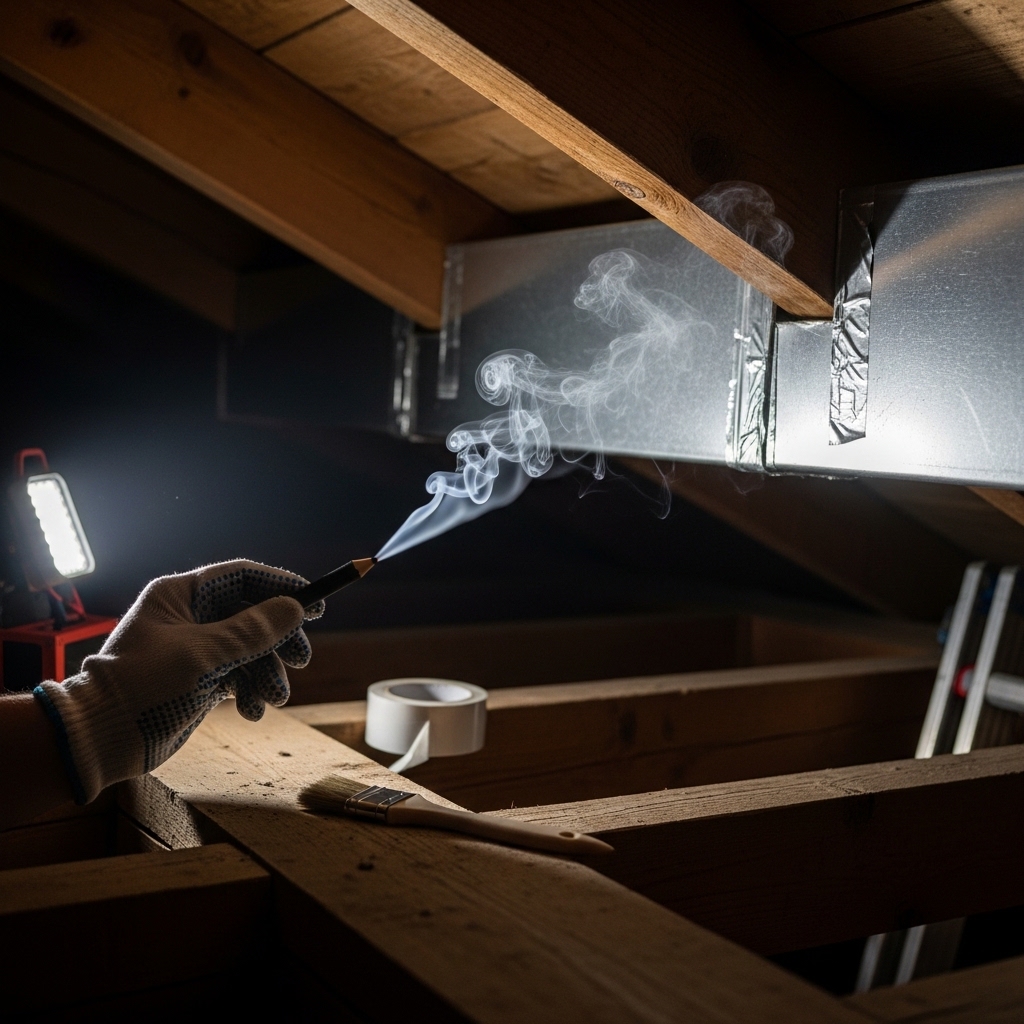
Use a smoke pencil or incense stick with the system running to test seams and joints. If smoke is drawn toward a joint, the return side may be leaking. If it is pushed away, air is escaping on the supply side. Mark each spot for sealing. Pay special attention to takeoffs at the plenum, flex-to-collar connections, and any areas where old cloth tape has failed.
Corrective Actions: Sealing and Reconnection
For sheet metal, secure loose joints with screws before applying water-based mastic. Push mastic into seams and over screw heads to create a continuous seal. For flex duct, slide the inner core fully over the collar, clamp it, seal with UL-181 foil tape, and then extend the insulation and outer jacket over the joint with a second clamp or tape wrap. Avoid compressing flex duct; maintain gentle bends and proper support spacing.
Fixing Weak Airflow at Specific Rooms
When a single room underperforms, trace the branch run serving that register. Look for kinks, crushed sections, or long unsupported spans of flex duct. If the run is excessively long or routed around obstacles, consider whether rerouting is feasible. Check for a partially closed balancing damper in the branch; small adjustments can restore flow. Ensure the register grille damper is not closed or obstructed by debris.
Addressing Odors and Return Integrity
Musty or dusty smells often originate on the return side of the system. Inspect return boxes and wall cavities for gaps where unconditioned air can enter. Seal seams with mastic and confirm that the filter compartment is tight. In basements, verify that returns do not draw air from near storage or hobby areas with solvents or chemicals. Proper sealing improves air quality and comfort at the same time.
Noise Troubleshooting
Whistling suggests leaks at joints or around registers. Rattling points to loose panels, insufficient supports, or ducts that expand and contract against framing. Add screws where appropriate, reinforce supports, and use mastic or foil tape to eliminate leak-related noises. If noises persist after sealing, consider whether high static pressure from other restrictions is amplifying the sound, and inspect for partial blockages or sharp bends in multiple branches.
Insulating Exposed Ducts
In Somerville’s climate, insulation matters for both comfort and condensation control. Wrap exposed metal ducts in crawl spaces and attics with foil-faced insulation, sealing seams with foil tape. Maintain a continuous vapor barrier. Insulation does not fix leaks, so complete sealing first, then add insulation to maintain airflow temperatures and prevent sweat on cold surfaces.
Testing Your Results
After sealing and reconnection, power the system and repeat smoke tests at every repaired joint. Walk each room to confirm airflow improvements and listen for residual noises. If you adjusted balancing dampers, record the final positions. Keep your notes, photos, and a simple map of work completed for future reference.
When Troubleshooting Reveals Bigger Problems
Sometimes, investigation uncovers issues that go beyond DIY, such as suspected contamination, severely corroded metal, or complex layouts that require specialized tools and measurements. In those cases, upgrading to professional diagnostics from Somerville providers of comprehensive air duct repair services is the fastest way to reach a verified solution with clear documentation.
Preventive Habits to Keep Ducts Performing
- Replace filters regularly according to manufacturer guidance and your home’s conditions.
- Keep registers clear of furniture and drapes to prevent blockages.
- Reinspect sealed joints after seasonal temperature swings.
- Protect ducts from storage impacts in attics and basements.
- Vacuum supply and return grilles to minimize dust buildup.
Frequently Asked Questions
Q: How can I tell if a return is leaking behind a wall? A: Listen for unusual sounds at the return grille, check for dust streaks at edges, and perform a smoke test at any accessible seams. Professional technicians can also use pressure tests to confirm hidden leaks.
Q: Which is better for sealing—foil tape or mastic? A: Both have roles. Use mechanical fasteners first, then apply mastic for permanent seals at seams and takeoffs. Foil tape is excellent for clean, smooth surfaces and for finishing layered connections on flex duct.
Q: My attic is very hot in summer. Can I still repair ducts? A: Yes, but choose cooler parts of the day and follow temperature guidelines for adhesives. Hydrate, use proper lighting, and limit time in extreme heat for safety.
Q: Will sealing ducts reduce dust in my home? A: It can, especially if return leaks were drawing in dusty air. Pair sealing with regular filter changes for the best results.
Q: What if balancing dampers are missing? A: Some systems lack dampers. You can still improve performance by eliminating kinks, ensuring proper support, and verifying that registers are fully open and unobstructed.
Somerville-Specific Tips
Local homes may feature basements that vary in humidity through the year. Keep an eye on condensation risks and maintain vapor barriers on insulated ducts. In older houses with unique chases, expect hidden turns and offset connections; take your time and photograph every discovery. Newer construction may have tighter building envelopes, making duct sealing even more noticeable in comfort and indoor air quality.
Move from Troubleshooting to Lasting Results
If you are ready for a verified fix with clear documentation, schedule dependable local air duct repair. An experienced team can confirm your findings, resolve root causes, and fine-tune airflow so every room in your Somerville home feels comfortable and consistent.
