Understanding how a thorough repair unfolds helps homeowners make informed decisions and achieve lasting comfort. In Somerville, New Jersey, the air duct repair process addresses leakage, damage, support, insulation, and airflow, with attention to local climate and home construction. The following explanation outlines each phase from first contact to post-repair maintenance. If you prefer to skip trial-and-error and ensure a meticulous approach, connect with a provider focused on professional air duct repair so each step is executed to best-practice standards.
Phase 1: Discovery and Initial Assessment
The process usually begins when you notice symptoms such as uneven temperatures, high dust, unusual noises, or musty odors. A phone or on-site consultation collects background details: home age, renovation history, known problem rooms, and any prior duct work. The technician asks about filter change frequency, equipment model, and accessibility of attics, basements, or crawl spaces.
Next, a visual inspection maps the duct system from the air handler to the farthest registers. The assessor notes duct materials, sizes, transitions, takeoffs, and the condition of insulation and supports. Attention is given to unconditioned spaces where leakage and condensation are common. Photos and notes document findings for a clear scope of work.
Phase 2: Diagnostics and Measurement
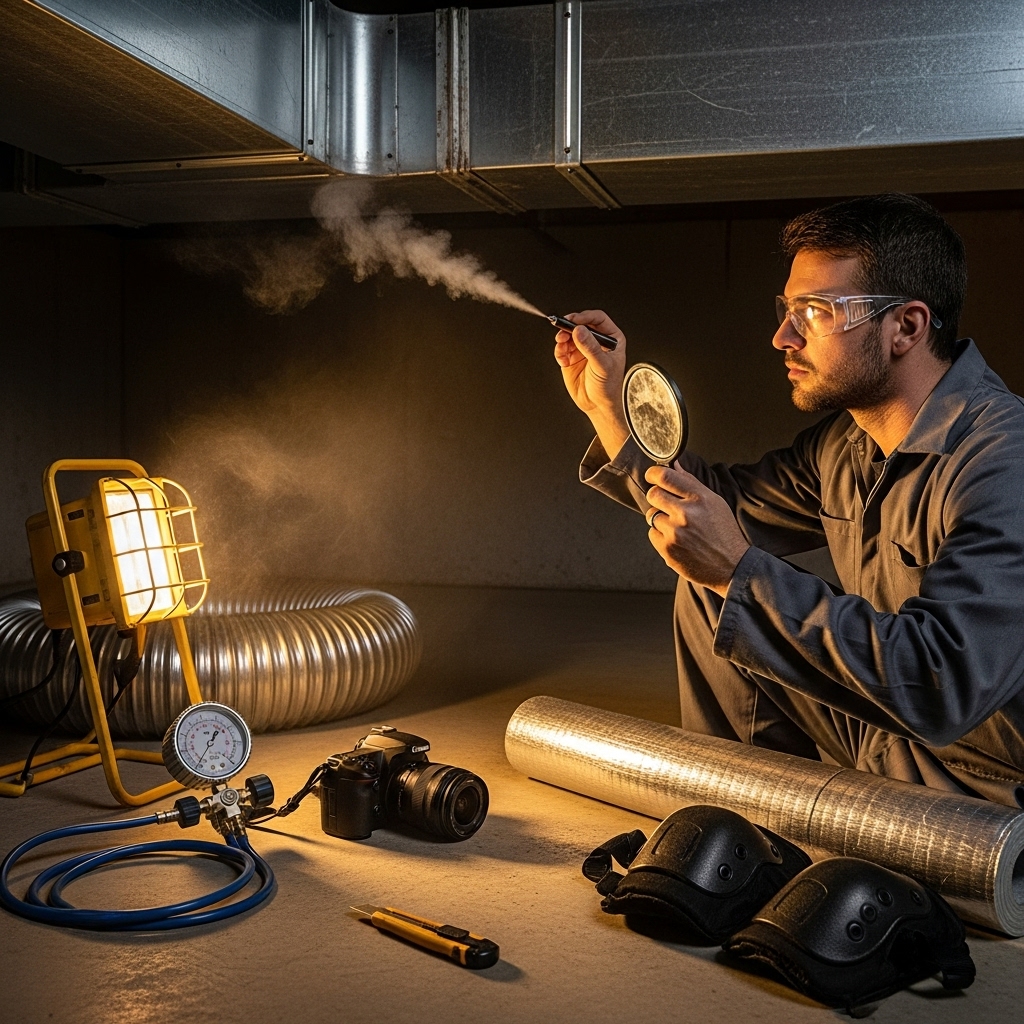
To move beyond guesswork, professionals use diagnostic tools. These may include static pressure measurements to see how hard the blower is working, temperature rise or drop across the equipment to gauge heat transfer, and airflow checks at registers to identify starved or over-supplied rooms. A smoke pencil can reveal hidden leaks at seams and joints, while mirrors and cameras help examine tight areas safely.
This data-driven approach is the backbone of an effective repair plan. It verifies whether issues stem from leakage, restrictions, undersized runs, or damaged components. With solid diagnostics, repairs target root causes rather than symptoms.
Phase 3: Planning and Scope of Work
After diagnostics, a plan outlines where sealing, reconnection, replacement, or rerouting is needed. The plan prioritizes critical leaks, structural weakness, and any safety concerns around returns and equipment. It also addresses balance among rooms so airflow is consistent and comfortable.
In Somerville homes, plans often include sealing long trunk seams, reworking flex runs with excessive bends, insulating bare metal in attics or basements, and tightening boot-to-structure gaps. When sizing issues are discovered, the plan may recommend adjustments or staged improvements.
Phase 4: Preparation and Protection
Before work begins, the team protects living areas with drop cloths and organizes tools and materials. The HVAC system is shut down and power to the air handler is turned off. Access is prepared in attics and basements, and safety gear is used for confined or elevated spaces. This phase is about controlling dust, preventing damage to finishes, and ensuring safe, efficient work.
Phase 5: Sealing, Reconnection, and Structural Repair
Sealing starts at the air handler and moves outward. Metal seams receive mastic and, where appropriate, foil tape reinforcement. Round ducts are re-seated over collar beads, secured with screws, and sealed. Flex ducts are reconnected with proper clamps, tapes, and insulation jacket repairs.
Damaged flex is replaced rather than stretched or patched if the inner liner is compromised. Supports are added or corrected to maintain duct shape, minimizing sags and pinch points. Register boots are screwed tight and sealed to the structure, preventing air from leaking into cavities.
Phase 6: Insulation and Condensation Control
Exposed metal ducts in unconditioned areas are wrapped with appropriate insulation. Seams of insulation are taped, and compression is avoided to maintain R-value. The outer jackets of flex ducts are inspected for rips and repaired. These steps are crucial in Somerville’s humid summers and cold winters, which can otherwise lead to condensation and energy loss.
Phase 7: System Balancing and Performance Checks
Once repairs are complete, the focus shifts to airflow and comfort. Balancing dampers are adjusted so each room receives adequate supply. The blower is run and noise levels are evaluated. Static pressure and temperature measurements confirm that the system operates within recommended ranges. This phase transforms sealed ducts into a system that feels better in everyday use.
If the balancing reveals a persistent restriction or a branch that cannot meet demand, the plan is revisited. Sometimes an additional repair or a small reroute of a branch line is recommended for optimal results.
For homeowners who want assurance that performance metrics match expectations, engaging a Somerville team experienced in full-scope air duct repair can add calibrated testing and detailed reporting that validates improvements.
Phase 8: Quality Assurance and Documentation
Quality checks include re-testing sealed joints with smoke, confirming all connections are tight and insulated, and verifying that boots do not leak into walls or ceilings. The team reviews photos and notes, and marks damper positions so settings can be restored after future maintenance.
Documentation is shared with the homeowner so there is a record of work performed, areas improved, and recommendations for ongoing care. This record is helpful for future service and for keeping the system tuned over time.
Phase 9: Education and Maintenance Guidance
At the end of the process, homeowners receive practical advice: how often to change filters, what noises or symptoms warrant a check, and how to visually inspect accessible runs seasonally. Simple practices like keeping returns unblocked and replacing filters on schedule protect the gains achieved during repair.
What Makes Somerville Homes Unique
Local housing spans older homes with legacy ductwork to newer builds with mixed materials. Attics and basements introduce temperature swings, and humid summers raise the stakes for proper insulation and vapor barrier integrity. A process tailored to these conditions produces more reliable outcomes than generic, one-size-fits-all quick fixes.
Signs the Process Is Needed
- Uneven heating or cooling that persists after filter changes and thermostat checks.
- Noticeable dust around registers or increased dusting needed in living spaces.
- Whistling, rattling, or popping sounds from ducts during operation.
- Rooms that smell musty or airstreams that feel weak.
- Visible gaps, crushed flex, or disconnected joints in accessible areas.
DIY vs. Professional Execution
Many homeowners can handle sealing visible seams, reconnecting a loose branch, or insulating a short metal run. However, full-system diagnostics, difficult access work, and balancing are easier and safer with trained technicians. A balanced approach—DIY on simple items, professional help for the rest—often delivers the best value and results.
FAQ
How long does a typical repair take? Timelines vary with scope and access. Simple sealing and reconnection can be completed relatively quickly, while extensive replacement and balancing may require more than one visit.
Do repairs change how my equipment runs? Yes. Tight ducts improve airflow and can reduce strain on the blower. Post-repair testing confirms that equipment operates within recommended parameters.
Is mastic messy or hard to use? Water-based mastic is straightforward with a disposable brush. Lay drop cloths and wear gloves, and clean up is easy before it dries.
What if I find mold or heavy debris? Stop and consult a qualified professional who can address contamination safely and advise on filtration and moisture control.
Can balancing fix hot and cold spots? Balancing helps once leaks and restrictions are corrected. In some cases, resizing or rerouting a branch is also recommended.
How often should I revisit the ductwork after repair? Perform a quick seasonal look and an annual check. Rebalance if household needs or room usage changes significantly.
Ready to enjoy consistent comfort and a system that runs smoothly in every season? Schedule expert air duct repair and turn a leaky, noisy duct system into a quiet, efficient foundation for healthier indoor air.
