
Introduction: Why Air Duct Leak Repair Matters in Somerville, New Jersey
Across Somerville, New Jersey, homeowners rely on forced-air systems to stay comfortable through damp springs, steamy summers, and chilly winters. When air ducts leak, that comfort slips away. Warm or cool air escapes into attics, basements, crawlspaces, and wall cavities instead of arriving at your rooms, while dust and unconditioned air can infiltrate the system and circulate indoors. A focused approach to leak detection and repair restores efficiency, indoor air quality, and even room-to-room balance. If you are just beginning your research or noticing uneven temperatures, a trusted local option for air duct repair services can help you understand what is happening inside your ductwork and the best path to a lasting fix.
This guide explains how duct leaks develop, the most reliable repair techniques, what to expect during a professional visit, and how to prevent new leaks from forming. While every home is different, the principles described here will help you evaluate symptoms, plan a priority list, and take confident action.
How Duct Leaks Start and Why They Persist
Air ducts face years of vibration from blower motors, pressure cycles as the system turns on and off, and temperature swings as seasons change. In older Somerville homes, ducts may include a mix of sheet metal, flex duct, and duct board installed at different times. Common failure points include seams that were never sealed properly, joints that loosened with vibration, take-offs that shifted, disconnected returns in basements, and punctures in flexible runs from storage activity or pests. Even small gaps around boots and registers can undermine comfort because they are located at the very end of the distribution path.
Once a leak starts, it tends to spread. Escaping air can carry fine dust that erodes tape adhesives. In humid weather, condensation near a cool supply line can stress materials. In cold weather, contraction makes marginal joints pull farther apart. The longer leaks remain, the more unfiltered air can be drawn into returns, building a film of debris inside ducts and on components like coils and blower wheels.
Symptoms of Leaky Ducts in Somerville Homes
- One or two rooms feel persistently warmer or cooler than others.
- Registers deliver weak airflow even after a filter change.
- Excessive dust reappears soon after cleaning.
- HVAC equipment seems to cycle frequently without bringing rooms to setpoint.
- Basements, attics, or crawlspaces feel unusually drafty near visible duct runs.
Because these symptoms can overlap with insulation issues, equipment sizing, or thermostat placement, it is helpful to confirm the presence and location of duct leaks before committing to repairs.
Diagnosing Duct Leaks: What Professionals Check
A thorough inspection starts with accessible areas: plenums, trunks, elbows, and connections at air handler cabinets. Technicians visually inspect for disconnected joints, deteriorated tape, sagging flex duct, crushed sections, and poorly fastened boots. They may conduct a pressure test on the duct system, using a calibrated fan to quantify leakage to the outside. Smoke pencils or aerosol fog help trace escaping air so the crew knows exactly where to focus repairs.
In homes with finished ceilings or limited access, pros also evaluate indirect indicators, such as temperature differentials at supply registers, pressure imbalances between rooms, and thermal patterns on nearby surfaces. In many Somerville residences, just a few strategic repairs to trunks and key branches can restore performance without invasive work.
Effective Fixes for Common Leak Points
The best repair approach depends on duct material and location. Here are methods that consistently provide durable results when applied correctly:
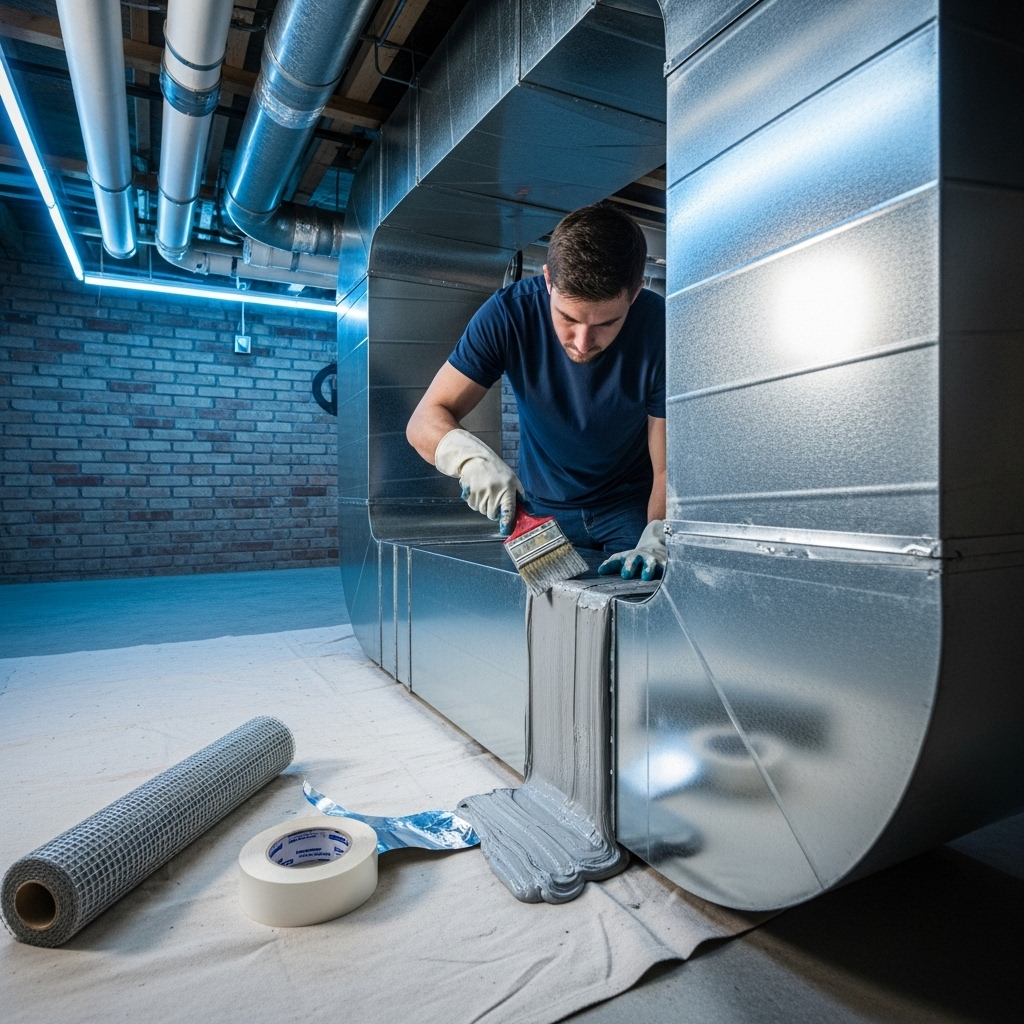
- Sealing metal seams with mastic: Water-based mastic applied with a brush or trowel forms an elastic air seal over gaps and screw penetrations. It remains flexible through temperature swings.
- Reinforcing with mesh: For larger gaps, embedded fiberglass mesh provides backing for mastic so it bridges and binds securely.
- Replacing failed tape: Standard cloth duct tape dries out and fails. Professionals use UL-listed foil tape or mastic tape, applied to clean surfaces and pressed firmly to eliminate channels.
- Repairing or replacing damaged flex duct: Punctured or crushed flex runs are often better replaced than patched. When replacing, pros ensure proper tension and gentle bends to protect airflow.
- Securing boots and registers: Screws and mastic around boots prevent leakage at the wall or floor opening where it is most tempting for air to escape.
- Sealing around air handler cabinets: Gaps where the cabinet meets the plenum or return box can leak significantly and require careful sealing.
When returns are located in basements or utility spaces, sealing is especially important. Any gaps can pull in unconditioned, dusty air, which ends up distributed throughout the home.
Somerville Climate Considerations
Local weather patterns drive unique challenges. In the summer, high humidity means unsealed supply ducts can develop condensation, which risks moisture damage and microbial growth. In winter, very dry air can accentuate small gaps as materials contract. Pollen seasons add another variable: leakage on the return side can draw allergens into the system, undermining indoor air quality. Addressing leaks supports filtration performance and helps maintain consistent comfort through the region’s seasonal swings.
What to Expect During a Professional Visit
The visit begins with questions about hot or cold spots, filter change routines, and any recent renovations. The technician then surveys accessible ducts, documents problem areas, and explains a repair plan. Work areas are protected with drop cloths. Dust and debris are collected as sealing progresses. After repairs, airflow at key registers is rechecked. If additional issues like sagging insulation or crushed runs are discovered, the technician will outline next steps so you can prioritize.
In many homes, targeted sealing of trunks and major branches can be completed in a single visit, while extensive replacements or concealed runs may take additional time. For houses with complex duct networks, teams sometimes phase the work to minimize disruption.
Mid-Project Verification and Long-Term Reliability
Reliable repair includes mid-project checks. After sealing initial leaks, professionals reassess pressure and airflow to verify improvements and reveal secondary gaps that only become obvious once the big leaks are closed. This step ensures that the final result supports balanced delivery across multiple rooms.
If parts of the duct system are nearing the end of their service life, a technician may suggest planned replacements for sections that are too brittle, crushed, or poorly routed. Integrating these upgrades with sealing can provide a long-lasting foundation for comfort. If you are comparing options for getting this work done, partnering with a team specializing in air duct repair helps ensure materials and methods are matched to your home’s layout and needs.
Maintenance Habits That Protect Your Repairs
- Change filters on schedule to keep return pressures in a healthy range.
- Keep storage items away from visible flex duct to prevent crushing and punctures.
- Have insulation resecured if it loosens around supply trunks and branches.
- Check accessible joints near the air handler each season for new gaps or vibration-related loosening.
- Keep supply and return registers open unless a professional recommends specific balancing adjustments.
These steps guard against recurrence and make subsequent inspections more straightforward.
Frequently Asked Questions
Q: How do I know if duct leaks are the real issue and not the equipment itself? A: A quick visual inspection may reveal obvious problems, but objective pressure or airflow tests are the most reliable. A technician can compare baseline measurements and show you where air is escaping or being pulled in.
Q: Can I fix duct leaks myself? A: You can apply mastic or UL-listed foil tape to small, accessible gaps on metal ducts. However, hidden leaks, return-side problems, and flex duct damage are best addressed by trained professionals with the right tools and materials for lasting results.
Q: Will sealing leaks change the way rooms feel? A: Yes. With leaks closed, more conditioned air arrives at the rooms that need it, often improving temperature consistency and reducing drafts near doors and hallways.
Q: What materials should never be used? A: Avoid cloth duct tape and non-UL-listed adhesives. These dry out, lose adhesion, and can become messy, requiring more extensive cleanup during professional repairs.
Q: How does sealing affect indoor air quality? A: Proper sealing reduces unfiltered air drawn from basements, attics, or wall cavities, helping your filter perform as intended and limiting dust and pollen distribution.
Q: Do I need to open walls or ceilings? A: Most repairs occur at accessible trunks, plenums, and runs near the air handler or in basements and attics. Only in rare cases are concealed sections opened, and that is typically discussed and planned in advance.
Q: How often should ductwork be inspected? A: An annual visual check around accessible joints and a more detailed review every few years—especially after renovations or equipment upgrades—helps catch issues early.
Smart Upgrades That Complement Leak Repair
While sealing addresses the pathways for lost air, certain supportive upgrades can enhance overall performance. Adding or re-securing insulation on supply trunks maintains temperature as air travels. Correcting restrictive transitions or replacing crushed flex with smooth, appropriately sized runs supports steady airflow. In homes with room additions, rebalancing the network ensures each space receives its fair share of conditioned air. These measures, paired with leak repair, create a system that runs more smoothly and predictably year-round.
Local Considerations for Somerville Homes
Somerville’s housing stock includes historic homes with retrofitted duct systems as well as newer constructions designed with modern HVAC layouts. In older properties, main trunks may be routed through tight spaces with improvised connections. Repairs in these homes focus on making the best of the existing layout while improving sealing and support. In newer homes, the emphasis is often on perfecting connections at boots and plenums and ensuring flex duct is properly tensioned and supported. In both cases, the goal is a well-sealed, well-supported air pathway from equipment to room.
Next Steps
If you suspect leaks, start by noting rooms with poor airflow and any visible joints or boots that look suspect. Gather these observations and schedule a visit with a qualified provider who can pressure-test, pinpoint issues, and implement a targeted plan. Whether your ducts are metal, flex, or a combination, proven repair techniques can deliver tangible improvements quickly.
Ready for Reliable Comfort?
When you want dependable airflow, cleaner indoor air, and an HVAC system that performs the way it should, turn to a local specialist who focuses on detailed sealing and durable repairs. To take the first step, reach out and schedule your air duct repair with a team that understands Somerville homes and the challenges of our climate. A careful inspection and methodical repair plan can transform your day-to-day comfort and set your system up for steady performance in every season.
