
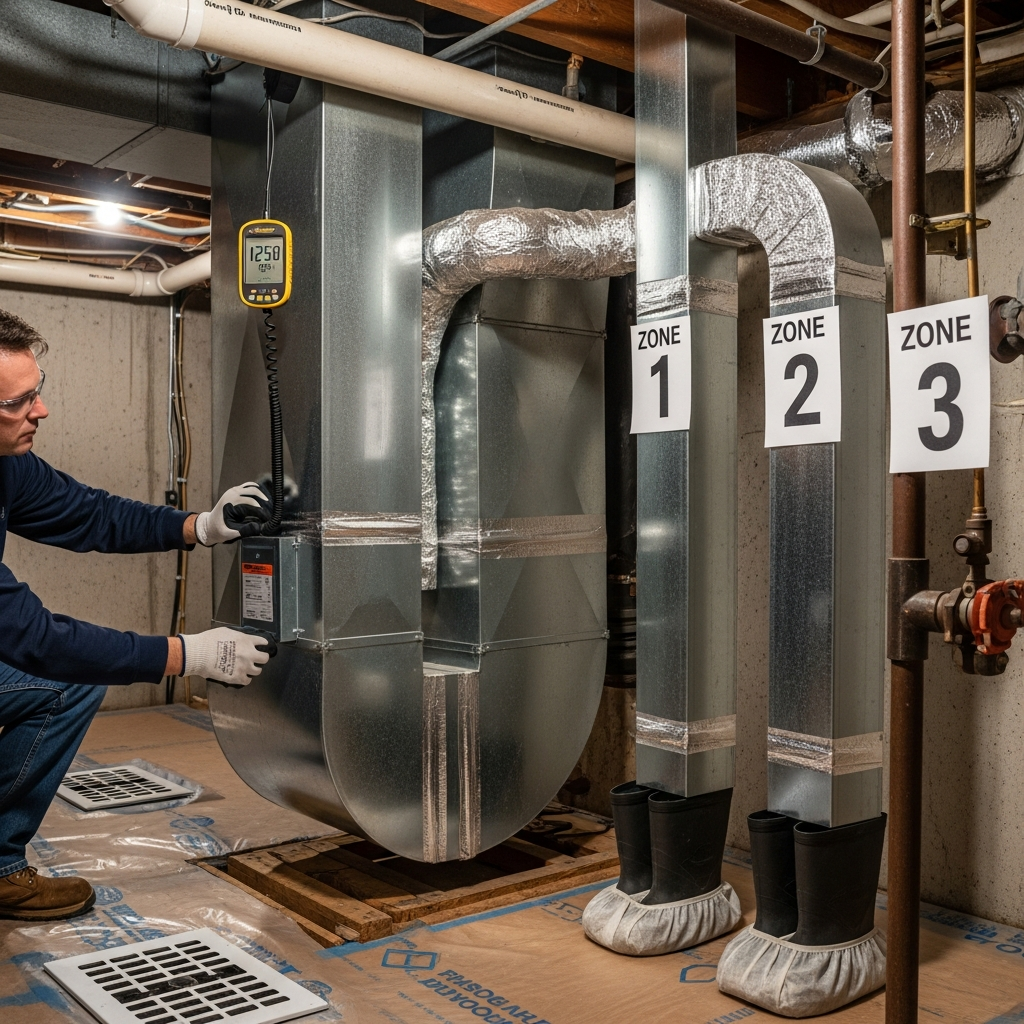
Overview: Why a Detailed Checklist Matters
An organized checklist transforms air duct installation from a complex undertaking into a predictable, high-quality project. For Somerville, New Jersey homeowners facing hot, humid summers and crisp winters, a well-executed duct system is essential for year-round comfort, quiet operation, and healthy indoor air. This comprehensive checklist walks you through every phase—planning, rough-in, sealing and insulation, commissioning, and maintenance—so you can verify that no critical step is missed. For additional local guidance, many homeowners consult professionals focused on air duct installation to align plans with New Jersey codes and neighborhood housing styles.
Use this as your companion during walk-throughs, installer meetings, and inspections. Checking off each item gives you confidence that your new ducts will perform as designed and remain serviceable for years to come.
Pre-Planning and Assessment Checklist
- Define comfort goals: resolve hot/cold spots, reduce noise, improve air quality, or support an addition.
- Document room sizes, ceiling heights, and sun exposure.
- Confirm insulation levels in attic, walls, and basement.
- Note window types and conditions, as they affect room loads.
- Identify space constraints and potential chases for vertical runs.
- Record current equipment location and service clearances.
Load Calculations and Airflow Targets
- Complete a Manual J or equivalent heat gain/loss calculation for each room.
- Establish target CFM per room and total system airflow.
- Plan for return air balancing across levels to avoid pressure issues.
- Consider zoning for multi-level or addition-heavy layouts.
Duct Design and Layout
- Choose trunk-and-branch, radial, or hybrid layout based on home geometry.
- Place supply registers to sweep conditioned air across rooms.
- Size and position returns generously; avoid prohibited locations.
- Limit flex duct to short, straight runs with proper support.
- Specify long-radius elbows and smooth transitions to reduce turbulence.
- Plan damper locations for balancing and long-term serviceability.
Materials, Insulation, and Hardware
- Use galvanized sheet metal for main trunks and major branches.
- Select UL-listed foil tape and mastic for sealing—all other tapes are not acceptable.
- Confirm insulation R-values based on duct location (attic, basement, garage, or conditioned chases).
- Verify vapor barrier orientation to control condensation.
- Choose corrosion-resistant hangers and fasteners where moisture is possible.
Permitting and Coordination
- Obtain mechanical permits per New Jersey Uniform Construction Code.
- Schedule rough-in and final inspections with clear documentation.
- Coordinate with framers, electricians, and plumbers to prevent conflicts.
- Plan for protective coverings and dust control in occupied spaces.
Site Preparation
- Protect floors, stairs, and furnishings along work paths.
- Stage materials to reduce handling and speed installation.
- Mark cutouts for registers, returns, and trunk routes.
- Establish safe ladder and attic access with adequate lighting.
Rough-In and Assembly
- Set main trunks first, followed by branches to priority rooms.
- Install long-radius fittings and avoid abrupt direction changes.
- Support ducts at manufacturer-specified intervals; prevent sagging.
- Keep flex ducts taut, short, and minimally bent if used.
- Install turning vanes in larger elbows where appropriate.
Sealing Checklist
- Seal all seams, joints, collars, and boots with mastic or UL-listed foil tape.
- Seal supply and return boots to surrounding surfaces to prevent leakage into cavities.
- Verify airtight return pathways—no drawing from wall cavities or attics.
- Label damper locations for commissioning and future service.
Insulation and Condensation Control
- Wrap ducts in unconditioned spaces to required R-value.
- Seal insulation seams and confirm correct vapor barrier orientation.
- Pay extra attention to supplies near the air handler and long attic runs.
- Inspect for gaps, tears, or compression that reduce insulation performance.
Registers, Grilles, and Finishes
- Install registers for optimal throw; avoid conflicts with furniture or drapes.
- Size return grilles to keep velocity and noise low.
- Fasten grilles securely; confirm that filter access is unobstructed.
- Repair and finish any access openings neatly, coordinating with renovation work.
Commissioning and Verification
- Measure total external static pressure at the air handler.
- Record room-by-room airflow and compare to targets.
- Adjust dampers and register vanes to fine-tune balance.
- Perform leakage testing if specified, or verify sealing effectiveness.
- Confirm quiet operation and absence of whistling or rumble.
Documentation and Handover
- Provide as-built duct layout and damper locations.
- Deliver load calculation results and final CFM readings.
- Offer maintenance guidance: filter schedule, seasonal checks, and signs of imbalance.
- Retain inspection approvals for your records.
Somerville-Specific Tips
- Historic homes may need creative routing through closets or soffits to preserve character.
- Attic ducts should feature robust insulation and airtight sealing to counter summer heat.
- Multi-level homes benefit from returns on each floor to limit stratification.
- Consider zoning for additions built over garages or sun-exposed rooms.
Mid-Project Review Items
- Walk the site to verify register placements before closing walls or ceilings.
- Confirm damper accessibility and label each for later tuning.
- Photograph concealed runs for documentation and future service.
- Discuss any field changes with your installer and update drawings.
Maintenance and Longevity
- Replace filters as recommended to maintain airflow and protect equipment.
- Keep returns unobstructed by furniture or drapes.
- Request rebalancing after major home changes that alter loads.
- Schedule periodic checkups to verify static pressure and airflow remain in range.
Frequently Asked Questions
Q: How does this checklist help me verify quality?
A: It aligns your project with best practices and code expectations, offering clear milestones you can confirm with your installer and inspector.
Q: Do I need all items for every home?
A: Some items vary by layout or scope, but the core steps—load calculations, sealing, insulation, and commissioning—apply to nearly all projects.
Q: What if I have limited space for ducts?
A: Designers can use compact round ducts, strategic soffits, and short, well-supported flex runs to fit high-performing pathways into tight areas.
Q: Will following this checklist reduce noise?
A: Yes. Correct sizing, smooth fittings, and balanced airflow limit rumble and whistling while supporting even temperatures.
Q: Is leakage testing required?
A: Requirements vary. Even when not mandatory, testing confirms sealing quality and identifies opportunities for improvement.
Q: How often should I revisit airflow balance?
A: After significant changes—like an addition, window replacements, or insulation upgrades—recheck and adjust to keep comfort consistent.
Q: Can I reuse parts of my current duct system?
A: Potentially, if existing sections are properly sized, in good condition, and integrate well with the new design.
Q: What documentation should I receive?
A: As-built drawings, damper locations, load calculations, final CFM readings, and inspection approvals form a complete package for your records.
Put This Checklist to Work
With a structured plan and clear verification points, you can approach your project methodically and avoid common pitfalls. If you would like local expertise to review your plan, confirm code details, or execute the scope end-to-end, connect with trusted Somerville professionals offering air duct installation services and move forward with a system that delivers comfort, quiet, and reliability in every season.
