Understanding dryer vent cleaning cost in Somerville, New Jersey starts with recognizing what drives the scope of work. While homeowners often focus on the number at the end of an estimate, the smarter approach is to examine the factors that influence that figure: vent length and complexity, accessibility, the condition of materials, how long it has been since the last service, and whether any corrections are recommended to improve safety and performance. By knowing what goes into the job, you can make an informed decision that balances value, safety, and long-term performance. In the introduction phase of your research, it helps to talk to a local specialist and schedule trusted dryer vent cleaning so you have a professional assessment tailored to your home’s layout.
Why “cost” depends on the vent you actually have
No two vents in Somerville are exactly alike. Some travel just a few feet straight to an exterior wall, while others wind through basements, crawl spaces, or attics with multiple elbows before exiting at a soffit or roof cap. Longer runs and sharper turns collect more lint and require more time and tools to clean thoroughly. Multi-story buildings or laundry rooms located in interior spaces can also increase complexity. A careful evaluation helps a technician determine the best cleaning method and how to access the termination safely, both of which influence the overall project scope.
Condition of the system and materials
The condition of your transition connector and main ducting affects both efficiency and how involved the service will be. Smooth interior metal ducting is recommended because it resists crushing and collects less lint, while thin foil or plastic materials are more prone to kinks and buildup. If the technician finds crushed sections, loose joints, noncompliant screws that protrude into the airstream, or a termination hood that sticks closed, they will recommend corrections. Addressing these issues supports better airflow and safety and can reduce future maintenance needs.
Frequency of cleaning and household habits
Households that launder frequently, dry bulky loads, or share their home with pets usually need more frequent maintenance. The longer you wait between appointments, the more lint accumulates, which can make the first cleaning more involved. After an initial service, a professional will suggest an interval based on your usage and layout. Maintaining that routine helps keep the scope of each visit predictable.
Accessibility and building type
Somerville’s mixture of historic properties, garden-style apartments, and newer townhomes creates a wide range of dryer vent configurations. When a vent runs through a tight chase, above finished ceilings, or terminates on a rooftop, safe access planning becomes essential. Technicians may need specialty rods, ladders, and protective containment to ensure debris does not enter living spaces. Easier access generally leads to a more straightforward appointment.
What a thorough professional cleaning includes
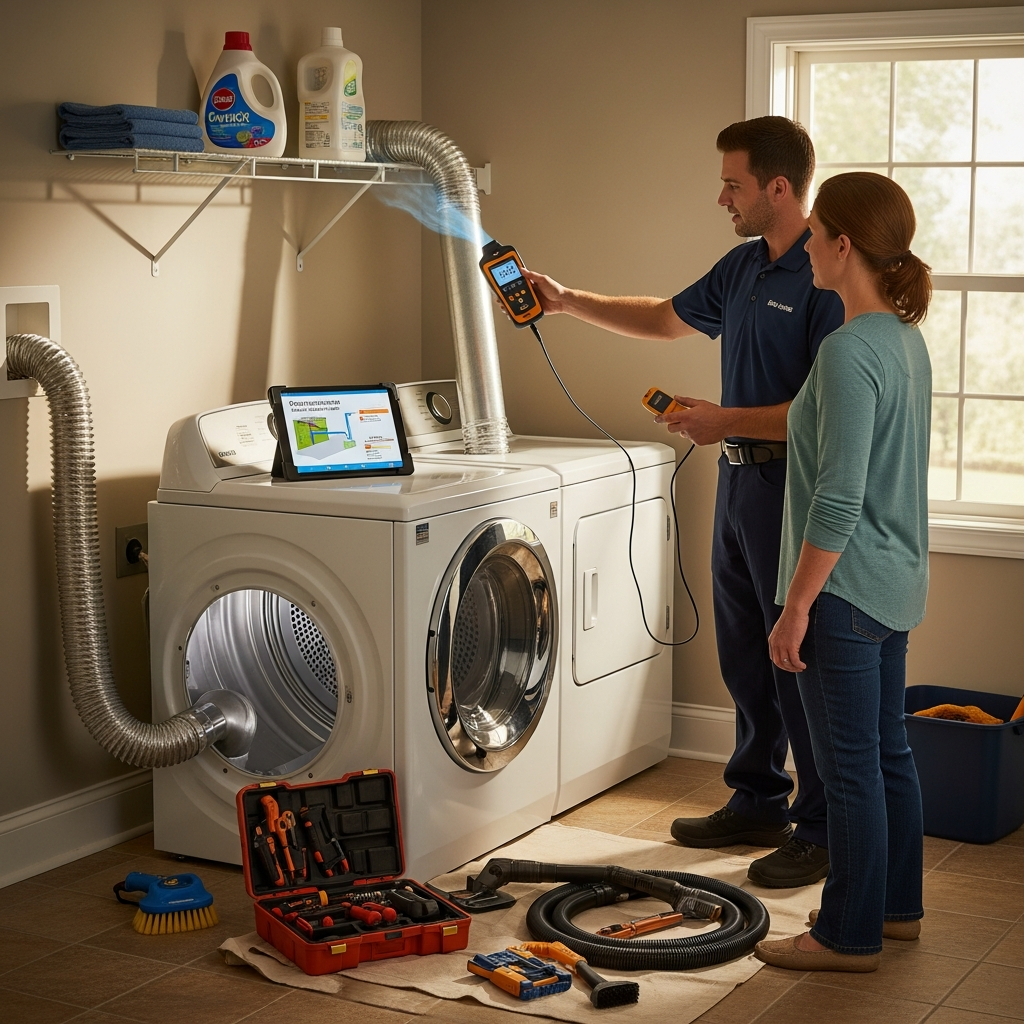
- Assessment and baseline airflow reading at the termination.
- Careful movement of the dryer and evaluation of the transition connector.
- Mechanical agitation using rotary brushes or air whips to dislodge compacted lint along the entire duct.
- High-powered vacuum extraction with filtration to protect indoor air quality.
- Exterior termination service to free stuck flaps and remove obstructions.
- Reassembly with code-aligned materials and gentle routing behind the dryer.
- Final airflow verification and a summary of findings with maintenance tips.
Why focusing on value beats chasing the lowest line item
Value in dryer vent cleaning comes from thoroughness, safety, and measurable results. A detailed process, modern equipment, and experienced technicians typically deliver better airflow improvements and fewer callbacks. Providers who document before-and-after readings and educate you on proper materials help you maintain those gains over time. When comparing proposals, look for transparency about steps taken and any recommended corrections to bring your system in line with best practices.
Common factors that change the scope
- Vent length and number of elbows or offsets.
- Location of the termination (sidewall, soffit, or roof) and ease of access.
- Presence of bird or rodent nesting at the exterior hood.
- Condition and material of the transition hose behind the dryer.
- Evidence of prior improper repairs, kinks, or screws inside the duct.
- Time since the last comprehensive cleaning.
Energy efficiency and appliance longevity
Healthy airflow does more than shorten drying cycles. It reduces heat strain on components, which can help extend the life of your dryer, and it lowers the chance of nuisance shutdowns triggered by overheating protection. Over the long term, an efficient system supports smoother laundry days and fewer surprises. The best way to capture that value is to pair routine service with daily good habits like cleaning the lint screen and avoiding overloading the drum.
Insights specific to Somerville neighborhoods
Older homes often have creative vent paths adapted to existing framing. These may include multiple elbows or tight spaces behind masonry, which can slow down cleaning if access is limited. Newer developments may route vents through soffits or roofs; these locations require careful exterior work and confirmation that termination components open freely. In multi-unit buildings, coordination with property management and neighbors may be needed to ensure safe access and proper scheduling.
How to prepare for a more efficient appointment
- Clear the space around the dryer and along the technician’s path.
- Note symptoms such as long dry times, hot clothes, or musty odors.
- Share any history of recent renovations that might have altered the duct route.
- Point out the exterior vent location if you know it, or ask the technician to help identify it.
Questions to ask when comparing providers
- What steps are included in your cleaning process from start to finish?
- Do you measure airflow before and after the job and review results with me?
- What materials do you recommend for the transition and main duct?
- How do you protect indoor air quality during cleaning?
- Are you experienced with my specific building type and vent configuration?
Midpoint guidance during your research
As you evaluate options, prioritize process quality and proof of performance. Providers who share a clear plan, demonstrate protective measures, and verify improvement typically deliver the best long-term value. During this stage, you can also arrange local dryer vent cleaning services to obtain a professional set of eyes on your system, which makes any decision easier and more confident.
Frequently Asked Questions
Q: How often should my vent be cleaned to keep the project scope manageable? A: Many households benefit from annual service, though heavy use, long runs, or multiple elbows may warrant more frequent visits. A professional can suggest an interval after evaluating your setup.
Q: What if my exterior hood has a screen? A: Screens can trap lint quickly and restrict airflow. Best practice is to use a hood with a damper flap and no screen. A technician can recommend a safe, effective termination.
Q: Does cleaning really change performance that much? A: Yes. Improved airflow typically shortens cycles, reduces heat, and lowers strain on components. The difference is often immediately noticeable.
Q: Can I clean it myself and still achieve similar results? A: DIY tools help with short, simple runs, but complex ducts, roof terminations, and compacted lint usually require professional equipment and techniques to achieve complete, verifiable results.
Q: Will any corrections be discussed with me? A: A reputable provider will explain findings, suggest improvements, and review maintenance tips so you understand how to preserve performance going forward.
Q: What about multi-unit properties? A: Coordinated scheduling and clear access are important. Routine service across units helps maintain safe, consistent performance for everyone involved.
Take the next step with confidence
Choose an experienced Somerville team that focuses on safety, measurable airflow gains, and clear communication from start to finish. When you are ready to move forward and make laundry day smoother, schedule professional dryer vent cleaning with a trusted local specialist who can evaluate your system, explain your options, and help you maintain stronger performance over time.
