When you search for top-rated dryer vent installation in Somerville, New Jersey, you are doing more than planning a home improvement; you are making a smart decision for safety, efficiency, and everyday convenience. A properly installed vent clears moist, lint-filled air from your dryer, prevents heat buildup, shortens cycle times, and helps reduce the risk of dangerous lint accumulation. If your goal is to combine local expertise with code-compliant results, choosing professional dryer vent installation is one of the most impactful steps you can take for your home and family.
Why Dryer Vent Installation Quality Matters
A dryer moves warm, humid air through ductwork that must be smooth, appropriately sized, and correctly terminated outdoors. When the vent path is too long, has too many sharp turns, or is made from the wrong materials, airflow drops and lint accumulates. Over time, that buildup can cause overheating, extended drying times, and potential hazards. High-quality installation minimizes resistance, reduces snags where lint can gather, and ensures your machine performs at its best.
In Somerville, seasonal humidity, winter chill, and spring rains can make drying heavier fabrics especially challenging. A well-designed vent path helps counter those local conditions by keeping air moving swiftly outside, not into crawlspaces or attics. The result is clothes that dry more evenly, fewer repeat cycles, and less wear on your appliance.
Common Signs You Need a New Vent or a Reconfiguration
- Drying cycles take longer than they used to, even after cleaning the lint screen.
- The laundry area feels warmer or more humid while the dryer runs.
- A burning or musty odor appears during operation.
- Laundry emerges hot to the touch but not dry.
- You see crushed, kinked, or loose duct sections behind the dryer.
- The exterior vent hood flap sticks, clogs, or never opens fully.
Any of these symptoms may indicate improper duct material, poorly sealed joints, an excessive run length, or a termination hood that restricts airflow. A top-rated installer will diagnose the root cause, recommend a safer configuration, and implement changes in line with manufacturer and code guidance.
Materials That Professionals Prefer
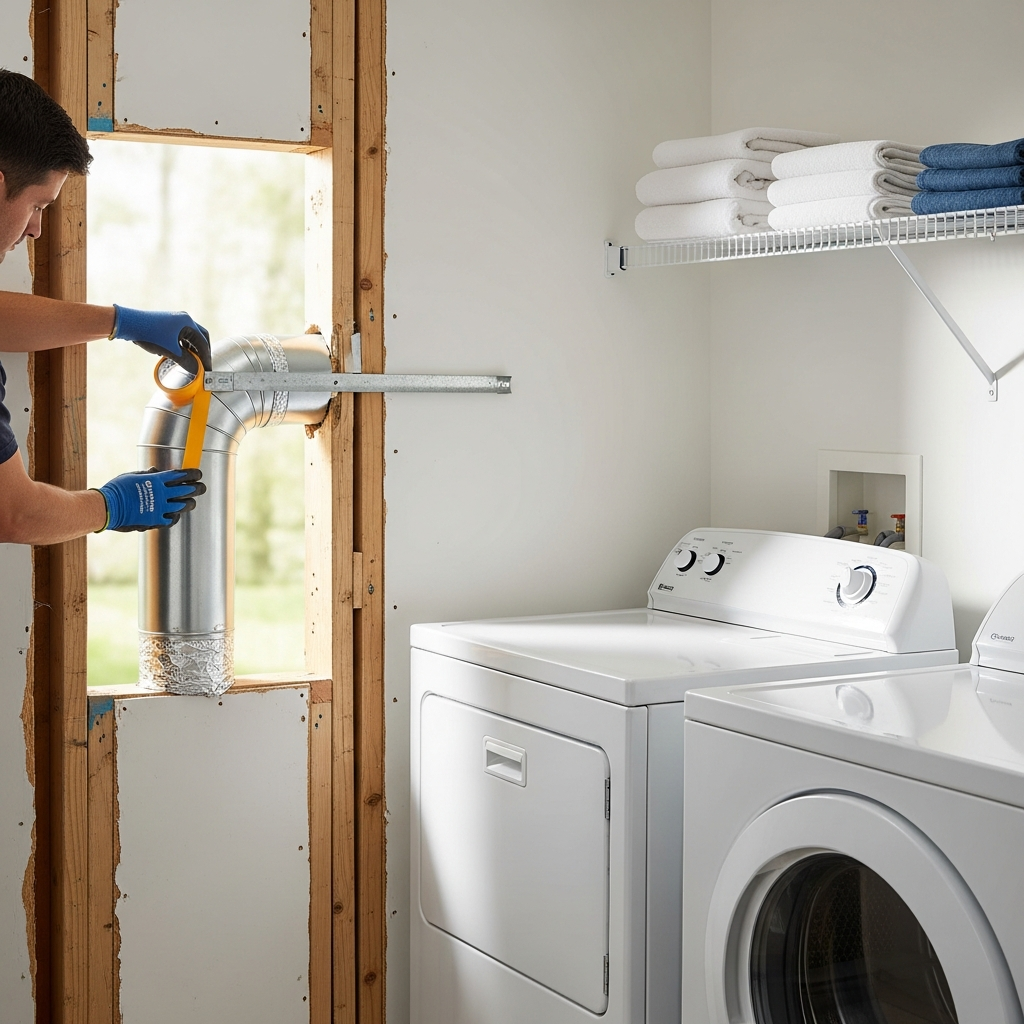
Experienced installers choose rigid or semi-rigid metal for the vent run because these materials are smooth inside, resist crushing, and shed lint more effectively than flexible foil. Metal elbows designed for dryer vents allow gradual turns that keep air moving. At joints, foil-backed HVAC tape (not cloth duct tape) creates airtight seals that withstand heat and moisture. A proper exterior termination hood includes a damper that opens when the dryer runs and closes when it stops to block pests, rain, and cold drafts.
What to Expect From a Top-Rated Somerville Installer
- Assessment: They review the dryer’s location, the most direct route outside, the number of turns required, and the termination point that best resists weather exposure.
- Design: They calculate an efficient path with minimal elbows and confirm that the duct diameter meets the appliance’s specifications.
- Material Selection: They choose durable, code-appropriate components and avoid materials that trap lint or restrict flow.
- Execution: They cut clean openings, support ductwork at proper intervals, seal connections, and verify smooth transitions.
- Testing: They run your dryer to confirm strong exhaust flow and proper damper operation at the wall or roof cap.
- Education: They explain lint screen maintenance, safe transition duct choices, and how to monitor for future issues.
Local Considerations for Somerville Homes
Older homes in Somerville may have tight laundry rooms or basements with shared utility space. Newer builds might route dryers through finished walls or ceilings. Each scenario calls for a tailored plan. For example, a first-floor laundry with a short, direct path through an exterior wall can deliver excellent airflow. A second-floor laundry might require careful routing through joists and fire-blocks, using the fewest possible elbows and maintaining proper clearances.
Weather also matters. In colder months, exterior dampers can freeze or stick if low-quality hoods were used or if lint gathers at the outlet. Top-rated installers choose hoods that open freely, mount with slope away from the wall for drainage, and are positioned to avoid snow drifts or splashback. In humid summers, correct slope and smooth interior walls reduce condensation risk inside the duct.
How Pros Reduce Risk and Improve Performance
- They keep the run as short and straight as possible to lower static pressure and maintain high airflow.
- They use long-radius elbows where turns are unavoidable to minimize resistance.
- They support ducts to prevent sagging, which can trap lint and moisture.
- They ensure airtight, screw-free joints inside the duct path to prevent snags and leaks.
- They select a termination hood sized to the duct, with a damper that opens fully during operation.
Many homes unknowingly rely on plastic transition connectors or crushed foil hoses. Replacing these with safer, sturdier options can transform dryer performance and safety. Top-rated Somerville pros know which products withstand heat, fit tight spaces, and meet modern guidelines.
Choosing the Right Installer Near You
Reputation, proven process, and clear communication are the markers of a top provider. Look for detailed explanations of how they route ducts, which materials they choose, and how they verify performance after installation. A local presence in Somerville suggests they understand neighborhood building styles and seasonal factors. You should feel confident asking questions about airflow, run length, and maintenance.
Another helpful criterion is transparency about what will happen on installation day. Leading installers outline each step, from protecting floors and walls to confirming that the dryer sits flush without kinks. They also discuss access points, expected time on site, and cleanup.
Enhanced Results Through Thoughtful Design
Sometimes, improving dryer performance requires small design changes. Elevating the dryer slightly can align the transition duct better. Rotating the dryer outlet with a short-radius elbow can eliminate a kink. Selecting a low-profile wall hood can reduce exterior restrictions. The cumulative result is better airflow, shorter cycles, and less lint accumulation inside the machine and vent.
In homes where space is limited, periscope-style connectors provide a tight, metal pathway from the dryer to the wall while preserving clearance. When combined with rigid duct runs and gentle turns, they offer a durable, low-resistance solution.
When to Combine Installation With Cleaning
If you are transitioning from an old vent path to a new one, it can be wise to request a comprehensive lint removal from the dryer cabinet and any retained portions of the vent system. Doing so gives your new installation a clean start and helps you immediately notice the benefits of improved airflow. It also reduces fire risk and supports a reliable maintenance schedule going forward.
Questions to Ask Before Work Begins
- What path will the duct follow, and how many elbows will be required?
- What type and diameter of duct will be installed, and why?
- How will joints be sealed and supported?
- Where will the vent terminate outside, and how is that point protected from weather and pests?
- How will you test performance when the work is complete?
- What should I do to maintain optimal airflow after installation?
Mid-Project Checkpoints
Professional installers welcome your participation at key moments: verifying the wall penetration location, confirming clearances around gas lines or electrical, and reviewing the chosen termination hood. These checkpoints ensure your expectations align with best practices. If something must change because of hidden framing or masonry, a top-rated pro explains alternatives and how each impacts performance. It is also an ideal time to review the importance of selecting expert dryer vent installation to protect your home and optimize your appliance.
Maintenance After a Quality Installation
Even the best system benefits from routine attention. Clean the lint screen before each load, and periodically check the exterior hood for free movement and debris. Depending on laundry volume, a professional vent cleaning schedule keeps your duct interior clear and your dryer efficient. If you notice cycle times creeping up or the laundry room feeling warmer, have airflow checked early to prevent issues.
Frequently Asked Questions
Q: How long should a typical dryer vent run be? A: The best runs are as short and straight as possible, using minimal elbows. The specific maximum allowable length depends on your dryer manufacturer’s guidance and the type and number of fittings used.
Q: What duct material is recommended? A: Rigid metal is preferred for most of the permanent run, with a short, safe transition between dryer and wall. Semi-rigid metal may be used when a gentle bend is needed in a tight space.
Q: Can a dryer vent terminate in an attic or crawlspace? A: No. Vents must discharge outdoors to remove heat and moisture and to reduce lint buildup in enclosed spaces.
Q: Why avoid screws inside duct joints? A: Fasteners that penetrate into the airstream catch lint and restrict flow. Airtight foil-backed tape and proper fittings create secure joints without internal obstructions.
Q: What about bird or insect screens? A: Screens trap lint and can quickly block airflow. Use a code-compliant damper hood instead, which opens during operation and closes afterward.
Q: How do I know the exterior damper works? A: With the dryer running, the damper should open freely and you should feel a strong, warm exhaust stream. If it sticks or hardly moves, further inspection is needed.
Q: What if my laundry is on the second floor? A: Skilled installers can design an efficient path, often through an exterior wall or carefully through framing members, using the fewest elbows and proper supports.
Q: How often should vents be checked? A: Inspect the exterior hood seasonally and schedule professional evaluations based on laundry volume, pets, and household habits.
Ready to Upgrade Your Dryer Vent in Somerville?
If you are experiencing slow dry times, frequent lint alarms, or you simply want the peace of mind that comes with a safer, more efficient system, now is an excellent time to act. Reach out to a trusted local team for expert guidance, a thorough plan, and careful workmanship from start to finish. To get started with reliable, code-conscious results, schedule professional dryer vent installation and enjoy the confidence that your home and appliance are in capable hands.
