How to Clean a Kitchen Exhaust Hood Safely in Somerville, New Jersey
Whether you run a bustling Somerville eatery or manage a small commercial kitchen in a community facility, a safe, methodical approach to exhaust hood cleaning is essential. The goal is to remove flammable grease from the hood, filters, ducts, and fan while protecting people, equipment, and property. This practical guide outlines daily, weekly, and professional-level tasks so you can build a predictable routine that keeps your operation inspection-ready. If at any point the job extends beyond safe access and basic wipe-downs, schedule professional kitchen exhaust hood cleaning to ensure full-system coverage without exposing your team to unnecessary risk.
Safety is the thread that ties every step together. It starts with planning, includes clear communication to staff on duty, and ends with documented results. By understanding what can be safely handled in-house and what should be left to trained technicians, you can protect your team while achieving a consistently clean and efficient ventilation system.
Core Safety Principles Before You Begin
- Plan the timing: Choose a window when appliances are cool, the line is quiet, and you have the space to work.
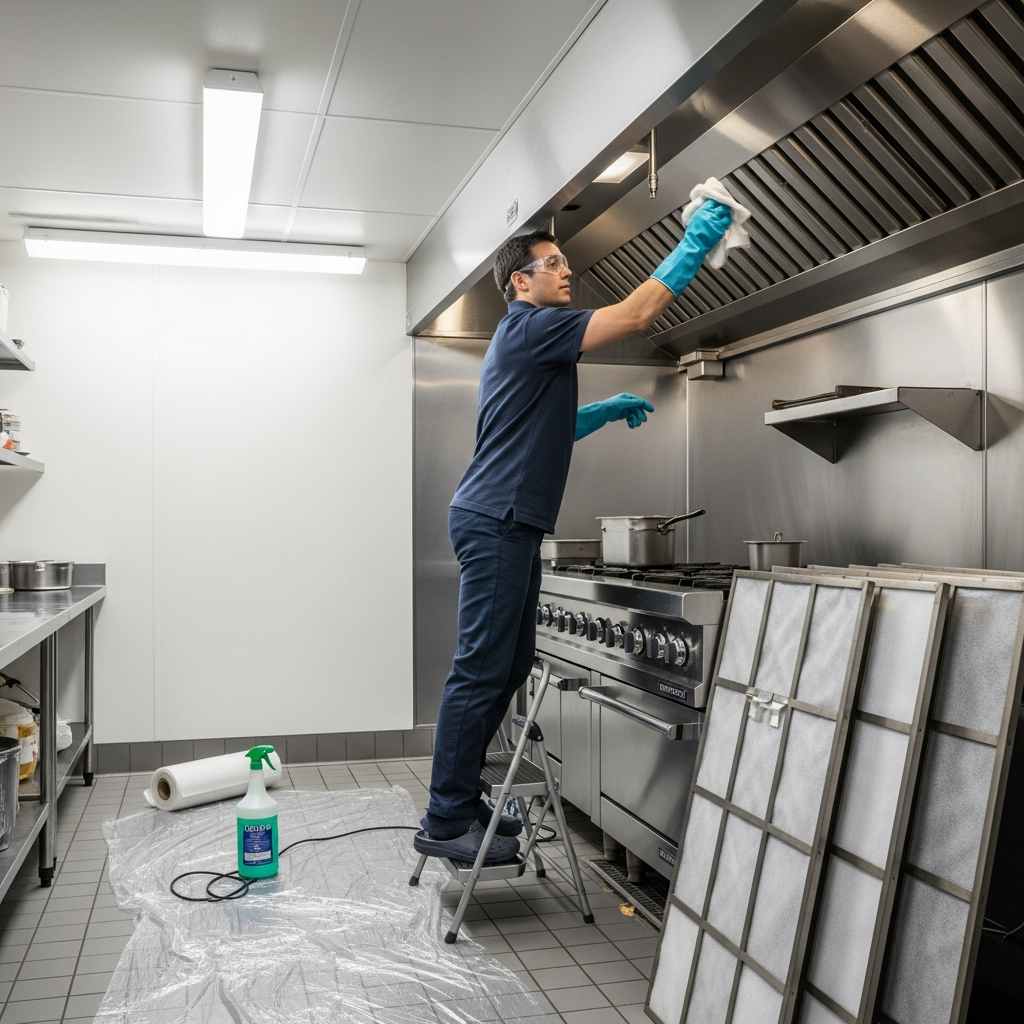
- Use proper personal protective equipment: Gloves, eye protection, non-slip footwear, and suitable clothing make a difference.
- Control power and fire suppression: Follow your facility’s lockout and reactivation procedures for fans and suppression components.
- Protect surfaces: Cover appliances and floors to prevent chemical overspray and slippery conditions.
- Manage wastewater: Use containment and disposal methods appropriate for your building and local rules.
What Can Kitchen Staff Safely Handle?
Line teams can maintain visible, accessible parts of the hood and filters as part of daily or weekly routines. These tasks improve capture, reduce odors, and extend the time between professional visits. However, work inside ducts and at the rooftop fan requires specialized tools, access equipment, and trained technicians. Setting clear boundaries creates consistency and prevents well-meaning staff from taking on risky tasks.
Daily Tasks for Consistent Cleanliness
- Wipe the hood exterior at close with a mild degreaser safe for stainless surfaces.
- Empty grease cups or troughs and check for any overflows or drips.
- Visually confirm filters are seated correctly and not noticeably caked with residue.
- Report any new rattling, wobbling sounds, or unusual fan behavior to a supervisor.
Weekly Tasks to Support Airflow
- Remove baffle filters and wash them thoroughly with hot water and an appropriate degreasing solution.
- Inspect filter frames for dents or warping that can create bypass pathways for grease-laden air.
- Check hood gutters and channels for buildup and wipe clean.
- Open a convenient access panel, if safely reachable, to spot-check the nearest duct section for abnormal accumulation.
When to Call Professionals
If you observe thick residue on duct interiors, grease on fan blades or housings, or staining on the roof, it is time for a full-system service. The same applies if the fan struggles to maintain capture, if odors creep into dining areas, or if an inspection is approaching and your in-house checks suggest high buildup. Trained technicians will set up containment, clean hoods, ducts, and fans thoroughly, and provide documentation and a visible sticker to verify completion and the next due date.
Step-by-Step Framework for a Safe Cleaning Session
- Notify staff and secure the area: Let your team know what will be cleaned and where. Place caution signage and confirm that appliances are cool.
- Lockout and suppression readiness: If your protocol requires it, de-energize the fan and ensure suppression components are protected prior to degreasing.
- Set protective covers: Use plastic to funnel wastewater and shield equipment, floors, and electrical components.
- Remove and soak filters: Use hot water and a compatible degreaser, then rinse and dry thoroughly before reinstalling.
- Clean the hood interior: Apply degreaser, allow proper dwell time, scrape thicker deposits, and rinse carefully.
- Inspect accessible ducts: If your access panel can be reached safely, look for heavy residue. Do not attempt deep cleaning without training.
- Address the fan and roof: This is typically professional work, but you can visually check from a safe vantage to report issues such as wobble or staining.
- Reassemble and test: Reinstall filters, restore power if applicable, and verify capture by running light steam or heat under the hood.
- Document results: Record the date, tasks performed, and any observations for trend tracking and inspection readiness.
Handling Degreasers and Protecting Surfaces
Not all degreasers are the same. Choose products compatible with stainless steel and suitable for foodservice environments. Follow label directions for dilution, dwell time, and rinsing. Avoid abrasive pads that can scratch surfaces and harbor future residue. Keep a dedicated set of cleaning tools for the hood area to prevent cross-contamination with food-prep items. Finally, rinse thoroughly and dry to restore a polished look that conveys professionalism during any walk-through.
Ventilation Balance and Why It Matters
Proper capture depends on both exhaust and makeup air. If your fan struggles while doors are difficult to open or close, you may have an imbalance. Cleaning reduces resistance in the ductwork, but if airflow symptoms persist after a thorough service, request a ventilation assessment. Balanced airflow reduces smoke leakage, moderates temperatures on the line, and enhances overall kitchen comfort.
Coordinating With Your Building
For restaurants and commercial kitchens in mixed-use or historic Somerville buildings, communication is essential. Inform property management before rooftop work or when extended water use is required. Protect common areas during equipment transport, and verify roof access rules. Good neighbor practices maintain strong relationships and ensure your cleaning program runs smoothly.
Mid-Cycle Verification
Halfway to your next scheduled service, take a few minutes to review filter condition and capture performance. Compare what you see with the last service report and photos. If filters look saturated or if you notice haze or odor drift during peak periods, move your next professional visit forward. It is more efficient to address buildup early than to tackle a heavy, overdue cleaning.
Common Mistakes to Avoid
- Focusing on shiny exteriors while neglecting interior surfaces that carry the greatest risk
- Using abrasive tools that scratch stainless, encouraging faster soil adhesion later
- Skipping lockout or safe suppression procedures prior to liquid cleaning steps
- Allowing wastewater to escape containment, creating slip hazards and cleanup headaches
- Reinstalling wet filters that drip into the cookline during service
Building a Year-Round Plan
Create a simple calendar that blends daily and weekly in-house routines with professional visits at the right intervals for your menu and volume. Include seasonal spikes—catering, holidays, or festivals—and note any menu shifts that increase searing or frying. Document each visit, save photos, and track recommendations such as hinge upgrades, access panel additions, or belt replacements. Over time, your plan will stabilize, and your team will react quickly to small issues before they become big ones.
Middle Checkpoint and Scheduling
In the middle of your maintenance cycle, double-check whether your service interval still fits your output. If you added a charbroiler special, changed oil types, or expanded weekend hours, your grease profile likely shifted. Adjust your calendar accordingly and, if needed, arrange prompt kitchen exhaust hood cleaning to prevent buildup from getting ahead of your team. Aligning your schedule to real-world cooking patterns is the smartest way to protect safety and maintain smooth operations.
Frequently Asked Questions
Is it safe for my team to clean inside ducts?
No. Duct interiors, turning vanes, and rooftop fans require specialized tools, trained technicians, and safe access methods. Your staff can handle exteriors and filters, but deeper work should be professionally executed.
How often should we replace baffle filters?
With proper washing, filters last a long time. Replace them if frames are bent, baffles are loose, or if damage creates bypass pathways that allow grease-laden air to slip past the filter stage.
What are signs the exhaust fan needs attention?
Listen for rattling, grinding, or changes in pitch. Look for wobble, vibration, or reduced capture at the hood edges. If you suspect a belt or motor issue, have it inspected promptly and avoid running the fan in a compromised state.
What should a professional report include?
Expect photos, notes on hood, duct, and fan condition, grease containment status on the roof, and clear next steps for repairs or upgrades. A visible sticker with dates helps your team and inspectors track compliance.
How do we keep the roof clean and safe?
Use proper grease containment, maintain hinge kits to prevent strain on wiring, and replace saturated absorbents before they overflow. Reporting roof status after storms is also wise in New Jersey’s changing seasons.
Can better cleaning improve indoor comfort?
Yes. Removing residue lowers resistance, allowing the fan to move design airflow. This often reduces heat and haze on the line and supports a more comfortable kitchen and adjoining spaces.
What if our kitchen has hard-to-reach ducts?
Technicians can install access panels to ensure complete cleaning and inspection. Without access, surfaces remain untreated, leaving fire risk and potential inspection issues.
Does menu type change my cleaning interval?
Absolutely. High-fry and charbroil operations create heavier loads than light sauté or steaming. Monitor grease thickness and adjust frequency with each significant menu or equipment change.
How do we avoid chemical residue on food-contact areas?
Use appropriate barriers during cleaning, rinse thoroughly, and allow surfaces to dry fully. Keep dedicated cleaning tools separate from food-prep tools to prevent cross-contamination.
What if odors persist after cleaning?
Check filter seating, confirm airflow balance between exhaust and makeup air, and verify that duct interiors and the fan were thoroughly cleaned. Persistent odors may indicate imbalance or a fan component issue that needs attention.
Ready to Safeguard Your Kitchen
A safer, cleaner, and more efficient kitchen starts with a plan anchored in safety and consistency. Empower your staff with clear routines, document what you do, and rely on trained professionals for deep work that demands specialized skills and equipment. When you are ready to move forward with confidence, schedule comprehensive kitchen exhaust hood cleaning and keep your Somerville operation comfortable, compliant, and prepared for any inspection.
