Restaurant Kitchen Exhaust Hood Cleaning Services in Somerville, New Jersey
Somerville’s dining scene thrives on flavorful menus, lively atmospheres, and consistent guest experiences. Behind that success is a back-of-house that runs smoothly, safely, and quietly. A clean, well-tuned exhaust hood system is central to this performance. It captures grease-laden vapors at the source, protects employees, and preserves the guest experience out front. Establishing a dependable routine for professional kitchen exhaust hood cleaning ensures your restaurant meets fire safety expectations, passes inspections with confidence, and maintains air quality that keeps cooks productive and guests comfortable.
When your ventilation is dialed in, heat and smoke are captured efficiently, make-up air is balanced, and odors do not drift into the dining room. You also reduce energy strain on fans and HVAC, prolong equipment life, and support a tidy, professional impression during any walk-through. For independent bistros, quick-service restaurants, and multi-concept groups alike, the right service partner and schedule make all the difference.
What Makes Restaurant Exhaust Systems Unique
Restaurants concentrate heavy cooking in tight spaces and peak periods, producing spikes of grease and steam. Add multiple appliances in a single bank—fryers, griddles, charbroilers—and the demand on capture and containment rises. Filters clog faster, ductwork accumulates residue at bends, and the rooftop fan must move high volumes of air without wobble or excessive vibration. Effective cleaning must address these realities with full-system attention and a report you can rely on for inspections and brand standards.
Front-of-House Benefits From Back-of-House Cleanliness
Guests often decide whether to return based on subtle cues: a faint fry smell on their coats, a smoky haze near the bar, or an uncomfortable temperature near the kitchen pass. A consistently clean exhaust system helps eliminate those distractions. By capturing vapors at the source and maintaining steady airflow, your dining room remains fresh, your servers stay comfortable, and your kitchen team can focus on speed and flavor rather than working around clouds of smoke.
Core Elements of Professional Service
- System mapping: Document hoods, duct routes, access panels, and roof components, including fan hinges and grease containment.
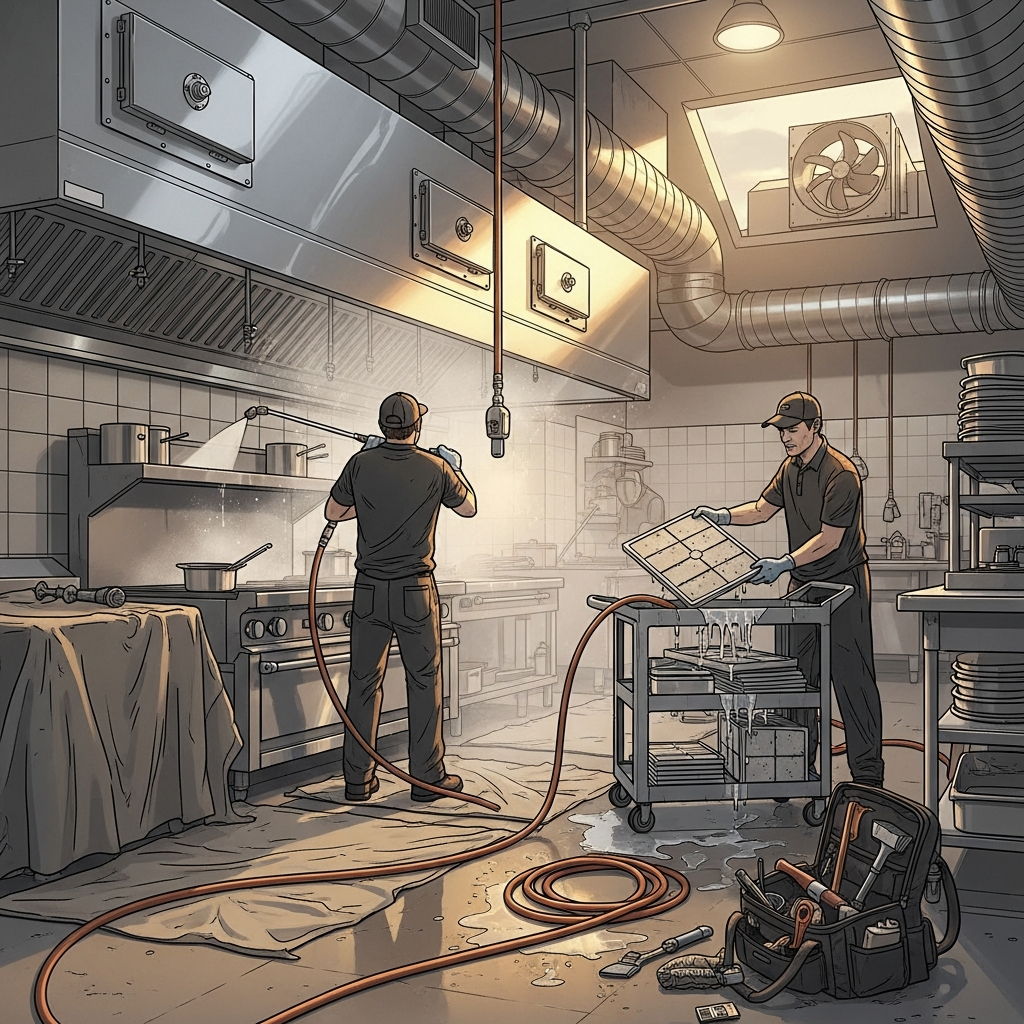
- Protection and preparation: Cover equipment, floors, and sensitive areas; set up plastic and evacuation pathways for wastewater.
- Filter and hood cleaning: Remove filters for soak and degrease the plenum, gutters, and interior surfaces thoroughly.
- Duct and fan cleaning: Scrape and wash all accessible surfaces; install access panels as required for full coverage.
- Rooftop stewardship: Clean fan blades and housings, replace saturated absorbents, and safeguard roofing materials.
- Verification and reactivation: Confirm fan performance, check suppression readiness, and polish the hood exterior.
- Documentation: Provide photos, notes, and a sticker that clearly shows service date and next due date.
Scheduling That Respects Restaurant Operations
Restaurants in Somerville often prefer late-night or early-morning slots for cleaning to avoid interrupting prep, service, or deliveries. Communicate cooling times for fryers and griddles, coordinate access to roof ladders or hatches, and confirm any noise restrictions in shared buildings. Consistency is key; a predictable cadence lowers stress for chefs and managers and keeps everyone aligned for inspections.
Matching Frequency to Menu and Volume
No two restaurants are identical. Fried chicken, burgers, wings, and charbroiled items generate heavier loads than salads and steamed dishes. Track grease accumulation with routine visual checks and adjust your cleaning interval as your menu evolves or as traffic surges seasonally. A modest increase in frequency often pays back through improved capture, fewer odors, and less strain on the fan and HVAC.
Training Staff to Support Professional Cleaning
Even top-tier service visits work best when your team handles daily care. Prioritize wiping hood exteriors, washing filters, emptying grease cups, and reporting fan noises, rattles, or vibrations. Train supervisors to perform quick, mid-cycle inspections: open an access panel, examine the first bend in the duct, and note any rapid grease buildup. Small, consistent habits protect your investment in professional cleaning and keep the kitchen inspection-ready.
Mid-Program Checkpoints
Halfway between services, confirm that filters still allow adequate airflow and that your roof grease containment is not saturated. Record a few photos for internal use to compare against your last report. This disciplined look ahead keeps you from being surprised by an unplanned inspection or an unusually smoky service. If you add a fryer or run a limited-time menu that increases searing or charring, adjust your schedule and call your vendor to focus on ducts most affected by the change. Keeping a tight link between operations and maintenance is essential to controlling risk.
Choosing a Service Partner
Seek providers who can demonstrate full-system cleaning, not just cosmetic polishing. Ask for sample reports with photos, proof of insurance, training protocols, and a plan for access panels and rooftop protection. A provider who communicates clearly and adapts to your unique footprint saves time, reduces rework, and builds trust with your culinary leadership and property management.
Quality Assurance and Reporting You Can Use
A meaningful report helps managers and inspectors quickly understand what was done, where it was done, and what needs attention next. Look for clear before-and-after photos, duct and fan notes, grease containment status, and any recommended repairs to hinges, belts, motors, or access panels. Place the service sticker where line cooks and inspectors can easily see it, and log dates and findings in your facilities calendar.
Health, Comfort, and Safety Benefits
Well-maintained systems minimize smoke exposure, reduce slippery residue around cooklines, and sustain ventilation that supports employee health. Cooler, clearer kitchens boost morale, reduce fatigue, and can enhance productivity and consistency. Your guests benefit, too, as air quality issues are less likely to intrude on the dining experience. This is a cycle of benefits that begins with a commitment to professional maintenance and accountability.
Middle Section Reminder
As you balance menu creativity with back-of-house realities, keep your maintenance plan flexible. When seasonal specials or promotions change how much you fry, grill, or sear, update your cleaning interval accordingly. If you need to make a quick adjustment, coordinate with your provider to add a targeted visit focused on the busiest ducts or on the rooftop fan. And if airflow declines or odors creep forward, use that as a trigger to schedule timely kitchen exhaust hood cleaning before the issue affects service.
Frequently Asked Questions
How do I know if my restaurant’s exhaust system is capturing properly?
Watch for smoke and steam capture at the hood edges, listen for stable fan sound, and look for minimal haze during peak periods. If you see plumes escaping, if servers smell smoke in the dining room, or if the fan whines or vibrates, investigate immediately and consider adjusting cleaning frequency.
What should a cleaning report include for restaurant inspections?
Expect photos, notes about hood and duct condition, rooftop fan status, grease containment observations, and any recommended repairs. A clear sticker with the next due date supports easy verification.
Can staff clean ducts or the rooftop fan?
They can assist with daily hood exterior care, filter washing, and basic checks, but internal duct and fan work should be performed by trained technicians using specialized tools, safe access methods, and proper wastewater handling.
How does menu type affect frequency?
Menus heavy on frying or charbroiling generate more grease and typically require more frequent cleaning. Track performance and adjust as you add or rotate high-heat items or specials that increase searing.
What risks come from delaying cleaning?
Delayed cleaning increases fire risk, reduces capture efficiency, pushes odors toward guests, and strains fan motors and belts. The longer residue remains, the harder it is to remove, which can extend future service times.
What role does rooftop grease containment play?
Containment protects roofing materials, prevents slip hazards, and supports environmental stewardship by keeping grease where it can be managed safely during service visits.
How do I coordinate cleaning across multiple concepts?
Create a shared calendar, standardize reporting, and align vendors where practical. Even if menus differ, consistent documentation and communication help you maintain brand standards and pass inspections smoothly.
What signs point to airflow problems?
Slow capture of steam, smoke escaping the hood on the sides, unusual fan noise, or doors that are hard to open from air pressure can signal imbalance or buildup. Investigate promptly to avoid compounding issues.
Can cleaning improve energy efficiency?
Yes. Clean ducts and fans reduce resistance, allowing the system to move air efficiently. When the fan does less work to achieve the same capture, energy use and wear can decline.
What if my restaurant is in a shared or historic building?
Coordinate access, follow quiet hours, and ensure rooftop protection. Transparent communication with property management avoids conflicts and keeps common areas clean and safe.
Take the Next Step
A cleaner, safer, and more comfortable restaurant starts with dependable ventilation. Build a plan that matches your menu and volume, empower staff with simple routines, and partner with professionals who document every step. Reach out today to schedule comprehensive kitchen exhaust hood cleaning for your Somerville operation and keep the heart of your restaurant working at its best.
