Restaurants in Somerville, New Jersey thrive on consistency—consistent flavors, consistent service, and consistent safety. At the center of a safe, efficient kitchen is a ventilation system that captures heat, smoke, and grease-laden vapors before they spread across the line or into the dining room. Reliable kitchen exhaust hood cleaning is the backbone of that consistency, protecting your team, your guests, and your brand. This guide explains how restaurants can set the right cleaning intervals, what to expect from professional service, and how to train staff to support a cleaner, more comfortable cookline.
What Makes Restaurant Hood Systems Unique?
Compared to other commercial kitchens, restaurants often run higher-heat equipment for longer periods, with peak service windows and back-to-back rushes. Fryers, charbroilers, woks, and flat-tops can vaporize a significant amount of grease that adheres quickly to hood canopies, baffles, ductwork, and fans. Without a routine plan, residues thicken and become very difficult to remove, allowing a flare-up to spread via the exhaust path. That is why restaurants in Somerville with steady dinner and weekend traffic usually require more frequent service than low-volume facilities.
Setting the Right Cleaning Frequency
Frequency depends on menu, volume, and cooking methods. A burger concept with multiple fryers and charbroilers will accumulate grease faster than a café focused on baking and light sautéing. Begin by tracking visible signs: how quickly do filters show heavy discoloration? Do you smell lingering smoke when the line is busy? Are fan belts squealing or does the system seem weaker? These indicators signal that professional cleaning may be overdue or that your cycle should be shortened.
- High-output frying and charbroiling: consider monthly or quarterly professional cleaning.
- Mixed menus with moderate grease: often quarterly to semiannual service.
- Lower-heat or low-volume kitchens: semiannual may be sufficient with diligent filter care.
No matter your interval, daily attention to filters and surfaces slows buildup and keeps air moving. A simple rinse of baffles at the end of a shift or during slower periods can dramatically improve capture.
What a Thorough Restaurant Hood Cleaning Includes
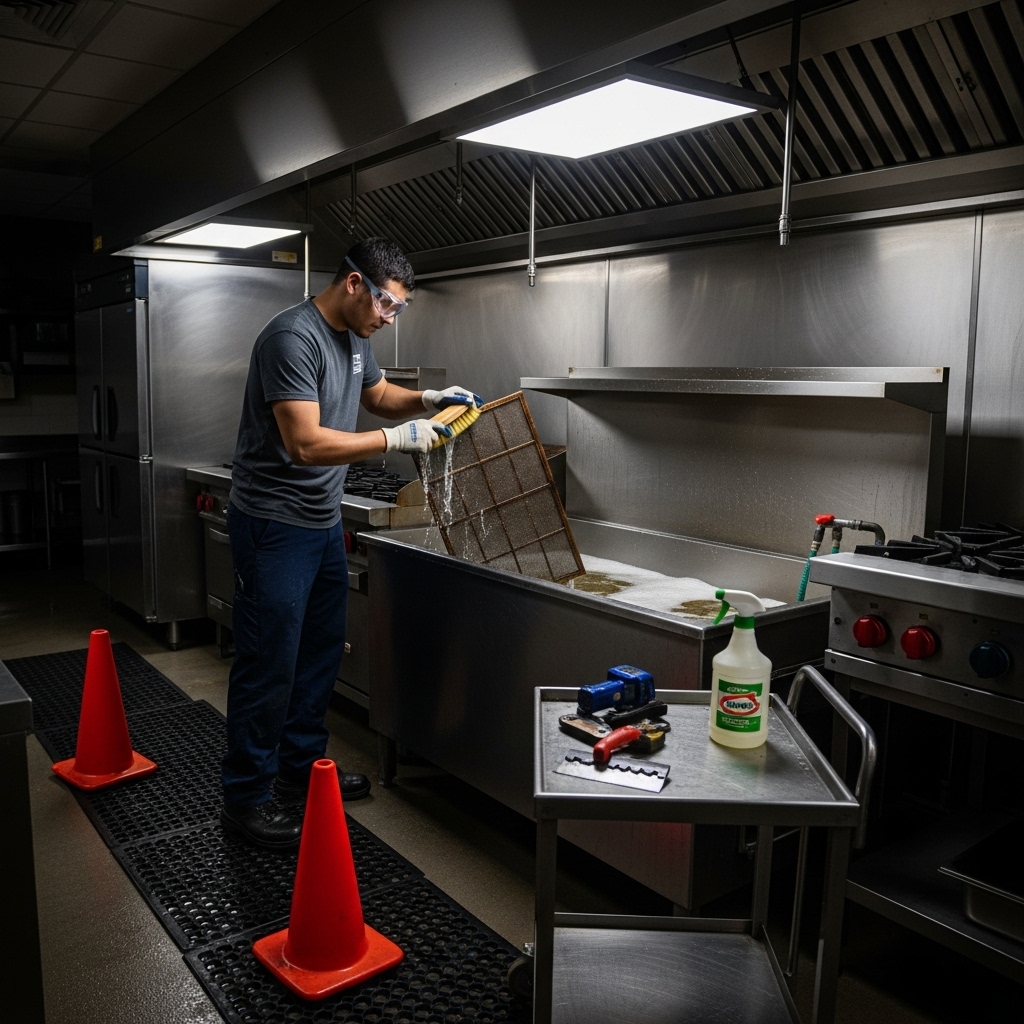
- Protection of cooking equipment and floors with sheeting and containment.
- Removal and degreasing of baffle filters using heated solutions or soak tanks.
- Mechanical scraping of heavy deposits in hoods and ducts, followed by heated degreasers and hot-water rinsing.
- Disassembly and cleaning of upblast fan housings and blades; inspection of belts and bearings.
- Rooftop grease containment cleanup and evaluation to prevent overflows.
- Polishing of visible stainless surfaces and a final readiness check for the next shift.
For a dinner-driven restaurant, after-hours scheduling prevents downtime and allows complete drying and reassembly well before lunch prep.
Staff Habits That Support Professional Cleaning
- Rinse and rotate baffle filters regularly to avoid airflow restrictions and reduce duct accumulation.
- Wipe hood interiors at shift end to keep residues soft and easier to remove.
- Check grease cups and rooftop containment for early signs of overflow.
- Report fan noise, vibration, or reduced pull immediately to management.
- Keep records of service dates, photos, and recommendations for inspections.
Mid-Cycle Inspections and Communication
Between professional visits, managers should perform quick visual checks. Look at filter color, check that air draws smoke effectively during line tests, and inspect the roof area around the fan if accessible. If you operate multiple Somerville locations, standardize these checks so all managers diagnose issues the same way. Clear communication with your provider—sharing photos or notes—helps adjust schedules and avoid surprises. For many restaurants, this proactive approach to professional hood cleaning keeps service intervals aligned with real-world conditions.
Benefits You’ll Notice on the Line
- Better capture of smoke, steam, and heat for a cooler, safer work area.
- Less odor transfer into the dining room and front-of-house spaces.
- More stable fan performance and fewer emergency maintenance calls.
- Cleaner rooftop conditions and reduced risk of staining or leaks.
- Improved inspector confidence and smoother compliance visits.
Seasonal Considerations in Somerville
Weather swings impact rooftop equipment. Summer heat can stress fan motors and belt systems, while winter adds ice concerns around containment. Schedule look-aheads with your provider, especially before busy seasons or menu changes, so your ventilation system is ready for increased volume. If your concept runs special events or extended hours, consider an interim filter service to keep capture strong.
Frequently Asked Questions
Q: How can I tell if my filters are installed correctly? A: Baffles should be oriented so grease flows downward into the collection channel, with no gaps that allow bypass. Incorrect installation reduces efficiency and drives grease deeper into ducts.
Q: Are all degreasers safe for kitchen use? A: Professional crews use food-safe, appropriate solutions and protect surfaces carefully. Avoid harsh chemicals in-house that can damage stainless steel or create fumes.
Q: What if my restaurant has low ceilings or long duct runs? A: These features increase the likelihood of hidden accumulation. Make sure your provider uses access panels and provides photos of elbows and horizontal runs.
Q: Will a single cleaning solve persistent smoke issues? A: Cleaning restores baseline performance, but airflow design, makeup air balance, and filter maintenance all play roles. Work with your provider to rule out multiple factors.
Q: How do I prepare for service? A: Clear counters, cover sensitive equipment if requested, and plan around wet floors and ladder access. Ensure roof access is available if needed.
Take the Next Step for a Safer, Cleaner Restaurant
Your guests and team expect a comfortable environment and a kitchen that runs smoothly. Book reliable kitchen exhaust hood cleaning services so your Somerville restaurant stays safe, compliant, and ready for every rush.
