In Somerville, New Jersey, every commercial kitchen—from bustling restaurants on Division Street to hospital cafeterias, school foodservice programs, hotels, and corporate cafeterias—relies on a safe, efficient ventilation system to keep operations compliant and productive. At the heart of that system is the exhaust hood and ductwork that pull heat, smoke, and grease-laden vapors away from the cooking line. Without consistent, professional kitchen exhaust hood cleaning, grease buildup can turn ordinary cooking into a significant fire hazard, degrade indoor air quality, and reduce equipment lifespan. This comprehensive guide explains what commercial operators in Somerville need to know about cleaning standards, practical maintenance approaches, and how to set up a program that supports safety, compliance, and reliable kitchen throughput.
Why Commercial Hood Cleaning Matters for Somerville Operations
Commercial kitchens process large volumes of hot, fatty vapors that condense into grease on the inside of hoods, filters, ducts, and fan assemblies. Over time, this accumulation becomes fuel. A small flare-up on a range or charbroiler can ignite residual grease, rapidly spreading flames through the exhaust system. In a dense commercial area like Somerville’s downtown or in multi-tenant facilities, a contained incident can escalate into building-wide emergencies without robust preventive measures.
Beyond fire risk, excessive grease compromises ventilation efficiency, forcing fans to work harder and raising energy use. Poor capture of smoke and steam makes line conditions uncomfortable, triggers false alarms, and sends odors into dining rooms. Finally, visible grime on canopies and filters erodes confidence during health inspections and guest walk-throughs. Consistent, documented cleaning supports safe operations, regulatory compliance, and a cleaner guest experience.
Codes, Standards, and Local Expectations
Most commercial kitchens in Somerville follow recognized fire safety standards for hood and duct maintenance, including frequency expectations based on volume and cooking type. While operators should confirm requirements with local authorities having jurisdiction, the general principle is simple: the higher the grease output (think high-volume frying, wok stations, and charbroilers), the more frequent the professional cleaning cycle. Establishments with lighter-duty cooking typically require fewer full-system cleanings but still benefit from routine filter maintenance and surface wipe-downs. Documentation—before-and-after photos, service reports, and component condition notes—demonstrates that you are meeting your obligations and maintaining a safe environment.
Common Grease Accumulation Hotspots
- Underside of hood canopies where vapors first condense.
- Baffle filters that catch heavier particles but require frequent degreasing.
- Duct transitions and elbows where airflow slows and grease collects.
- Horizontal duct runs and long duct paths common in older buildings.
- Upblast fans and fan housing components, including blades and shafts.
- Grease containment systems on rooftops that can overflow if neglected.
Failure to address any of these areas can undermine the entire system. For example, clean filters cannot compensate for heavy deposits hiding in ducts. Similarly, a spotless canopy does little if the fan assembly is coated and vibrating out of balance.
What a Professional Commercial Cleaning Should Include
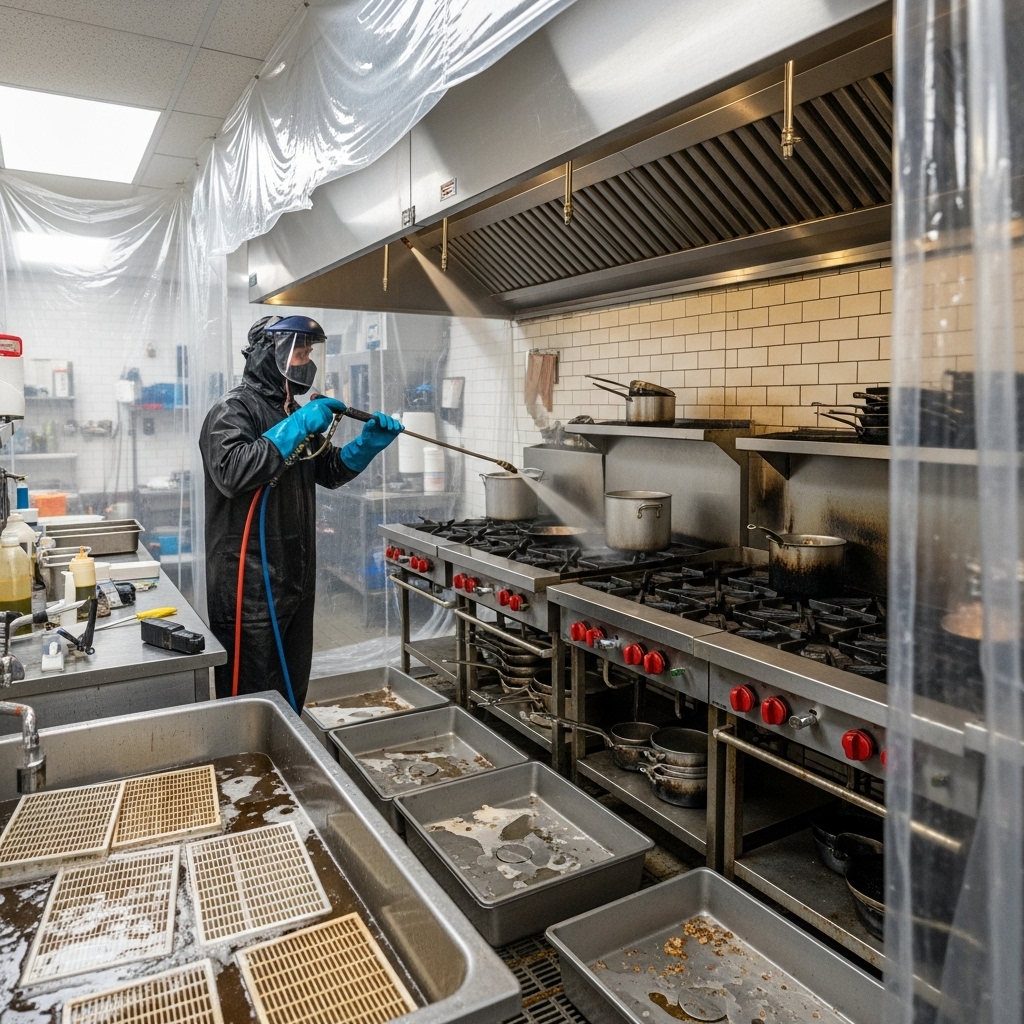
Commercial operators should expect a methodical, top-to-bottom approach that protects equipment and facilities while delivering verifiable results. A thorough service generally includes surface preparation and containment, filter removal and degreasing, mechanical scraping of heavy deposits, application of heated food-safe degreasers, hot-water rinsing, polishing of visible stainless surfaces, and treatment of fans and rooftop containment.
- Site protection with plastic sheeting and drip pans to safeguard ranges, fryers, and floors.
- Filter degreasing using soak tanks or heated solutions to restore airflow.
- Access panel utilization to reach hidden duct sections and elbows for thorough removal.
- Upblast fan disassembly, cleaning of housings and blades, and belt inspection.
- Grease containment inspection and cleanup to prevent roof damage and stains.
- End-of-service verification with photos, notes on wear items, and recommendations.
In busy Somerville businesses, technicians may coordinate after-hours scheduling to minimize downtime and ensure a clean, ready-to-cook line by morning service.
How Often Should Commercial Hoods Be Cleaned?
Frequency hinges on menu, volume, and equipment type. High-output fryers and charbroilers produce more vaporized grease than ovens and low-heat cooking methods. A useful approach is to monitor filter and duct conditions monthly and adapt intervals based on observed accumulation. Many high-volume kitchens find monthly or quarterly professional cleaning effective, while lower-volume operations might schedule semiannual service. In all cases, daily or weekly in-house filter maintenance keeps air moving and reduces long-term buildup.
Building a Culture of Preventive Maintenance
Commercial kitchen safety is a team effort. Ensure line crews understand how to insert baffle filters correctly, identify when airflow is compromised, and recognize signs of grease overflow on rooftops or behind the line. Supervisors can track maintenance on a simple calendar: filter wash days, hood surface wipe-downs, and scheduled professional service dates. A consistent routine lowers risk and prevents drama during rush periods when ventilation matters most.
Choosing the Right Partner
For commercial facilities, experience across multiple kitchen types is invaluable. A partner accustomed to restaurants, schools, healthcare, and hospitality environments can tailor the approach to your constraints and compliance requirements. Look for thorough documentation, responsive scheduling, minimal disruption, and clear communication about findings. In the middle of your planning cycle, consider the value of recurring appointments and multi-site coordination if you operate several locations in and around Somerville. When discussing scope, confirm that the service includes hood canopies, filters, accessible ducting, fans, and rooftop protection, not just visible surfaces. This complete approach to professional hood cleaning can significantly reduce emergency repairs and extend equipment life.
Operational Benefits You Can Measure
- Improved capture and containment of heat and vapors, leading to cooler, more comfortable lines.
- Reduced smoke and odor migration into dining areas or hallways.
- Stable fan performance and lower strain on motors and belts.
- Cleaner rooftop surfaces and fewer leak or staining incidents.
- Better inspector confidence during health and fire safety visits.
- Enhanced employee morale and productivity thanks to better air quality.
Safety Practices During Service
Qualified crews isolate power, protect gas lines and controls, and use food-safe degreasers. They block access to slippery areas, maintain ventilation during chemical use, and confirm equipment readiness before handing the line back to your staff. Ask for a post-service walkthrough with photos to understand exactly what was cleaned and what components may need attention in the near future.
Training Your Team
- Teach filter care: remove, soak, rinse, and dry baffles without bending fins.
- Wipe the interior hood surfaces at shift end to prevent hardened layers.
- Check grease cups and rooftop containment for overflow indicators.
- Listen for fan vibration or belt squeal; report changes immediately.
- Log cleaning dates and attach service photos to your maintenance records.
Frequently Asked Questions
Q: How do I know if my commercial kitchen needs more frequent service? A: If you notice smoke hanging at the cookline, visible residue reappearing quickly after wipe-downs, or rooftop stains around the fan, your interval is likely too long. High-heat menus often require shorter cycles than mixed-use or low-heat kitchens.
Q: What parts of the system are most often missed? A: Elbows and long horizontal duct runs can be challenging without proper access. Fan housings and blades also demand careful attention. Ask for photos of these locations in your service report.
Q: Can my staff handle all cleaning tasks? A: Staff can manage daily filter care and hood surface wipe-downs, but full-system degreasing and duct cleaning require specialized tools, access, and containment procedures to be effective and safe.
Q: How should I prepare for a cleaning appointment? A: Clear the line of food, utensils, and small appliances; schedule during downtime; and notify staff about wet floors and limited access. Provide roof access if applicable.
Q: Will cleaning disrupt my operation? A: Reputable providers schedule after hours and leave the line dry, reassembled, and ready. Downtime is minimized through planning and proper containment.
Ready to Strengthen Safety and Compliance in Your Somerville Facility?
Protect your staff, guests, and property with a proven program that keeps your ventilation system working at its best. Schedule dependable kitchen exhaust hood cleaning services and take the uncertainty out of inspections, comfort, and day-to-day performance.
