
Introduction
Knowing the steps and expected duration of a dryer vent installation helps you plan your day, prepare your home, and ensure the work is done correctly. In Somerville, New Jersey, houses range from historic masonry structures to newly built townhomes, and each style influences both the process and the timeline. A well-executed installation favors rigid metal duct, gentle turns, and a short, direct path to the exterior. If you want support from specialists who follow best practices from start to finish, connect with local experts in dryer vent installation to map out a predictable, efficient project.
Whether you are scheduling a new vent for a relocated laundry, upgrading from a flexible plastic hose, or replacing a damaged line, understanding the sequence of tasks and how long each typically takes can reduce stress. Below is a phase-by-phase look at the work, including site assessment, cutting, assembly, sealing, and testing, with notes about factors that may shorten or extend the timeline.
Phase 1: Pre-Installation Assessment
The process begins with a walkthrough of the laundry area and the surrounding building elements. The installer confirms the dryer model, required duct diameter, and the current condition of any existing vent. They measure the route to the exterior, identify obstructions in floors, walls, or ceilings, and choose the termination location. In Somerville’s diverse housing, this assessment is crucial: older homes may have thick masonry that requires core drilling, while newer structures might offer a straightforward framed-wall exit. This phase often takes a short time for simple routes and longer for complex ones, especially if the installer is tracing hidden pathways through finished spaces.
Preparation also includes protecting floors, moving the dryer to create workspace, and clearing storage. If a recessed dryer box is advisable to prevent kinks and save space, the installer marks and cuts the wall opening at this stage. Having the right tools and components on hand—long-radius elbows, rigid metal ducts, and a quality exterior hood—helps the schedule stay on track.
Phase 2: Selecting and Confirming the Route
With measurements in hand, the route is finalized. The guiding principle is to minimize total effective length and elbows while preserving accessibility for maintenance. If a planned exit conflicts with a structural member or utility line, minor adjustments are made to keep turns gentle and runs short. In masonry walls, the installer selects a path that avoids mortar joints prone to crumbling and ensures a clean, circular opening for a snug duct fit. In framed walls, the installer checks for studs and blocking and confirms that the duct can pass without compromising structural integrity.
During this phase, the timeline benefits from decisive planning. An experienced installer will balance speed with precision, knowing that small changes now can save time later by preventing rework. A clear, documented path also makes post-installation cleaning easier.
Phase 3: Creating the Exterior Penetration
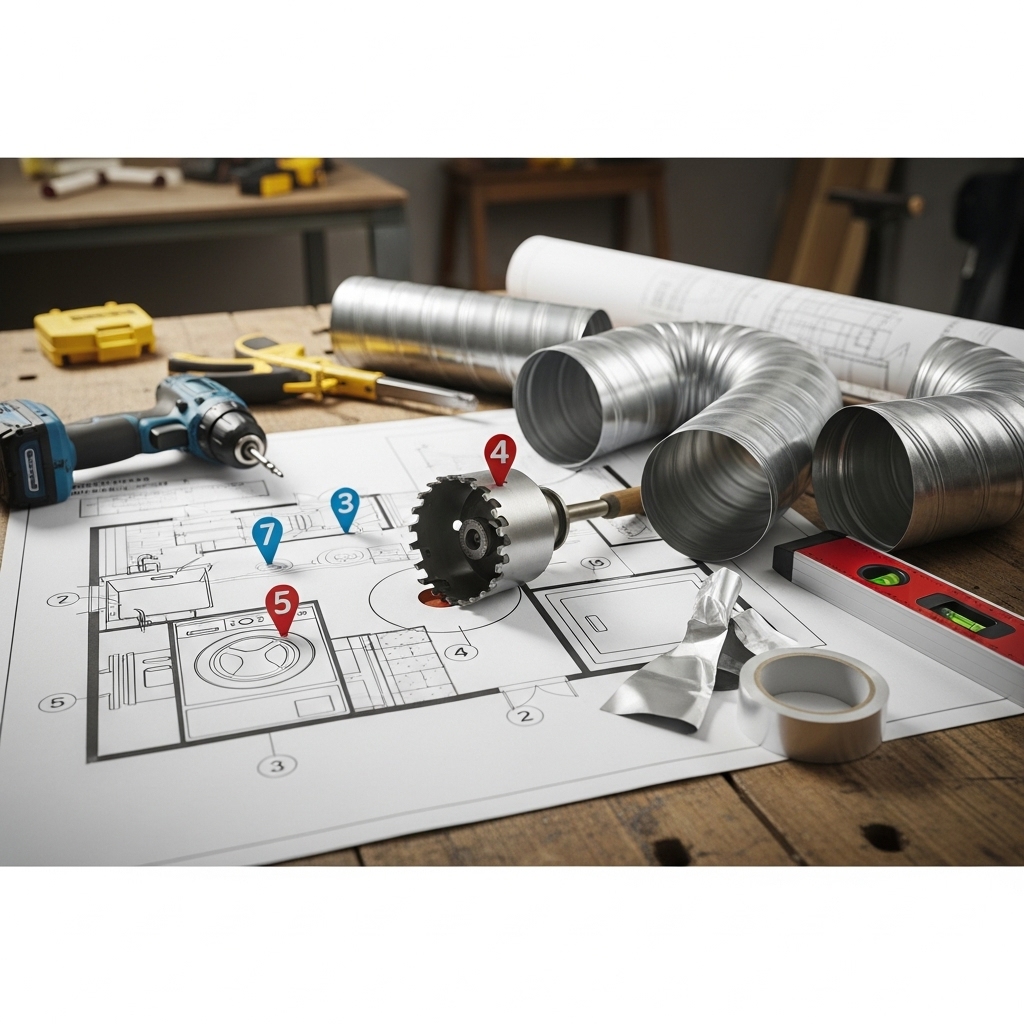
Cutting the exit is a pivotal moment in the schedule. For siding-clad framed walls, a properly sized hole saw can create a clean opening quickly. For brick or block, core drilling takes longer but yields a neat, durable result. The installer places the exterior hood, checks damper movement, and incorporates flashing and sealant suited to the cladding. Weather can influence this step; in rain or extreme cold, additional time may be needed to protect materials and ensure sealants adhere properly.
Choosing a well-designed termination pays dividends. A hood with a low-resistance damper reduces the dryer’s workload, decreases lint capture, and shortens drying times. It also simplifies future inspections because it is easy to see and access.
Phase 4: Assembling and Supporting the Ductwork
Inside the home, the installer cuts rigid metal duct to length and assembles sections with the male ends facing the exhaust direction. Seams are sealed with UL-listed foil tape, and joints that require periodic disassembly—such as the transition behind the dryer—use robust clamps. Long-radius elbows are placed for smooth airflow, and supports are installed to prevent sagging. Careful assembly is time well spent; it avoids callbacks and ensures the system performs consistently.
In Somerville’s climate, routing may cross cool, unconditioned spaces where condensation could occur. The installer maintains a slight pitch toward the exterior to help incidental moisture move out. They also verify there is no compression behind the dryer when it is moved back, preserving duct diameter and preventing kinks.
Phase 5: Testing and Verification
After assembly, the installer runs the dryer on an air-only setting and checks the exterior damper for full, smooth movement. They feel for strong exhaust and listen for vibrations that could indicate loose supports. Inside, they inspect for warm spots on the duct that might suggest restriction. If airflow is weaker than expected, adjustments are made—tightening a joint, reorienting an elbow, or shortening a section. This quality control step is essential and typically brief when the route is well-planned.
Typical Timeframes for Common Scenarios
Simple installations with a short, straight route through a framed wall can often be completed in a relatively brief window. Add time for masonry penetrations, tight closets that require recessed dryer boxes, or long runs that demand extra supports and elbows. Multi-level homes may require careful coordination to pass through floors or ceilings, which can extend the job. Weather, especially heavy rain or freezing temperatures, can also add to the timeline because sealing and flashing need dry, stable conditions for best results.
Despite these variables, an experienced team keeps work flowing by staging tools, cutting components accurately the first time, and verifying measurements before committing to openings. The bulk of the schedule is allocated to cutting, assembling, and sealing, with testing serving as the final checkpoint.
Common Factors That Slow Projects and How to Avoid Them
Late changes to the route, missing parts, and discoveries behind walls are the usual culprits. You can help by confirming the dryer model and duct diameter ahead of time, clearing storage from around the laundry, and providing any available information about wall construction. If the home has undergone prior renovations, be prepared for surprises; a good installer will have a plan B that keeps elbows gentle and the run short even if the original path is blocked.
Another factor is inadequate access. Narrow staircases and tight hallways can delay moving the dryer or tools. Preparing clear paths and temporarily removing doors or thresholds, when safe, can help accelerate the process. Finally, landscaping or exterior obstacles near the termination site—dense shrubs, trellises, or storage—may require quick relocation to allow proper placement of the hood.
Quality Benchmarks to Expect
Regardless of timeline, quality remains non-negotiable. Expect rigid metal ductwork for the main run, foil-taped seams, clamp-secured service connections, and long-radius elbows. The duct interior should be free of screws and protrusions that trap lint. The exterior termination should feature a low-resistance damper without a screen. Supports should keep the duct straight and level, with a slight pitch toward the outside when horizontal. The final test should show a strong, steady exhaust that opens the damper fully.
Documentation adds value: photos of the route behind the dryer and at any access points, plus a simple diagram, make future maintenance faster. Ask your installer to explain how to disconnect the transition safely for periodic cleaning and what normal damper movement looks like during operation.
Maintenance and Post-Installation Timeline
Plan to perform a visual check of the exterior termination within the first month to ensure the damper remains clean and moves freely. After that, seasonal checks help catch early lint accumulation from heavy laundry periods. Schedule a professional cleaning annually, or more often if your household produces significant lint or you notice longer drying times. Keep the area behind the dryer free of clutter to avoid compressing the transition connector.
Mid-Project Adjustments and Communication
Clear communication prevents delays. If an unexpected obstacle arises—a hidden pipe or a misaligned wall cavity—the installer should present alternatives with their impact on timeline and performance. Often, shifting the termination slightly or adding a long-radius elbow can maintain airflow without major schedule changes. If you need additional work, such as patching a previous opening after rerouting, plan those tasks so they do not interfere with testing and verification. When in doubt, consult a team that handles dryer vent installation regularly; familiarity with common layouts in town shortens decision time and keeps the project moving.
Frequently Asked Questions
Question: How long does a typical installation take? Answer: Many straightforward jobs can be completed within a few hours. Masonry penetrations, multi-story routing, or very tight spaces may require more time, but careful planning helps keep the project within a predictable window.
Question: Can weather delay exterior work? Answer: Yes. Rain and extreme cold can affect sealant performance and safety on ladders. Installers work around weather when possible, protecting wall assemblies and ensuring materials adhere properly.
Question: Do I need to be home the whole time? Answer: It is helpful to be present for the initial walkthrough and the final test so you can approve termination placement and understand the route and maintenance needs. During cutting and assembly, you can be elsewhere in the home if access is clear.
Question: Will the installer use flexible duct to save time? Answer: No professional should substitute flexible plastic for rigid metal in the main run. Proper materials are essential for safety and airflow, and they do not significantly extend the schedule when handled by experienced technicians.
Question: How soon can I use the dryer after installation? Answer: Immediately after testing. Once the installer verifies strong airflow and proper damper movement, you can run laundry. Keep an eye on performance during the first few loads and report any concerns promptly.
Plan Your Project with Confidence
With a clear process and realistic timeline, dryer vent installation becomes a predictable, manageable task. For a plan tailored to your home that balances speed with quality, work with Somerville specialists in dryer vent installation and enjoy a reliable, efficient laundry setup from day one.
