
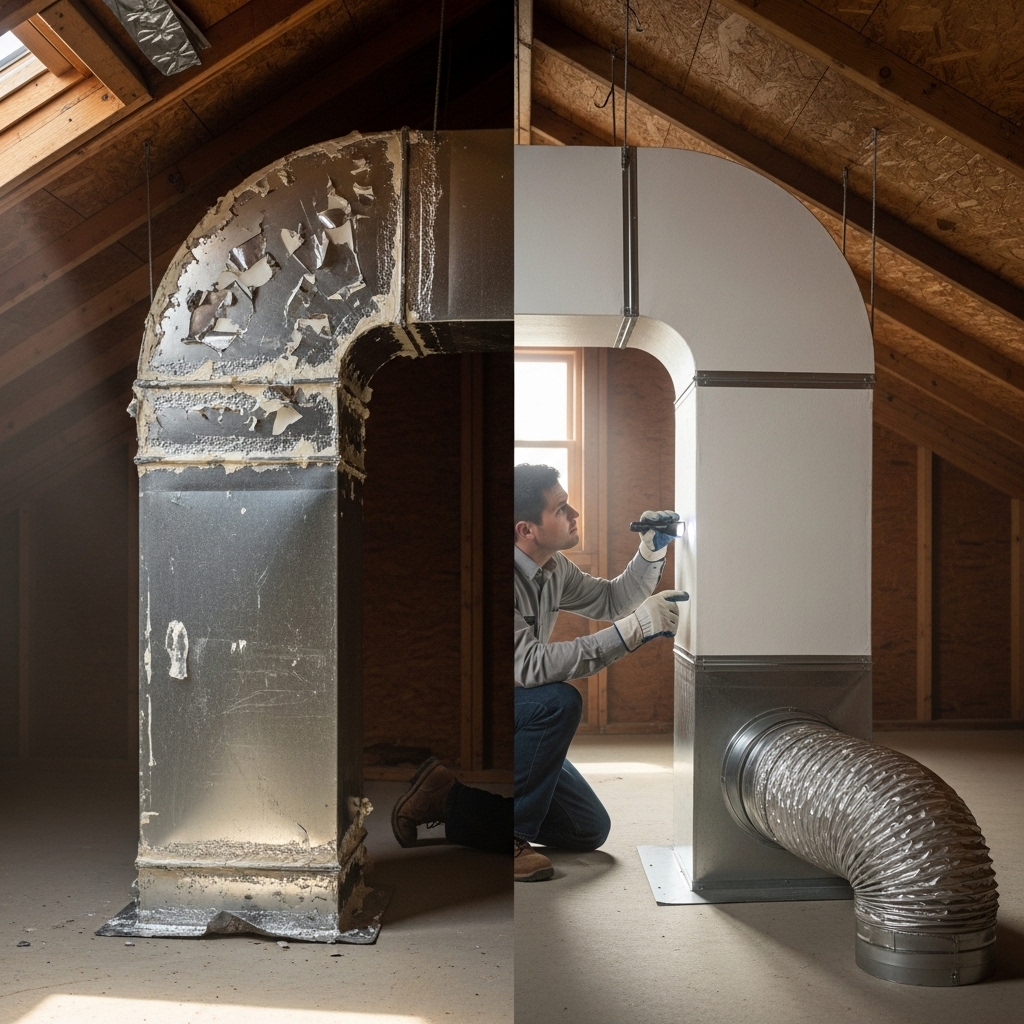
Choosing Between Air Duct Repair and New Installation in Somerville
Every home in Somerville, New Jersey tells a story, and behind walls and ceilings the duct system often reflects decades of updates. Some homes still rely on original metal trunks with newer flexible branches; others feature modern layouts but aging insulation. If comfort is uneven, if energy use seems high, or if you hear whistling and rattling, it may be time to weigh repair against new installation. This guide clarifies your options and outlines how to optimize duct performance no matter which path you choose. If you want a seasoned team to evaluate and implement solutions, local experts provide thorough air duct repair services aligned with the realities of Somerville homes.
The decision often hinges on scope. Localized leaks and minor damage typically respond well to repair. Systems with widespread deterioration, severe design flaws, or contamination may be better served by partial or full replacement. Understanding materials, airflow, and building dynamics will help you make a confident choice.
Understanding Duct Materials and Their Behavior
Sheet metal ducts are durable, smooth, and easy to clean, but they require properly sealed seams and insulation in unconditioned spaces. Duct board offers built-in insulation but is more sensitive to moisture and physical damage. Flexible duct is lightweight, fast to install, and forgiving around obstacles, yet it is vulnerable to crushing and kinks that impede airflow. Many Somerville systems combine all three, which means repairs must match the material and its role within the system.
Metal excels for main trunks and long runs, while flex is best for short, gentle connections from trunk to boot. When repair is the route, upgrade weak points: add supports under long flex spans, replace sharp elbows with smoother transitions, and reinforce metal seams with mastic. If installing new ducts, choose materials based on expected airflow and location, emphasizing smooth interiors and appropriate insulation values.
What Repair Can Achieve
Properly planned repair can transform system performance. Sealing significant leaks with mastic and foil tape reduces wasted air and helps every room receive intended airflow. Reinsulating cold supply ducts prevents condensation in humid months. Correcting support spacing eliminates sags and vibration, reducing noise. Addressing boot-to-wall gaps keeps conditioned air from dumping into cavities. After these steps, many homeowners report more even temperatures, fewer drafts, and quieter operation.
Repairs are especially effective when the original design is fundamentally sound. If trunk sizes and branch runs match equipment capacity, sealing and insulation can restore like-new performance. Documentation—photos and notes—will guide future maintenance and justify decisions if further upgrades are considered later.
When Installation or Replacement Makes Sense
Consider new installation when ducts are extensively damaged, contaminated, or incorrectly sized. In homes with finished attics or additions served by very long, undersized runs, replacing sections with larger, smoother channels may be the only way to deliver adequate airflow. If you are replacing HVAC equipment, coordinate duct changes to match blower performance and modern efficiency targets. Properly designed ducts reduce static pressure, which extends equipment life and improves comfort.
In Somerville’s mixed housing stock, retrofits must respect framing and finished surfaces. A thoughtful installation plan finds routes that minimize disruption, uses compact trunk lines where appropriate, and leverages transitions that maximize flow within limited space. Expect a combination of rigid metal trunks and short, well-supported flex connections, all sealed meticulously and insulated according to location.
Assessing Your Current System
Begin with a comprehensive inspection. Map the system components, identify material types, and list symptoms by room. Measure branch diameters and note any compressed flex sections, crushed elbows, or disconnected joints. Check the return path: underperforming returns are a frequent cause of dust and temperature imbalance. Evaluate insulation integrity in attics, basements, and crawlspaces, noting any signs of condensation or mold.
Ask whether issues cluster in specific zones—finished attic rooms, additions, or rooms at the end of long branches. Clusters often indicate design constraints that repair alone may not solve. Also consider the age and condition of the air handler and furnace; a new blower with higher capacity can expose duct bottlenecks that were less obvious before.
Design Principles for New Duct Installation
Effective design emphasizes right-sized ducts, minimal sharp turns, balanced supply and return, and sealed, insulated pathways through unconditioned spaces. Place returns strategically to support even airflow and pressure balance. Use manual guidelines for sizing or consult a professional for a formal calculation. In practice, you should see straight trunks with smooth takeoffs, short flexible connections laid in gentle arcs, and boots sealed to surrounding surfaces to prevent losses into cavities.
Insulation values should reflect the route. Attic runs need higher R-values than basement runs in semi-conditioned spaces. Vapor barriers must be continuous, with seams taped and fittings sealed to resist humid air infiltration. Good installation ensures quiet operation, with supports that dampen vibration and spacing that prevents flex duct from sagging.
Mid-Process Decisions and Somerville Considerations
At the midpoint of your project, revisit goals: are you primarily solving comfort issues, reducing noise, or preparing for equipment upgrades? In Somerville, basements can be humid and attics hot, so condensation control and insulation quality are top priorities. If mid-project you realize the scope suggests broader changes, consider engaging specialists who provide comprehensive air duct repair services and installation planning that aligns with local building practices.
Also consider envelope interactions. Sealing attic bypasses and rim joists reduces the pressure differences that exacerbate duct leakage. Such whole-home thinking pairs well with either repair or new installation and yields better results than duct work alone.
Quality Assurance and Testing
Whether repairing or installing new ducts, verify results with careful checks. Listen for whistling or rattling, feel for leaks, and confirm airflow consistency at registers. If possible, measure static pressure and temperature differentials to confirm that design intent translates into performance. Check that all insulation is secure and vapor barriers are intact to avoid future moisture issues. Confirm that returns are tight and that filters fit properly to prevent bypass.
Over the following week, monitor comfort in different weather conditions. Document any remaining issues and address them promptly, whether that means adding a support, sealing a newly discovered pinhole, or re-routing a problematic branch.
Frequently Asked Questions
Q: How do I decide between repair and replacement? A: If damage is localized and design is fundamentally sound, repair is usually cost-effective and fast. If you see widespread deterioration, poor sizing, or contamination, replacement or reconfiguration is more appropriate.
Q: What materials are best for new ducts? A: Rigid metal for main trunks and longer runs, short flexible connections for final transitions, and insulation appropriate to the environment. Prioritize smooth interiors, sealed seams, and well-supported runs.
Q: Can I perform some repairs myself? A: Many homeowners can seal accessible leaks, resecure connections, and restore insulation. For design changes, extensive contamination, or complex routing, professional help is recommended.
Q: What about noise control? A: Noise usually stems from turbulence, leaks, or vibration. Smooth transitions, solid supports, and sealed seams reduce noise significantly. Verify blower speed and damper positions to avoid creating pressure spikes.
Q: How does Somerville’s climate affect choices? A: Humid summers and chilly winters put ducts through thermal and moisture stress. That makes continuous insulation, vapor-tight sealing, and solid supports especially important, whether you repair or replace.
Confident Next Steps for Your Home
With a clear understanding of options, you can align your duct strategy with your comfort goals and home plans. If you are ready for a professional evaluation and precision work that stands the test of Somerville’s seasons, arrange expert air duct repair or installation support and move forward with a quieter, more efficient home.
