
Understanding Air Duct Repair in Somerville, New Jersey
Air ducts quietly support every comfortable day you spend at home, yet they tend to be forgotten until a problem shows up. In Somerville, New Jersey, older housing stock, seasonal temperature swings, and humidity shifts can combine to stress ductwork. Seams can loosen, insulation can degrade, and contaminants can infiltrate. When that happens, heating and cooling systems work harder, utility bills rise, and indoor air quality drops. This guide explains how to perform air duct repair methodically and safely, with local conditions in mind. If you would rather have a specialist handle the job, remember that trusted professionals are available for air duct repair throughout Somerville and surrounding neighborhoods, offering solutions tailored to local homes.
Before you begin, consider why ducts fail. Age and material fatigue can cause joints to separate. DIY remodeling can inadvertently crush or puncture ducts. High static pressure from an oversized blower can push on elbows and transitions, while pests or construction debris can compromise airways. Each of these issues requires a slightly different approach, but the core principles are similar: inspect thoroughly, seal air leaks, restore insulation, secure supports, and verify performance.
Safety and Preparation
Start by turning off your HVAC system at the thermostat and at the breaker if you will be working near wiring or the air handler. Although ductwork is not typically energized, you may encounter low-voltage control wires, metal edges, or sharp screws. Wear gloves, eye protection, and a dust mask or respirator, especially if you suspect contamination such as fiberglass fibers, dust accumulation, or rodent droppings. Keep a flashlight or headlamp handy because attics, basements, and crawlspaces in Somerville homes often have limited lighting.
Ventilation is also important. If you are working in a confined space, open access points to promote fresh air exchange. Place movable boards or crawlspace pads to protect exposed soil and keep tools clean. In winter, plan extra time—cold metal is less forgiving, and mastics may take longer to set. In humid summers, consider a dehumidifier to reduce moisture that can affect tapes and sealants.
Tools and Materials
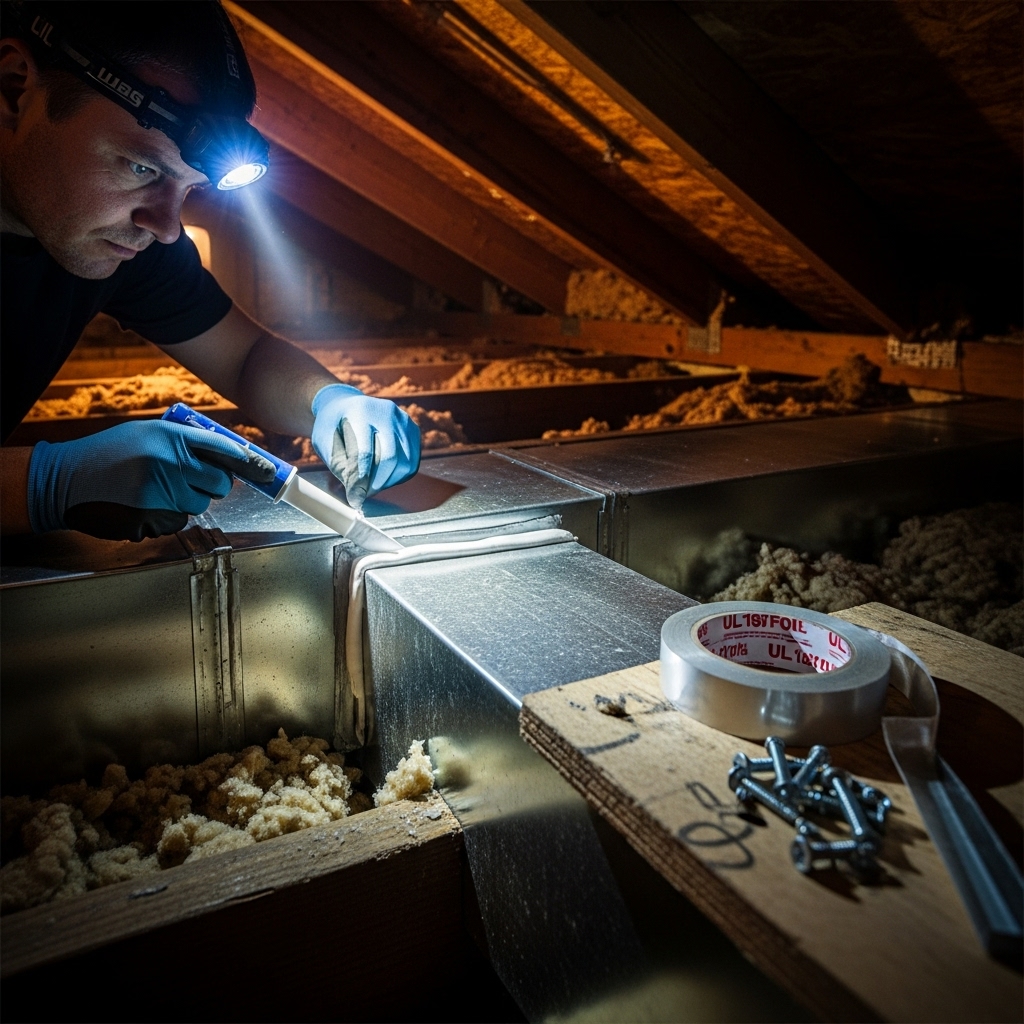
You can complete many air duct repairs with a practical toolkit. Useful items include a high-lumen flashlight, a mirror on an extension for hard-to-see areas, a camera or phone for documenting conditions, a tape measure, HVAC foil tape rated for UL 181, mastic sealant formulated for ductwork, a brush or gloved hand for applying mastic, tin snips, sheet metal screws, drill/driver, zip ties, hangers, metal strapping, and insulation sleeves or duct wrap. Avoid cloth “duct tape,” which degrades quickly. Quality products, properly applied, make the difference between a temporary fix and a durable repair.
Before buying materials, note whether your ducts are sheet metal, flexible duct, or duct board. Many Somerville basements feature a primary metal trunk with flexible branches to supply registers. Each material behaves differently: metal holds shape but can vibrate or gap at seams; flex duct is lightweight but can tear; duct board insulates well but requires careful sealing of cut edges.
Inspection and Diagnosis
Effective repair starts with a slow, methodical inspection. Look for disconnected joints, crushed sections, torn vapor barriers, and missing or sagging insulation. Pay attention to elbows and transitions near the air handler, where vibration is common. Feel for air movement when the system is running; even with the system off, soot-like dust trails may reveal leaks. Check supply and return plenums for gaps where they meet the furnace or air handler cabinet. Examine boots (the transition pieces that connect ducts to floor or wall registers) for loose connections or gaps that allow conditioned air to escape into cavities.
Measure duct diameters and lengths to determine whether you have adequate airflow potential for your system’s capacity. Tight spaces sometimes tempt prior installers to compress flexible duct to make turns, but compressed or kinked flex can halve airflow. Mark suspected problem areas with painter’s tape so you can return and repair in sequence. Take photos of each issue as a checklist, ensuring nothing is missed when you start sealing and reinforcing.
Sealing Leaks and Reconnecting Joints
Begin with the largest leaks for a clear performance gain. For metal-to-metal joints, apply mastic generously along seams after lightly cleaning dust and oil. Press the mastic into cracks with a brush or your gloved fingers, smoothing to a uniform thickness. Where gaps are wider than the sealant can span, use mesh tape embedded in mastic. Overlap each side by at least an inch to resist future movement. For slip-and-drive connections along rectangular trunks, make sure the drives and S-cleats are fully seated and, if needed, add a few sheet metal screws before sealing.
For flexible duct reconnections, slide the inner core over the metal collar or boot until it seats fully, then secure with a metal clamp or a pair of wide zip ties. Seal the joint with mastic before pulling the outer vapor barrier and insulation back over the connection. Seal the barrier with UL 181 foil tape, taking care to provide a neat, continuous bond. Do not constrict the diameter with overtight straps—airflow relies on a full opening and smooth interior surface.
Repairing Tears, Holes, and Crushed Sections
Tears in flexible duct should be patched only if they are small and in a straight section. Clean the surface, then apply a mastic patch reinforced with mesh, or use UL-listed repair tape approved for flex duct vapor barriers. If the inner core is punctured or the helix is broken, replace the affected run rather than rely on patches. For metal ducts with small holes from corrosion or stray screws, use a small piece of sheet metal as a backer and seal with mastic. Crushed flex or dented metal can cause noise and airflow loss; restore shape where possible, or replace damaged segments that will not hold a smooth path.
Insulation is essential for thermal efficiency and condensation control. Where insulation is missing or compromised, wrap ducts with the correct R-value insulation for your location, taking special care in unconditioned basements, crawlspaces, and attics. More than once in Somerville homes, condensation on cold supply ducts during humid months has led to dripping and even mold concerns; continuous insulation with sealed vapor barriers helps prevent this.
Securing Hangers and Supports
Inspect all hangers, straps, and saddles. Flexible duct should be supported at intervals that prevent sagging and sharp bends, with wide supports that distribute weight evenly. Metal ducts need secure strapping and screws at joints to resist vibration. Replace undersized or corroded hangers, and reposition supports to straighten drooping runs. Proper support not only protects the duct but also lowers noise, because a taut, well-supported run vibrates less.
Balancing Airflow and Verifying Results
After sealing and securing, turn the system back on and listen closely. Whistling can indicate a missed leak; rumbling can suggest loose internal components or high static pressure. Check each register for airflow consistency. A simple test is to hold a tissue at the grille to see how firmly it pulls. For a more precise approach, use an anemometer to compare velocities at similar rooms. If one branch remains weak, there may be a hidden kink or blockage further back. Sometimes a partially closed damper is the culprit, especially in older homes where damper handles are tucked along the trunk.
Walk the home to ensure rooms heat or cool more evenly than before. If you measured at the start, compare temperature differentials and energy use after a few days of regular operation. In Somerville’s shoulder seasons, when nights are cool and days are warm, an efficient duct system makes transitions smoother and reduces cycling that stresses equipment.
Mid-Project Considerations Specific to Somerville
Somerville’s climate and local building methods influence duct performance. Basements here often combine concrete walls with fieldstone or brick sections, creating temperature gradients that amplify condensation risk. Keep supply ducts insulated and ensure return ducts are sealed tightly, because drawing air from damp basements can raise humidity and odor issues. If you encounter legacy materials or unconventional DIY alterations, take photos and correct them with standard fittings rather than improvising further. When you are unsure, it may be time to engage experienced technicians offering comprehensive air duct repair services who understand both older and newer Somerville construction styles.
Additionally, consider the interaction between your ducts and envelope. Air sealing around rim joists, top plates, and penetrations reduces the pressure differences that drive leakage. If you are upgrading insulation or windows, coordinate duct improvements so the whole system works in harmony. This is especially helpful in split-level homes common to the area, where temperature stratification can otherwise be challenging.
Addressing Noise and Vibration
Noise often signals movement, resonance, or turbulence. If you hear flapping, it might be loose foil tape or a torn vapor barrier. If you hear a low hum, look for rubbing hangers or uninsulated contact points between ducts and framing. Adding acoustic duct liner where appropriate, or adjusting the blower speed to manufacturer specifications, can help, but be careful not to modify equipment settings beyond approved ranges. Sealing leaks reduces whistle noises that are common with narrow gaps at transitions.
When flexible duct is used near the air handler, ensure at least a short section of hard pipe or a proper connector is installed to avoid ripples that generate turbulence. In long runs, gentle sweeps outperform tight elbows. The goal is smooth airflow with minimal obstructions, which reduces noise and energy consumption simultaneously.
Indoor Air Quality and Cleanliness
Repairing ducts is an opportunity to improve air quality. If you see accumulated dust, consider vacuuming accessible surfaces with a HEPA-filtered vacuum while avoiding damage to liners or insulation. Replace filters at the air handler and verify they fit snugly to prevent bypass. Check that returns are not drawing from garages or utility rooms where fumes or particulates may be present. Sealing returns tightly is as important as sealing supplies, because negative pressure can pull contaminants into the system.
A clean, sealed return side pairs well with proper filter maintenance. Note filter size and MERV rating recommended for your equipment; overly restrictive filters can raise static pressure, while inadequate filters allow dust back into the ducts. Mark replacement dates and plan a schedule that matches the local pollen cycles and your household’s needs.
When to Repair Versus Replace
Not every duct can be saved. Severely deteriorated duct board, extensive mold growth on porous materials, or widespread crushing of flexible duct may justify replacement. Likewise, if your system was poorly designed and rooms consistently suffer from comfort issues, reconfiguring runs and resizing branches may be more effective than patching leaks. On the other hand, many systems respond wonderfully to careful sealing, insulation, and support improvements, delivering better comfort immediately.
Document your work as you go, including before-and-after photos and notes on products used. This record helps future homeowners, inspectors, and service providers understand what was done and why. It also guides your own maintenance, allowing you to revisit areas that were borderline or that depend on adhesives curing properly over time.
Post-Repair Testing and Ongoing Maintenance
After repairs, monitor the system for a week across different operating conditions. Note any odors, drafts, or temperature swings. If you have access to static pressure readings via a professional, that data can confirm your improvements. Homeowners can still perform basic checks: listen during startup and shutdown, feel for leaks at previously repaired seams, and ensure insulation remains intact and dry. Seasonal checks are wise in Somerville, where winter cold and summer humidity challenge ductwork differently.
Adopt an annual routine: replace or clean filters, visually inspect accessible ducts, verify that supports are tight, and touch up mastic if you see cracks or separation. Keep storage items clear of ducts to prevent accidental crushing. If you plan renovation, coordinate with your HVAC layout so new walls, soffits, or built-ins do not block service panels or choke airflow.
Frequently Asked Questions
Q: How do I know if my ducts are leaking? A: Signs include uneven temperatures, excessive dust, whistling near joints, high utility bills, and visible gaps or dust streaks along seams. A smoke pencil or incense stick can reveal moving air at suspected leaks.
Q: Is mastic better than tape? A: Both have roles. Mastic, properly applied, creates a durable seal over irregular surfaces and larger gaps. UL 181 foil tape is excellent for sealing vapor barriers and smooth metal seams. Cloth “duct tape” is not recommended because it dries out and fails.
Q: Can I repair moldy ducts myself? A: If the contamination is superficial on non-porous metal and limited in scope, you may clean and seal after consulting safety guidance. Widespread mold or contamination on porous materials like duct board should be addressed by qualified professionals and may require replacement.
Q: How long does a typical repair take? A: Small projects, such as sealing a few joints and reinsulating a short run, might take a couple of hours. Larger systems with multiple issues can require a full day or more spread over several sessions, especially when curing time for mastics is considered.
Q: What about building codes in Somerville? A: Follow New Jersey mechanical code requirements and manufacturer specifications for materials, hangers, and clearances. When in doubt, consult your local building department or a licensed contractor familiar with area practices.
Q: Will sealing ducts really improve comfort? A: Yes. Reducing leakage often restores intended airflow to distant rooms, evens temperatures, and reduces cycling. It also helps control humidity by ensuring conditioned air reaches living spaces rather than escaping into attics or basements.
Q: Do I need new ducts if I am upgrading my HVAC equipment? A: Not always. However, a system check is smart because changes in blower performance or static pressure may reveal bottlenecks. Many homeowners pair equipment upgrades with duct sealing and modest reconfiguration for optimal results.
Q: How do I prevent future damage? A: Maintain adequate supports, avoid storing heavy items against ducts, keep access paths clear, and schedule periodic inspections. Address any water intrusion or pest activity promptly, as both can accelerate duct deterioration.
Take the Next Step for Your Somerville Home
If you have read this guide and identified issues you are not comfortable addressing, or if your system still underperforms after careful DIY work, the next step is straightforward. Schedule professional help from local experts who can evaluate the entire system, from the air handler to the furthest register, and deliver targeted repairs with lasting results. For prompt, knowledgeable service in your neighborhood, book reliable air duct repair and enjoy cleaner air, steadier comfort, and a more efficient home season after season.
