
Introduction: A Practical Troubleshooting Guide for Somerville Homes
Uneven temperatures, drafty hallways, and dusty rooms can make any home feel less comfortable than it should. In many Somerville, New Jersey residences, the duct system is the quiet cause. This guide gives you a clear, step-by-step approach to diagnosing common duct issues and knowing when to call a professional. Whether you live in a historic home with retrofitted ducts or a newer build with flexible runs, the principles are the same. If you need a partner to confirm findings and implement reliable repairs, consider contacting a local specialist in air duct repair troubleshooting who can measure performance and deliver lasting fixes.
Start with Symptoms: What Are You Feeling and Seeing?
Good troubleshooting starts by documenting what you notice. Walk room to room and note which spaces feel too warm or too cool, which registers blow weakly, and where dust builds up quickly. Listen for whistling at joints and pay attention to drafts near basements or attics when the system runs. These observations guide inspection and help prioritize the most impactful fixes.
Check the Basics First
- Filter condition: A clogged filter restricts return airflow and can mimic duct problems. Replace it if it is overdue.
- Registers and grilles: Confirm they are open and free from furniture, rugs, or debris.
- Thermostat settings and location: Make sure settings are correct and that heat sources or direct sun are not skewing readings.
If the basics are in order, move on to the duct system itself.
Inspect Accessible Ducts
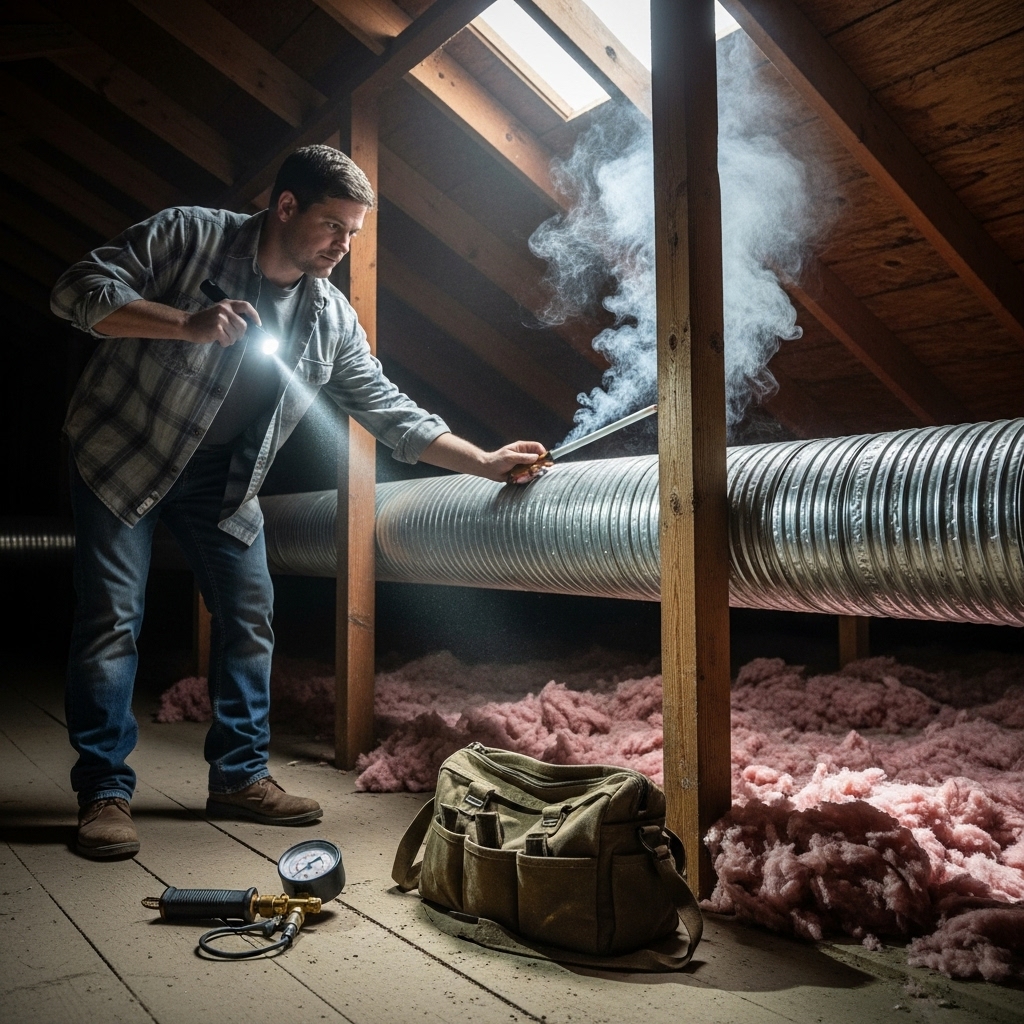
Focus on basements, attics, crawlspaces, and areas near the air handler. Use a flashlight to scan for gaps, loose seams, deteriorated tape, and sagging or crushed flex runs. Pay special attention to elbows, branch take-offs, boots at registers, and the connections at the air handler cabinet. Return pathways in utility areas are critical because gaps here can pull unfiltered air into the system.
Simple DIY Fixes You Can Attempt Safely
- Seal small gaps on metal ducts with water-based mastic. Apply with a brush and allow it to cure.
- Use UL-listed foil tape for straight seams and minor leaks on clean, dry surfaces.
- Support flex ducts with proper hangers and gentle bends to remove kinks and sags.
- Secure boots to floors, walls, or ceilings and seal the edges to prevent leakage at the register opening.
Limit DIY to accessible areas. If returns are improvised through wall cavities or if you suspect concealed damage, call a professional to prevent unintended consequences.
When and Why to Test
While visible leaks are important, hidden leakage often plays a major role in comfort problems. Duct pressure testing quantifies how much air escapes to unconditioned spaces, and airflow readings at registers reveal which rooms are under-supplied. Testing before and after repairs provides solid evidence that improvements are real and lasting.
Common Root Causes in Somerville Homes
- Age-related loosening of metal seams and transitions.
- Punctures and compression of flexible ducts from storage or pests.
- Boots that were never properly sealed at floors, walls, or ceilings.
- Return pathways that draw air from basements or utility rooms.
- Insulation that has slipped or deteriorated around supply trunks, causing temperature loss en route.
Identifying the root cause prevents repeat problems and guides smarter repairs.
Sequencing Repairs for Maximum Impact
- Address obvious disconnections and crushed runs first to restore basic airflow.
- Seal major leaks at plenums, trunks, elbows, and boots using mastic and UL-listed tapes.
- Re-support or replace damaged flex runs to eliminate kinks and compression.
- Reinsulate supply trunks and key branches if insulation has slipped or become damp.
- Verify airflow at priority rooms and adjust balancing if needed.
This sequence builds a stable foundation and ensures each step supports the next.
How to Judge a Good Repair
Reliable repairs are neat and methodical. Mastic is applied continuously with clean edges, foil tapes are firmly pressed without channels, and mesh reinforcement is used on larger gaps. Boots are firmly secured, and flex connections are tight with proper clamps and sealant. After work is complete, airflow at troubled rooms should be measurably improved.
Protecting Results with Ongoing Maintenance
- Replace filters as recommended to keep return pressures healthy.
- Keep storage items away from visible duct runs to prevent damage.
- Check accessible joints seasonally for new gaps or condensation.
- Leave registers open unless a professional suggests targeted balancing.
These habits help your duct system stay resilient through Somerville’s seasonal changes.
Frequently Asked Questions
Q: How do I know if a weak room needs duct repair or more insulation? A: If the register feels weak or if there is a noticeable temperature difference between nearby registers, duct issues are likely. A technician can test and confirm whether leakage or layout is the main cause.
Q: Is it worth sealing ducts I can’t easily access? A: Yes, provided testing shows significant leakage. Often, sealing accessible areas combined with strategic fixes yields big improvements without opening finishes.
Q: Can sealing make my system quieter? A: Often. With leaks closed and airflow restored, the system may operate with less turbulence and vibration.
Q: What if I still have uneven rooms after repairs? A: You may need balancing adjustments or layout changes. A professional can recommend targeted alterations to supply or return paths.
Q: Will sealing help with indoor air quality? A: Proper sealing reduces unfiltered air drawn from basements, crawlspaces, or wall cavities, helping your filter and equipment work as designed.
Somerville Climate Tips for Duct Reliability
In humid months, pay attention to condensation risks around cool supply lines. Sealing and insulation work together to keep moisture off surfaces and maintain the temperature of the air traveling to rooms. During cold snaps, materials contract, so small gaps can widen; a quick seasonal inspection helps catch issues before they grow. As pollen seasons arrive, keeping return leaks closed limits allergens entering the system.
When to Call a Professional
Contact a qualified technician if you see widespread tape failure, crushed or inaccessible flex runs, rust through metal sections, or if DIY efforts do not resolve airflow complaints. Professionals bring testing equipment, specialized materials, and the experience to pinpoint and correct issues efficiently.
Documenting Your Findings
Keep a simple log of rooms, symptoms, and any visible leaks you discover. Note the date of filter changes and the results of any tests or repairs. This record makes conversations with technicians more productive and helps prioritize future work.
From Diagnosis to Lasting Results
A methodical troubleshooting process—symptoms, inspection, testing, targeted repair, and verification—builds confidence that your home will feel better in every season. With a focus on the most impactful fixes and ongoing maintenance, you can keep your duct system dependable and your indoor environment healthier.
Mid-Guide Check-In: Are You Seeing Progress?
After addressing obvious issues and sealing major seams, revisit your symptom list. Are airflow and temperatures more consistent? If not, re-check for concealed kinks, return-side gaps, or poorly sealed boots at room registers. When in doubt, seek a measurement-driven assessment from a local expert in residential air duct repair who can quantify leakage and guide next steps.
Bring Comfort Back to Your Rooms
With this troubleshooting guide, you can identify likely causes and decide which fixes to handle yourself and which to leave to a professional. If you are ready for measured improvements and a clear plan, schedule professional air duct repair and enjoy the steady comfort that comes from a well-sealed, well-supported duct system tailored to your Somerville home.
