Why Professional Dryer Vent Cleaning Matters in Somerville, NJ
Dryers are workhorse appliances that most households depend on several times a week, yet the pathway that exhausts moisture and lint to the outdoors often goes overlooked. In Somerville, New Jersey, where seasonal humidity, autumn leaves, and winter storms can all influence home ventilation, keeping your dryer vent clear is critical for safety, energy efficiency, and appliance longevity. When lint builds up and airflow is restricted, your dryer works harder, runs hotter, and takes longer to complete each cycle. That strain can shorten the life of the machine, inflate energy usage, and elevate the risk of overheating. The most reliable way to maintain safe and efficient operation is to schedule professional dryer vent cleaning that reaches the full length of the ductwork and addresses hidden trouble spots.
Many homeowners are surprised at how quickly lint accumulates beyond the removable screen. Fabric fibers, pet hair, and fine dust migrate into the vent line, cling to moist elbows, and collect around screens or bird guards at the exterior hood. Over time, that buildup can narrow the vent diameter, create debris traps, and force exhaust back toward the dryer. Professional service includes specialized tools and a trained approach that reveals and resolves the full scope of buildup, rather than removing only the lint you can see inside the lint filter compartment.
Key Benefits of Hiring a Professional
There are several specific benefits to hiring a qualified technician in Somerville. First, you gain a thorough cleaning from the dryer’s internal transition duct all the way to the exterior termination point, including tricky bends and long horizontal runs. Second, professionals verify that components like clamps, connectors, and the exterior hood move freely and seal properly. Third, they identify code or safety issues such as excessive flexible ducting, crushed transition lines, or outdated plastic or foil materials that may not be rated for dryer use. Fourth, you receive a clear picture of the vent’s condition and recommendations to improve performance and reduce future maintenance.
Another value of professional service is diagnostic insight. A well-trained technician can spot issues such as backdrafting dampers stuck by paint or debris, misrouted vents that terminate in an attic or crawl space, and excessive run lengths that require a booster fan per manufacturer specifications. By addressing these findings, you protect your home from moisture problems, mold growth, and unnecessary wear on your dryer.
Signs Your Dryer Vent Needs Attention
Common warning signs indicate that your vent needs a professional cleaning. If clothes take longer than one cycle to dry, if the laundry room feels unusually warm or humid during operation, or if the dryer exterior feels hot to the touch, airflow may be restricted. A musty smell on freshly dried fabrics suggests moisture and lint are lingering in the vent path rather than exhausting outside. If you notice lint collecting behind the dryer, on the floor, or around the outdoor hood, that can indicate a partial blockage. Finally, if it has been more than a year since your last service—or sooner if you run multiple loads per day—schedule a cleaning to stay ahead of buildup.
Pay attention as well to the outside vent. The flap (or louvered cover) should open freely when the dryer runs and close when it stops. If the flap stays stuck, or if you see a thick ring of lint at the cap, airflow is likely compromised. In colder months, ice can form on screens and caps, further restricting exhaust. These seasonal conditions are especially relevant in Somerville’s climate, making routine checks and timely service a smart habit.
How Professionals Clean the Vent System
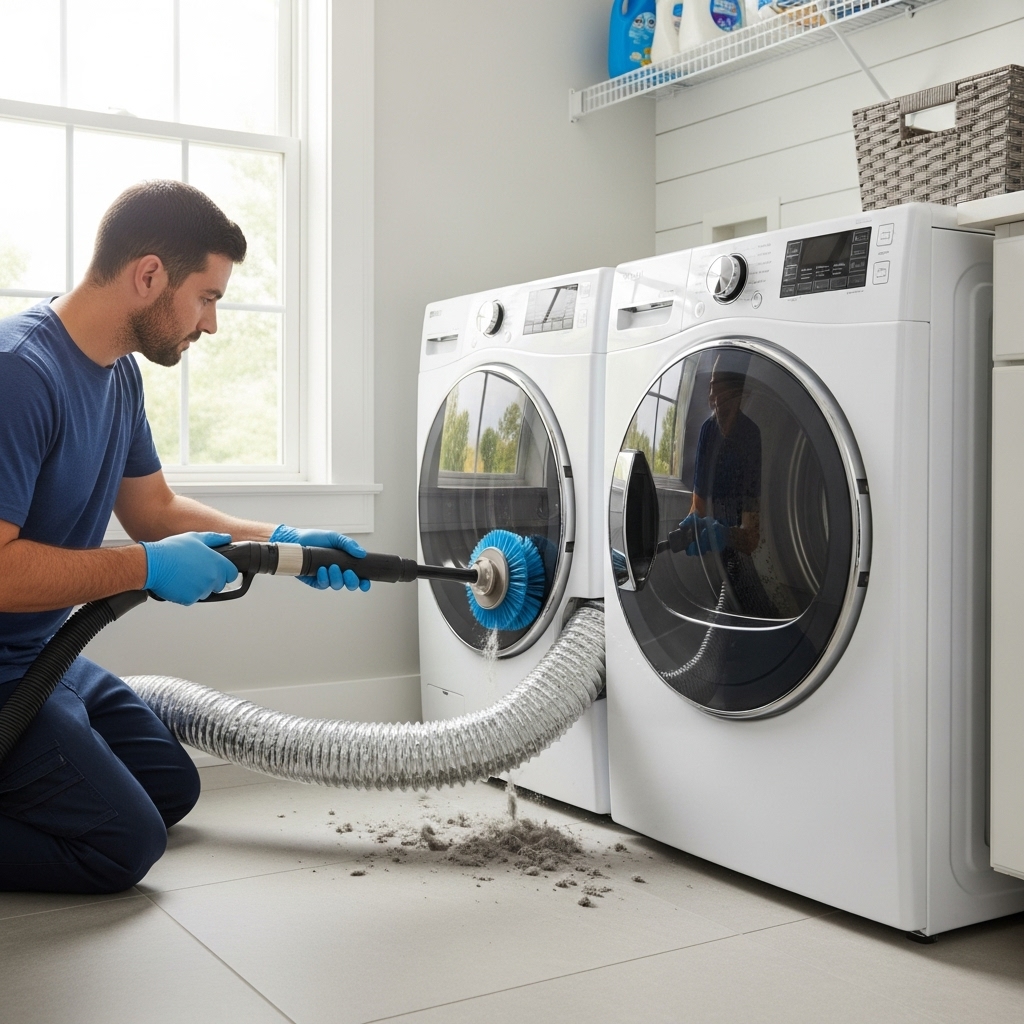
Professional cleaning uses purpose-built rotary brushes, air whips, or compressed air tools inserted through access points to agitate and lift lint from the vent wall. A high-capacity vacuum collects loosened debris so it does not migrate into the home. Technicians will disconnect the dryer when needed to reach the transition duct, inspect for kinks or crushing, and ensure the connection to the wall duct is sound. They also verify that the vent terminates outdoors with a proper hood, not into a crawl space, attic, or soffit. Finally, they test airflow and verify reduced backpressure to confirm that the system is moving exhaust effectively.
In many homes, a dryer vent runs through walls or floors and includes several elbows. Each bend can catch lint, and longer runs require more thorough agitation to clear. Professionals understand these challenges and adjust their method to match your vent’s layout. They also work carefully around drywall and finished surfaces, protecting your living space while they clean.
Safety and Compliance in Somerville Homes
Compliance with manufacturer guidelines and applicable building codes matters as much as cleanliness. Smooth metal ducting is the standard for most modern installations because it resists crushing and holds less lint than ridged foil materials. Where older foil or plastic ducts remain, a professional can recommend safe upgrades that align with best practices. Ensuring the correct duct diameter, minimizing unnecessary elbows, and maintaining a short, direct run to the exterior all contribute to safer operation and better performance.
Professional cleanings also reduce the chance of overheating events. Although modern dryers have thermal safeguards, persistent heat caused by poor ventilation can stress components over time. For households with high laundry volume, pets, or heavy lint-producing fabrics like towels and fleece, the margin for error grows smaller; that is where consistent service becomes especially important.
Maintenance Tips Between Appointments
Homeowners can support safe dryer operation with a few simple habits. Clean the lint screen before or after every load. Occasionally wash the screen with mild soap and water to remove fabric softener residue that can reduce airflow through the mesh. Keep the area behind and around the dryer free of dust, and avoid pushing the appliance so close to the wall that the transition duct becomes compressed. If you notice drying times creeping upward or a burnt-lint smell, unplug the dryer and arrange for service promptly.
It also helps to dry similar fabrics together so cycles complete efficiently. Overloading the dryer can reduce tumbling and trap moisture in the load, extending run time and generating more lint. Periodic professional service remains essential, but these daily habits contribute meaningfully to performance.
For homeowners seeking a midyear checkup, a reputable Somerville specialist can evaluate airflow, run a quick visual inspection, and advise whether a full cleaning is needed. This proactive approach keeps small issues from becoming big ones, especially after home renovations or changes to the laundry setup.
In the middle of your maintenance planning, remember that a well-timed appointment with a trusted local provider makes all the difference. If you need a reliable assessment and thorough cleaning, consider booking a Somerville dryer vent cleaning service to keep your system running at peak efficiency throughout the year.
What to Expect During a Service Visit
On arrival, technicians will discuss your dryer’s recent performance and any concerns you have noticed. They will locate the vent path, take airflow or pressure readings if appropriate, and protect the workspace. After disconnecting the dryer as needed, they will use rotating brushes or air tools to dislodge lint while a collection system captures debris. Once the vent is clear, they will reconnect the dryer, test the operation, and confirm that the exterior hood opens and closes freely. Finally, they will share observations and recommendations, such as replacing a crushed transition duct or upgrading an outdated cap that traps lint.
Good communication is a hallmark of professional service. Technicians should explain their process, show you the collected debris, and provide tips tailored to your laundry habits and the layout of your home. That way, you leave the appointment confident about the condition of your vent and the steps you can take to keep it performing well.
Frequently Asked Questions
How often should I have my dryer vent cleaned in Somerville? Most households benefit from annual professional cleaning. Larger families, pet owners, or households that run multiple loads per day may need service every six to nine months.
Can I clean my dryer vent myself? You can clear superficial lint and use consumer brush kits for short, straight runs, but professional tools and training provide more thorough results for longer or complex vent paths.
What are the signs of a blocked vent? Longer drying times, hot or humid laundry rooms, a burning smell, or a stuck exterior flap are common indicators of restricted airflow.
Is aluminum foil duct acceptable? Flexible foil duct can crush easily and hold lint. Smooth metal duct is generally recommended for safer, more efficient airflow.
Will cleaning help my energy usage? Yes. Restoring proper airflow reduces cycle time and the energy needed to dry each load, easing wear on components and lowering overall consumption.
Do birds or pests affect vents? Yes. Nests or insects can clog exterior caps, and screens may trap lint. Professionals will remove obstructions and ensure the cap functions correctly.
Ready to Protect Your Home and Dryer
If your laundry has been taking longer or you have not scheduled service in the last year, now is an ideal time to act. For dependable results and clear communication, schedule your next dryer vent cleaning with a trusted Somerville specialist and enjoy safer, faster, and more efficient drying.
