Restaurants in Somerville, New Jersey thrive on consistency—consistent flavors, consistent hospitality, and consistently safe, clean kitchens. The restaurant exhaust hood is the front line of defense against grease-laden vapors, heat, and odors. It captures contaminants at the source, pulls them through filters and ductwork, and exhausts them outside your building. For that system to work the way it was designed, it must be cleaned thoroughly and on a sensible schedule. That is where specialized kitchen exhaust hood cleaning for restaurants makes the difference between reactive fixes and a calm, efficient line.
Every restaurant operation is unique. A high-volume fryer and chargrill will load ductwork faster than an oven-focused concept. A rooftop fan with limited access needs a different approach than a straight vertical run. When your cleaning provider builds a plan around your menu, hours, equipment, and staffing, your restaurant can reduce fire risk, improve air quality, and keep line cooks comfortable through the rush.
What Restaurant-Focused Hood Cleaning Includes
Restaurant service requires meticulous attention to detail and a clear, repeatable process. A qualified cleaning service typically includes:
- Site Review: Confirming the full path from hood to rooftop, noting access panels, fan type, and grease containment.
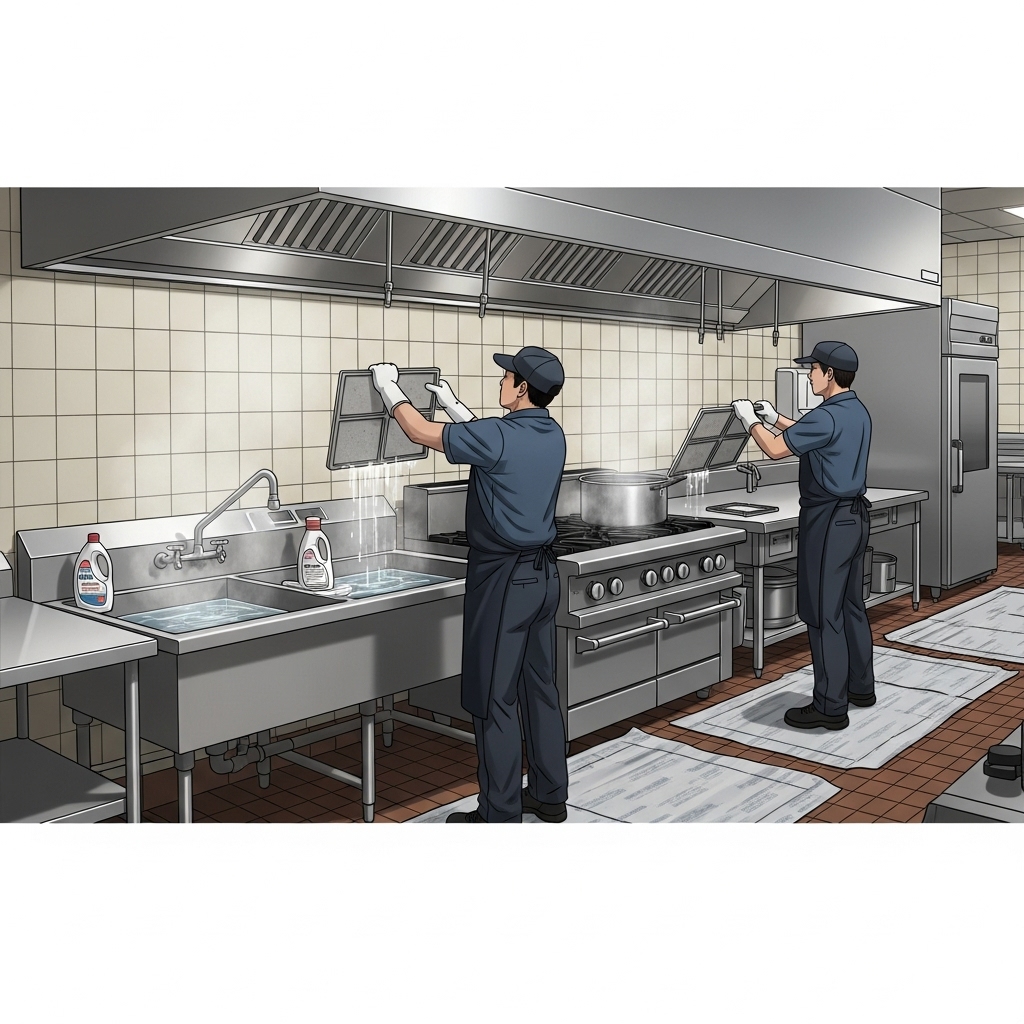
- Shielding and Containment: Protecting fryers, ranges, prep surfaces, and floors to keep cleaning isolated from food-contact areas.
- Filter Service: Degreasing and hot-water pressure cleaning of baffle filters; recommending replacements if performance is compromised.
- Hood and Plenum Degreasing: Removing accumulated residue to restore capture efficiency and reduce fire risk.
- Duct Cleaning to Bare Metal: Accessing horizontal and vertical runs and ensuring thorough removal of grease buildup.
- Exhaust Fan Maintenance: Cleaning blades and housings, checking belts, verifying rotation, and inspecting bearing condition.
- Rooftop Check: Identifying grease discharge issues and assessing the condition of roof membranes around the fan curb.
- Final Detailing and Inspection: Rinsing, drying, polishing visible stainless, and documenting the result with photos.
Somerville Restaurant Realities
From small, family-run eateries to bustling multi-concept venues, Somerville’s restaurant kitchens encounter daily swings in volume and menu composition. Promotions, holidays, and local events can ramp up frying and grilling, accelerating grease accumulation. A restaurant-focused cleaning plan anticipates these peaks and adapts the schedule accordingly. Coordinating with front-of-house hours, deliveries, and prep schedules ensures the cleaning happens with minimal disruption.
The Benefits You and Your Team Will Notice
- Safer Operations: Removing flammable grease reduces the chance of a costly, disruptive incident.
- Better Air and Comfort: Cleaner ducts and fans improve smoke capture and reduce heat build-up on the line.
- Odor Control: Grease residue can harbor strong smells; removing it helps protect the dining experience.
- Equipment Longevity: Exhaust fans work less strenuously when airflow is unobstructed.
- Inspection Readiness: Documented service helps you stay prepared for health, fire, and insurance reviews.
Right-Sizing the Cleaning Frequency
Restaurants that rely on deep frying, char-grilling, and high-heat sauté usually need more frequent service than concepts focused on baking. The best schedule aligns with your real-world grease load, not a calendar set-and-forget guess. Encourage your team to watch for telltale signs—more smoke lingering at the hood edge, sticky surfaces near filters, rumbling or squealing fans—and adjust intervals based on those observations. After any menu change, revisit the plan to ensure you have the right cadence.
Front-of-House Meets Back-of-House: Why Guests Benefit
Guests rarely see your exhaust system, but they experience its results. When airflow is strong, odors don’t linger in the dining room. When grease isn’t circulating, tabletops feel cleaner, and the ambiance remains inviting. Reduced noise and vibration from well-maintained fan systems make conversation easier. All of these details add up to repeat visits and positive word of mouth, which are essential in a community-driven dining scene.
Mid-Season Adjustments and Documentation
In the middle of your cleaning cycle, it can be helpful to perform a quick spot-check—especially during summer festivals or winter holiday spikes. A brief assessment of filter conditions, plenum edges, and rooftop discharge can reveal whether a mid-cycle service is warranted. Partnering with a provider that specializes in exhaust hood cleaning service ensures that you receive clear reports, photos, and practical recommendations that keep your team aligned and your records inspection-ready.
Restaurant Team Roles in Ongoing Care
While full-system cleaning requires professional equipment and training, your restaurant staff plays a critical role in day-to-day care:
- Nightly: Wipe the hood exterior and accessible plenum surfaces to reduce surface film.
- Weekly: Clean baffle filters thoroughly and inspect for dents or warping.
- Monthly: Note any unfamiliar noises from the fan and check for grease around the discharge area.
- As Needed: After menu changes or promotional periods, re-evaluate cleaning frequency with your provider.
Avoiding Common Mistakes
- Delaying service after heavy periods of frying and grilling.
- Assuming a shiny hood exterior means the entire system is clean.
- Overlooking fan belt wear and rotation issues during cleaning.
- Failing to document service and recommendations for inspections.
FAQ
-
How do I schedule around service hours? Most providers offer overnight or early morning appointments to minimize disruption.
-
Will cleaning leave odors? Degreasers have mild scents that dissipate after rinsing and ventilation; proper containment protects dining spaces.
-
How often should a busy fryer line be cleaned? High-volume frying commonly requires shorter intervals than baking-centric operations; consult your provider based on observed grease load.
-
Do I need access panels? Access panels allow thorough cleaning of duct interiors. If they’re missing, your provider can recommend placement.
-
What proof of cleaning should I receive? Expect before-and-after photos, a written report, and recommendations for maintenance or scheduling.
-
What if my rooftop shows grease staining? Rooftop discharge issues should be corrected promptly to protect the roof membrane and reduce fire risk.
Strengthen Safety and Guest Experience
Your kitchen’s throughput depends on reliable ventilation and disciplined upkeep. In Somerville, New Jersey, aligning your restaurant’s unique needs with a knowledgeable partner can transform hood cleaning from a chore into a strategic advantage. When you are ready to optimize comfort, safety, and inspection readiness, book professional kitchen exhaust hood cleaning and keep every shift running smoothly.
