
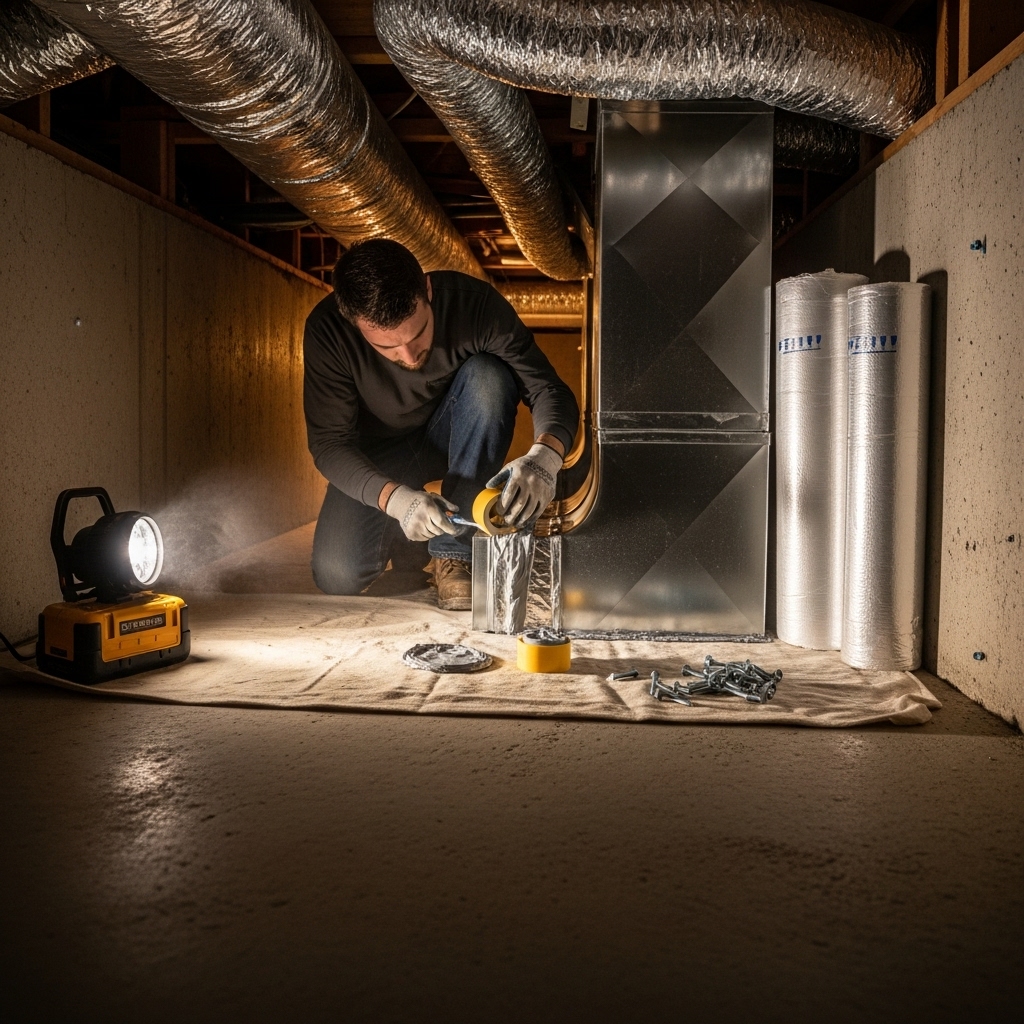
Somerville, New Jersey homes rely on well-sealed, well-supported ducts to deliver clean, conditioned air to every room. When ducts leak, disconnect, or collapse, the system wastes energy and indoor comfort suffers. This step-by-step guide walks you through the essentials of safe, effective air duct repair for local homes, from preparation to final testing. If at any point a task feels beyond your skill level or you uncover significant damage, it is wise to consult experienced technicians who specialize in air duct repair for a thorough, code-compliant result.
Understand Your Duct System
Before starting, take time to understand how your ductwork is laid out and how air moves through your home. Most Somerville homes use a central forced-air system with a supply plenum that feeds branches to rooms and a return path that draws air back to the air handler. You may have a mix of sheet metal trunks and flex duct branches, or all metal, or all flex, depending on the age of the home and past renovations.
Trace the major trunks from the air handler to the farthest registers. Note transitions, elbows, tees, and takeoffs. Mark any areas where ducts pass through unconditioned spaces like attics, basements, crawl spaces, and garages. These areas are more prone to leakage, damage, and condensation, and they are common places to focus repairs.
Safety and Preparation
Turn off the HVAC system at the thermostat and, if you will open any equipment panels or work close to the air handler, power it down at the breaker. Wear gloves, eye protection, and a dust mask or respirator rated for fine particles. In cramped or dusty areas, knee pads and a headlamp are also helpful.
Clear access to ducts by moving stored items and sweeping debris. Lay drop cloths to protect flooring and to keep tools organized. Have a trash bag ready for old tape, insulation scraps, or damaged flex duct sections you may remove. Good preparation saves time and reduces the chance of accidental damage to wiring, refrigerant lines, or framing.
Tools and Materials
- UL 181-rated foil tape (not cloth or “duct tape”)
- Water-based mastic sealant and a disposable brush
- Sheet metal screws and a nut driver
- Snips for metal duct and a sharp knife for flex duct
- Insulation (R-6 or R-8 duct wrap or pre-insulated flex duct)
- Plastic straps or metal hangers for proper support
- Flashlight, mirror, and camera for documentation
- Smoke pencil or incense stick for airflow leak testing
- Measuring tape and marker for layout
Inspection: Finding the Problems
Begin at the air handler and move outward. Look for obvious disconnections, crushed sections of flex duct, gaps at seams, loose takeoffs, kinks, or torn vapor barriers. Check for dark, dusty streaks on insulation or metal; these often indicate leaks where air is carrying dust out of the duct. Pay attention to rooms that run hot or cold, whistling sounds, or weak airflow; these symptoms often point to problems in the branch lines serving those rooms.
Gently tug on joints. If a connection moves or separates, it needs repair. Shine a light around seams while a helper turns on the fan briefly; if you see fibers flutter or feel a draft, you have leakage. Turn the system back off before continuing repairs.
Step-by-Step Repairs
- Seal Accessible Seams: For metal ducts with small gaps, brush on a layer of water-based mastic over the seam and around the joint. Smooth it to a uniform thickness. For long seams, reinforce mastic with foil tape; apply tape first, then mastic over the edges for a belt-and-suspenders seal.
- Reconnect Loose Joints: If a round metal duct has slipped off a collar, re-seat it fully over the bead, secure it with at least three sheet metal screws spaced evenly, then seal with mastic and foil tape. For flex duct, slide the inner core over the collar past the bead, secure with a metal clamp or plastic tie, tape the joint with UL 181 foil tape, then pull the insulation and vapor barrier back over the joint and tape again.
- Repair or Replace Damaged Flex: If the inner liner is torn or the duct is badly crushed, cut out the damaged section. Join the remaining ends to a rigid coupling or a new section of flex duct. Keep flex runs as straight and short as possible and maintain gentle bends to reduce static pressure.
- Insulate Exposed Metal: In unconditioned spaces, wrap bare metal ducts with duct wrap insulation to reduce heat loss or gain and prevent condensation. Overlap seams, tape joints with foil tape, and avoid compressing the insulation.
- Support Ducts Correctly: Use wide straps or saddle supports every 4 to 6 feet for horizontal runs of flex and at each change of direction. Avoid sharp bends over framing that can pinch the duct. Proper support maintains shape, minimizes noise, and protects airflow.
- Secure Takeoffs and Boots: At tees, wyes, and register boots, check for loose or missing screws. Tighten or add screws as needed and seal with mastic. Verify that boots are tight to the floor, wall, or ceiling and that gaps around the boot are sealed to prevent air leakage into cavities.
- Address Balancing Issues: If certain rooms are starved for air, confirm that dampers are open and that the branch line is not undersized or excessively long. Minor re-routing or replacing a small section of collapsed flex can restore proper airflow.
- Check the Return Side: Returns are just as important as supplies. Look for leaky filter slots, disconnected return drops, or stud bays used as returns with gaps. Seal returns meticulously, as leaks on the return side can pull dust, insulation fibers, and attic or basement air into the system.
Midway through a project, many homeowners discover issues that require specialty tools, challenging access, or advanced diagnostics. When that happens, it is smart to bring in local professionals experienced in air duct repair to evaluate static pressure, verify sizing, and ensure that repairs meet best practices for safety and performance.
Quality Checks and Airflow Testing
After sealing and reconnecting, conduct basic tests. With the fan running, use a smoke pencil to trace around repaired seams; smoke should not be pulled in or blown away. Listen for whistling, rattling, or drumming that indicates loose parts or excessive air velocity. Place a hand over registers to compare airflow between rooms. While this is not a professional measurement, it helps identify branches that may still have problems.
Check the filter and replace it if dirty. A clogged filter increases pressure and can reveal weaknesses in your repairs. Finally, run the system through a full heating or cooling cycle to confirm stable operation, comfortable temperatures, and quiet ducts.
Somerville-Specific Considerations
Somerville’s seasonal swings mean ducts can see condensation in humid summers and contraction in cold winters. Focus on sealing joints in attics and basements where temperature differences are greatest. If your home is older, you may find legacy materials, unconventional returns, or boot connections that predate current standards. Approach these with care and correct them to modern sealing and support practices.
Basements in the region can be damp. Where ducts pass through or near moisture-prone areas, ensure vapor barriers on flex are intact and that insulation is dry. If you discover signs of microbial growth or persistent odors, stop and consult a qualified professional for proper remediation procedures before proceeding with repairs.
Common Mistakes to Avoid
- Using cloth “duct tape” instead of UL 181 foil tape or mastic. Cloth tape degrades quickly and will fail.
- Over-tightening straps or bending flex too sharply, which collapses the inner core and restricts airflow.
- Leaving gaps around register boots that leak into walls or ceilings. Always seal the boot-to-structure joint.
- Neglecting the return side. Leaky returns increase dust and reduce comfort.
- Skipping insulation on metal ducts in unconditioned spaces, leading to condensation and energy loss.
- Ignoring system airflow. Sealing without considering sizing and balancing can shift problems from one room to another.
When to Call a Professional
Call a professional if you find extensive disconnections, large sections of collapsed duct, damaged plenums, or signs that duct sizing is fundamentally wrong for your system. Professional technicians have tools to measure static pressure, temperature rise, and airflow, and they can verify that repairs support safe furnace operation and proper cooling performance.
Additionally, if ducts run through tight crawl spaces or high attics that are difficult to access, hiring an expert can reduce risk and ensure thorough sealing and support. A quality repair not only improves comfort but also protects the longevity of your equipment.
Maintenance to Keep Ducts Performing
- Replace filters on schedule to maintain airflow and reduce dust accumulation.
- Visually inspect accessible ducts each season, especially after extreme weather or renovation work.
- Keep registers open and unblocked by furniture, drapes, or rugs.
- Listen for new noises and investigate early; small issues are easier to correct.
- Ensure attic and basement insulation and ventilation are in good shape to control condensation risks.
FAQ
How do I know if my ducts are leaking? Common signs include uneven temperatures, high dust levels, whistling sounds, and visible dust streaks around seams. A smoke pencil test with the fan running can also reveal leaks. For precise results, professionals use pressure testing and airflow measurements.
Is mastic better than tape? For most joints, a combination works best. Foil tape provides an immediate mechanical seal, while mastic brushed over seams and tape edges delivers a long-lasting, airtight finish. Always use UL 181-rated products designed for ductwork.
Can I repair flex duct, or should I replace it? Small tears or loose collars can be repaired. If the inner core is crushed, kinked, or brittle, replacement is usually the better option to restore airflow and reliability.
Should I seal the inside of ducts? Generally, focus on external joints and seams. Interior sealing is not usually necessary and may not be appropriate for all materials. If interior coating is considered, consult a qualified technician for guidance.
What if I suspect mold? Pause work and consult a professional experienced in safe assessment and remediation. Address moisture sources and ensure proper filtration and ventilation before returning to repairs.
Will repair improve my comfort? Yes. Properly sealed, supported, and insulated ducts deliver more consistent temperatures, quieter operation, and cleaner air to each room.
If I renovate, should I re-check my ducts? Yes. Remodeling can change airflow paths, add new loads, or disturb existing duct runs. Inspect and adjust after major changes.
What about balancing dampers? If accessible, manual dampers on branch lines can fine-tune airflow to rooms. Mark damper positions once comfort is optimized so you can restore settings after filter changes or service.
How often should I inspect? A seasonal quick check plus a more thorough annual review is a good cadence for most Somerville homes.
Do I need permits for duct repair? Minor repairs typically do not, but major relocations or equipment changes may trigger local requirements. Consult your local building department or a licensed contractor.
Ready to bring consistent comfort back to every room and protect your HVAC system? For dependable results, schedule expert air duct repair and enjoy tighter ducts, quieter operation, and a healthier home environment.
