If you are new to managing a commercial kitchen in Somerville, New Jersey, exhaust hood cleaning may feel intimidating. The good news is that a clear plan, basic tools, and consistent habits make it manageable. By understanding the parts of your system, following safe cleaning steps, and keeping records, you can reduce fire risk, support airflow, and stay inspection-ready.
Beginners often wonder where to start—filters, ducts, or the fan—and how often to repeat tasks. The following guidance breaks down the system and offers a routine you can scale as your operation grows. If you prefer extra assurance or need help with difficult access, professionals focused on kitchen exhaust hood cleaning can assist with complex duct runs and rooftop fans while you maintain daily and weekly tasks in-house.
Know the Parts of Your System
Your exhaust system captures hot, grease-laden vapors from cooking and vents them outside. Key components include the hood canopy over your appliances, a plenum where grease collects, removable baffle filters, ductwork that carries vapors to the exterior, and a rooftop or wall-mounted fan that expels air. Many systems also connect to a fire suppression network with nozzles aimed at high-risk appliances.
Each component needs attention. Filters clog first, restricting airflow and allowing more grease to migrate downstream. Ducts and the fan accumulate residue over time, increasing fire risk and reducing efficiency. A well-structured routine cleans the quick-access parts often and schedules thorough, deeper cleaning at intervals guided by your cooking volume.
Safety First
Before any cleaning, cool the line and secure power to the hood, make-up air, and fan. Post “Do Not Operate” signs and lock switches if possible. Protect the fire suppression system components from overspray and avoid disturbing nozzles or detection lines. Wear gloves and eye protection, place mats to prevent slips, and keep food and utensils away from the work area.
Set up containment using plastic sheeting and drip trays to capture runoff. This protects floors and appliances and helps you control chemical use. Good containment also makes clean-up faster and keeps your kitchen safer for reopening after the job.
Tools and Supplies You Will Use
- Food-safe alkaline degreaser appropriate for stainless steel and exhaust systems
- Foamer or sprayer to apply cleaner evenly and control dwell time
- Nylon brushes, non-scratch pads, and elongated brushes for duct sections
- Hot water rinse source; controlled pressure to protect finishes and seals
- Plastic sheeting, magnets, tape, absorbent pads, and drip trays
- Gloves, goggles, non-slip footwear, and a respirator if needed
- Ladder, headlamp, and basic tools for access panels and fan hinges
- Wet/dry vacuum and containers for spent solution and grease
Beginner-Friendly Routine
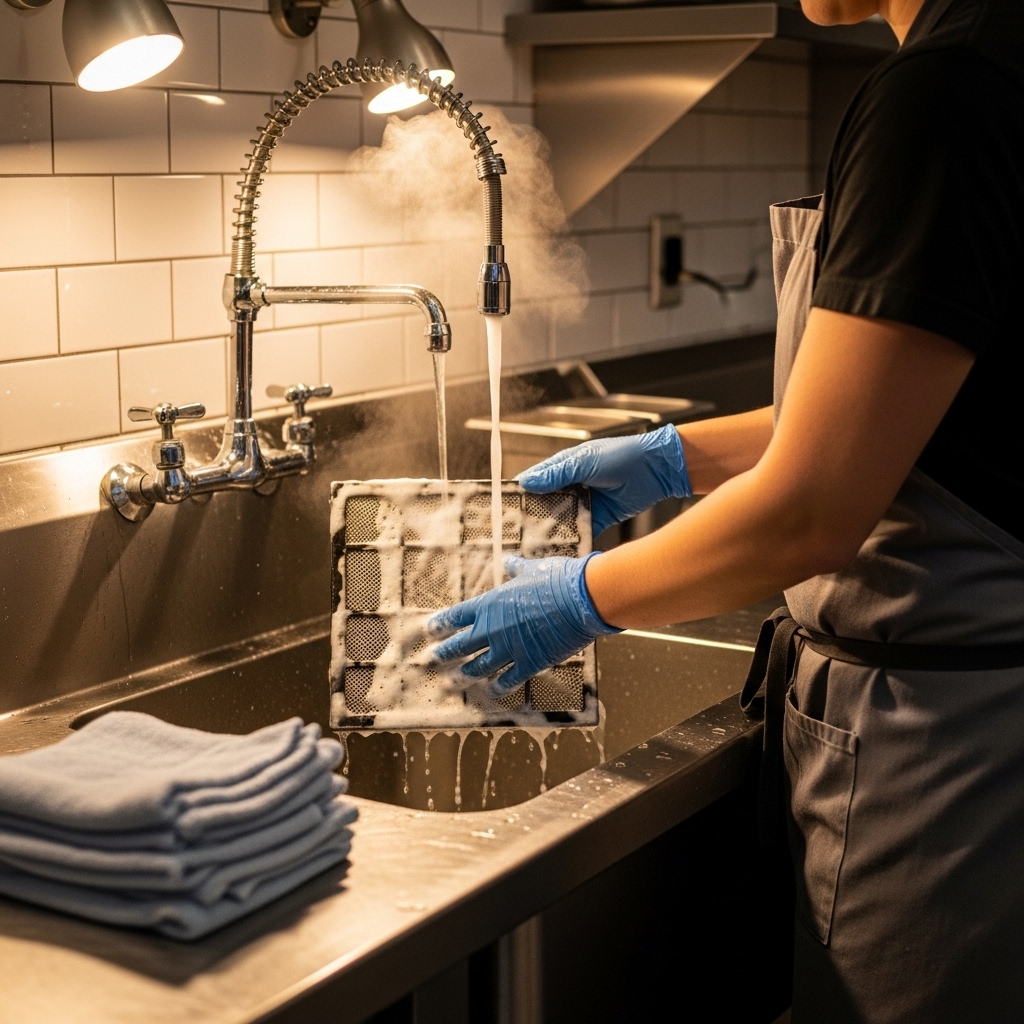
- Daily or service-day filter rinse: Remove baffle filters and rinse with hot water. For heavy use, soak with a mild degreaser, rinse, and allow to dry before reinstalling.
- Weekly hood wipe-down: With equipment off and cool, apply a light degreaser to the hood interior and plenum. Wipe with non-scratch pads and rinse with warm water.
- Monthly inspection: Open an access panel, inspect a duct section, and check the fan housing if it has a hinge. Take photos and note any visible film or residue.
- Periodic full-system clean: Based on volume, plan quarterly or more frequent comprehensive cleaning of hood, ducts, and fan. Record dates and observations.
- Documentation: Keep a log with photos, chemicals used, and any repair notes—like gaskets or hinge maintenance—to show diligence during inspections.
As you progress from basics to deeper tasks, you will gain confidence. If you encounter stubborn buildup or challenging access, a Somerville-based team skilled in kitchen exhaust hood cleaning can complete the heavy-lift portions while you handle routine filter and hood care.
How to Perform a Thorough Clean
- Shut down and secure power. Confirm the hood and fan are off. Protect nearby equipment and food with covers.
- Remove and soak filters. Use diluted degreaser and hot water. After soaking, scrub gently and rinse thoroughly.
- Apply degreaser to the hood interior. Allow appropriate dwell time to soften grease without excessive scrubbing.
- Scrub and rinse from top to bottom. Capture runoff using your containment setup.
- Open access panels and clean ducts. Apply cleaner to interior surfaces, scrub with elongated brushes, and wipe residue toward containment.
- Tilt and clean the rooftop fan. Degrease blades and the housing, rinse carefully, and check for clear drainage.
- Wipe the roof curb and surroundings. Remove grease and check that no chemical pools remain.
- Dry, reassemble, and test. Reinstall filters, close panels, remove containment, restore power, and run the fan to check airflow and sound.
When to Clean: Setting a Schedule
Frequency depends on what and how much you cook. Heavy frying or charbroiling often requires monthly full-system cleaning. Many beginner-managed kitchens start with quarterly cleaning and adjust based on inspections. Filters benefit from daily or weekly attention; having a spare set makes rotations easier during busy service.
Common Beginner Mistakes
- Cleaning only the parts you can see and forgetting ducts and fans where grease accumulates most.
- Rushing dwell time for chemicals. Allow the cleaner to work so you can scrub gently and avoid scratches.
- Using high-pressure water near seals and electrical components. Use controlled rinsing and dry thoroughly.
- Skipping documentation, which makes inspections harder and obscures patterns that could improve scheduling.
- Neglecting rooftop drainage and hinge maintenance, which leads to messes, damage, or unsafe conditions.
Somerville Context: Buildings and Access
Many kitchens in Somerville operate in multi-tenant buildings or historic spaces with unique duct routes and rooftop constraints. Coordinate access with property management and plan for weather. Dry components completely in cold months to avoid icing. Keep communication clear with neighbors and staff to prevent surprises during cleaning windows.
Frequently Asked Questions
Q: How often should beginners plan a full cleaning? A: Start with quarterly service and adjust based on cooking volume and inspection findings. Heavy grease production may require monthly schedules.
Q: Are store-bought degreasers safe? A: Choose food-safe, non-chloride alkaline degreasers appropriate for stainless steel and exhaust systems. Test a small area first.
Q: Can I clean without shutting down the fan? A: No. Shutdown is necessary for safety, containment, and thorough cleaning. Running fans can spread chemicals and moisture.
Q: What proves I completed the cleaning? A: Keep a log with dates, photos, chemicals used, and any recommendations or repairs. This documentation supports inspections and insurance.
Q: Do I need a hinge on my rooftop fan? A: A hinge kit improves safety and access, preventing strain on wiring and roof surfaces and enabling thorough cleaning of blades and housing.
Q: What if I find heavy buildup? A: Increase dwell time, reapply cleaner, and use the right brushes. If access is difficult, schedule professional help to handle ducts and the fan.
Take the Next Step with Confidence
If you want a dependable, beginner-friendly path to a safer kitchen and stronger compliance, book support from experts in kitchen exhaust hood cleaning. You will protect your team, improve airflow, and keep your Somerville operation ready for peak service and inspections.
