A complete kitchen exhaust hood cleaning program is one of the foundations of fire safety, airflow efficiency, and regulatory compliance for restaurants and foodservice operations in Somerville, New Jersey. Because grease vapors condense throughout the hood, plenum, ductwork, and fan assembly, an incomplete cleaning leaves ignition sources hidden in the system. This guide provides a comprehensive framework—planning, execution, verification, and documentation—so your team can approach each cleaning with clarity and confidence.
Whether you manage a high-volume fry line, a charbroiler-focused bistro, or a mixed-method cafeteria, the essentials remain the same: clean every grease-bearing surface on an appropriate schedule and keep records. If you require specialized equipment, rooftop access support, or simply want to streamline compliance, consider partnering with local professionals who specialize in kitchen exhaust hood cleaning to cover complex duct runs and fan assemblies safely.
Core Principles of a Complete Program
Comprehensiveness means addressing the hood interior, filters, plenum, ductwork, access panels, rooftop fan, and surrounding roof or wall areas impacted by grease discharge. Consistency means sticking to a schedule based on your volume and cooking methods, with adjustments informed by inspections. Documentation means keeping logs, photos, and certificates to demonstrate diligence to inspectors, insurers, and owners.
Adhering to NFPA 96 guidelines helps align your practices with recognized standards. Combined with local code requirements, these guide the frequency and scope of cleaning. Solid-fuel cooking, for example, typically requires more frequent attention. Your program should also incorporate daily and weekly tasks for line staff, like filter washing, that support long-term system performance.
Roles, Responsibilities, and Communication
Assign a program lead who coordinates schedules, vendors, and recordkeeping. Line staff can handle nightly wipe-downs and filter checks, while supervisors ensure pre-clean prep and post-clean verification steps are followed. If a third party is engaged, the lead confirms access windows, roof protocols, and any shared-building considerations common to Somerville’s mixed-use properties.
Provide a pre-clean briefing before each service event: confirm lockout/tagout steps, chemical handling, containment layout, and suppression system precautions. Post “Do Not Operate” signs on switches and gas valves as needed, and close off the area to non-essential staff.
Supplies and Equipment
- Food-grade alkaline degreaser suitable for stainless steel and exhaust components
- Foamers or sprayers for even chemical application and dwell time control
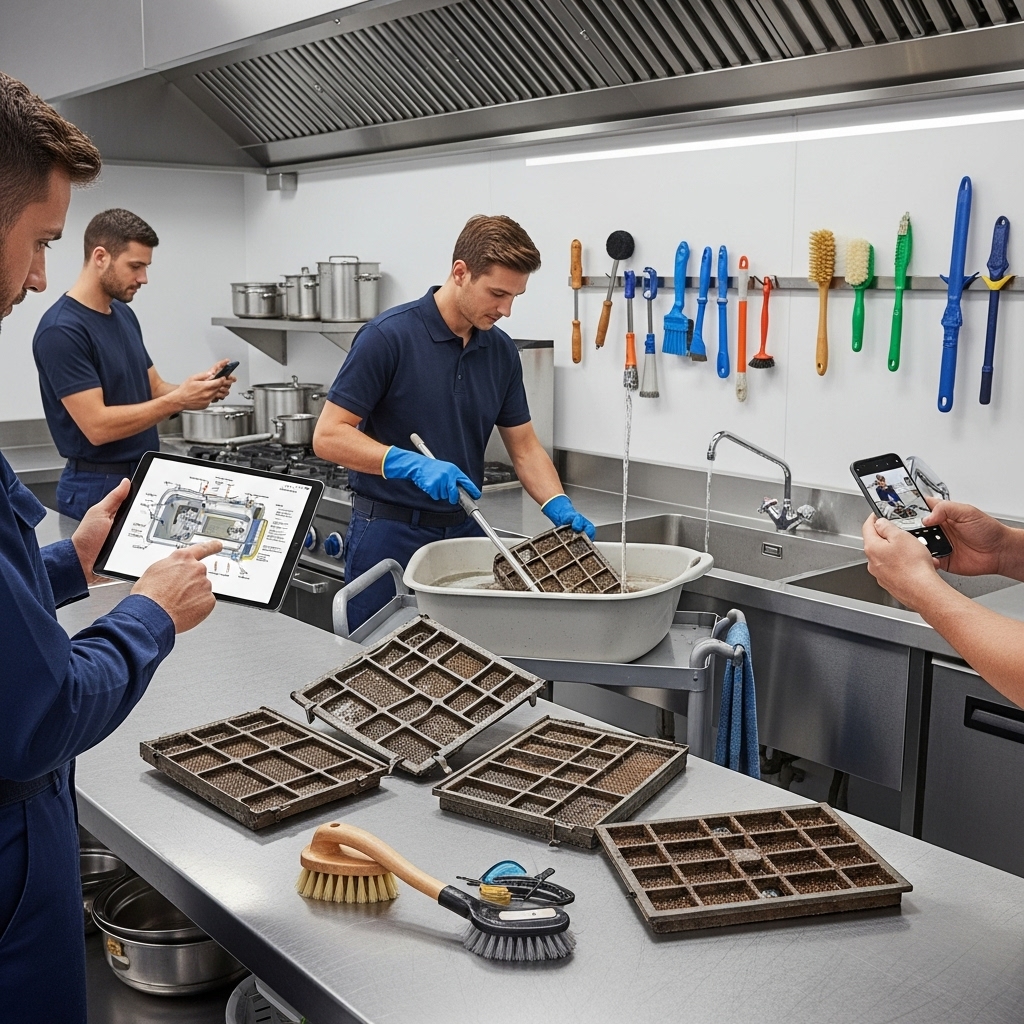
- Nylon brushes, non-scratch pads, detail brushes, and elongated duct brushes
- Hot water rinse source and controlled-pressure tools to protect finishes
- Plastic sheeting, magnetic covers, tape, drip trays, and absorbent mats
- Ladders, lights, basic hand tools, and appropriate PPE (gloves, eye, respiratory protection)
- Wet/dry vacuum and waste containers for safe collection and disposal
- Camera or mobile device for before/after photos and documentation
Preparation and Containment
Cool the cookline and power down affected equipment. Cover appliances and work areas with poly sheeting. Build a containment funnel from the hood to buckets or drip trays. If your fan has a hinge kit, confirm it’s functional. Identify all cleanout doors, verify gaskets are intact, and plan the order of operations to minimize cross-contamination as you move from the hood to the ducts to the roof.
Photograph high-buildup zones before you begin. Capture filter condition, plenum, duct entries, elbows, and the fan interior. These images serve as baselines and become part of your compliance log alongside chemical lists and worker notes.
Cleaning Procedure: A Detailed Sequence
- Lockout and label. Shut off electrical power to the hood, make-up air, and fan. Mark switches and gas valves. Confirm with a test cycle that systems are offline.
- Filter removal and soak. Remove baffle filters and soak them in a diluted degreaser. Agitate as needed and rinse with hot water. Place on racks to drip dry.
- Hood interior application. Apply a foaming degreaser to the plenum and interior hood surfaces. Observe dwell times to break down heavy polymerized films.
- Scrub, rinse, and detail. Use nylon brushes, non-scratch pads, and warm water rinse. Work top to bottom to prevent re-soiling cleaned areas. Capture runoff.
- Access panels and duct interior. Open cleanouts, apply cleaner to duct surfaces, and scrub toward your containment. Use elongated brushes for elbows and long runs.
- Rooftop fan cleaning. Tilt the fan on its hinge. Clean blades, housing, and drain paths. Avoid aggressive pressure that may unbalance the fan. Rinse carefully and check for clear drainage.
- Roof curb and surroundings. Wipe grease residue from the curb and roofing materials. Confirm there is no ponding of chemical or grease.
- Reassembly and polish. Reinstall panels, confirm gasket integrity, replace dry filters, and polish external stainless to a uniform finish.
At the midpoint of the job, compare progress to your checklist and photos. If you encounter hard-cured buildup in elbows or near heat-intensive appliances, extend dwell time and reapply foam rather than scraping aggressively. For difficult access or when staffing is tight, partnering with a Somerville-based team experienced in kitchen exhaust hood cleaning helps ensure safe, thorough results with minimal disruption.
Verification, Start-Up, and Airflow Check
After final rinse and dry, remove containment without spilling residue. Restore power and run the fan. Listen for vibration and check airflow at the cookline. Confirm that make-up air is functioning and balanced. Inspect for drips at seams or panels and tighten as needed. Take after-photos mirroring your before-angles for a clear comparison.
Log the date, areas cleaned, personnel, chemicals used, and any repairs recommended. Include belt or motor notes if you observed wear or noise. This record supports inspections and provides continuity across shifts and staff changes.
Scheduling and Frequency Guidance
Base your frequency on cooking type and volume. High-grease or solid-fuel operations may need monthly full-system cleaning. Many Somerville restaurants operate on quarterly or semiannual schedules for ducts and fans, with weekly or daily filter cleaning. Adjust intervals based on inspections—if filters saturate quickly or ducts show notable film between cycles, tighten the schedule.
For seasonal spikes—farm-to-table events, festivals, or holiday crowds—plan extra filter rotations and interim hood touch-ups. Keep spare filters to maintain service while others soak and dry.
Common Pitfalls and How to Avoid Them
- Cleaning only visible hood surfaces while ignoring ducts and fan blades where grease accumulates out of sight.
- Using abrasive tools that scratch stainless steel, accelerating future buildup and complicating cleaning.
- Over-rinsing near electrical components or seals, causing water intrusion or damage.
- Skipping roof grease checks, which can lead to slippery surfaces, roof damage, and code issues.
- Neglecting records, which undermines compliance and continuity across staff and vendors.
Somerville Considerations: Buildings, Access, and Weather
Many Somerville kitchens operate in multi-tenant or historic buildings with long horizontal runs and shared rooftops. Confirm access windows with property managers, and plan safe ladder use and roof protection. In colder months, consider the impact of freezing temperatures on rinsing and fan operation; dry components thoroughly and ensure hinges are not iced before reassembly.
Frequently Asked Questions
Q: What determines how often I should clean the system? A: Cooking volume and methods drive frequency. Frying and charbroiling produce heavy vapors requiring more frequent service than light sauté or baking.
Q: Do I need to clean beyond the hood and filters? A: Yes. Ducts and fans collect grease and must be cleaned to reduce fire risk and comply with standards.
Q: Can we clean during business hours? A: It is best to schedule during off-hours to avoid contamination risks and to allow full system shutdown and containment.
Q: What if my rooftop fan lacks a hinge kit? A: Install a hinge kit for safe access and to protect wiring and roofing. It simplifies future cleanings and inspection.
Q: How should I document the work? A: Maintain logs with dates, areas addressed, chemicals used, photos, and any vendor certificates. Keep these accessible for inspections.
Q: Are there specific products I should avoid? A: Avoid chlorine-containing cleaners on stainless and harsh abrasives that can scratch. Use food-safe alkaline degreasers recommended for exhaust systems.
Keep Your Kitchen Safer and Inspection-Ready
When you want a thorough, code-aligned result on a dependable schedule, engage specialists in kitchen exhaust hood cleaning. You will help protect your team, improve airflow, and keep your Somerville kitchen ready for peak service and inspections year-round.
