
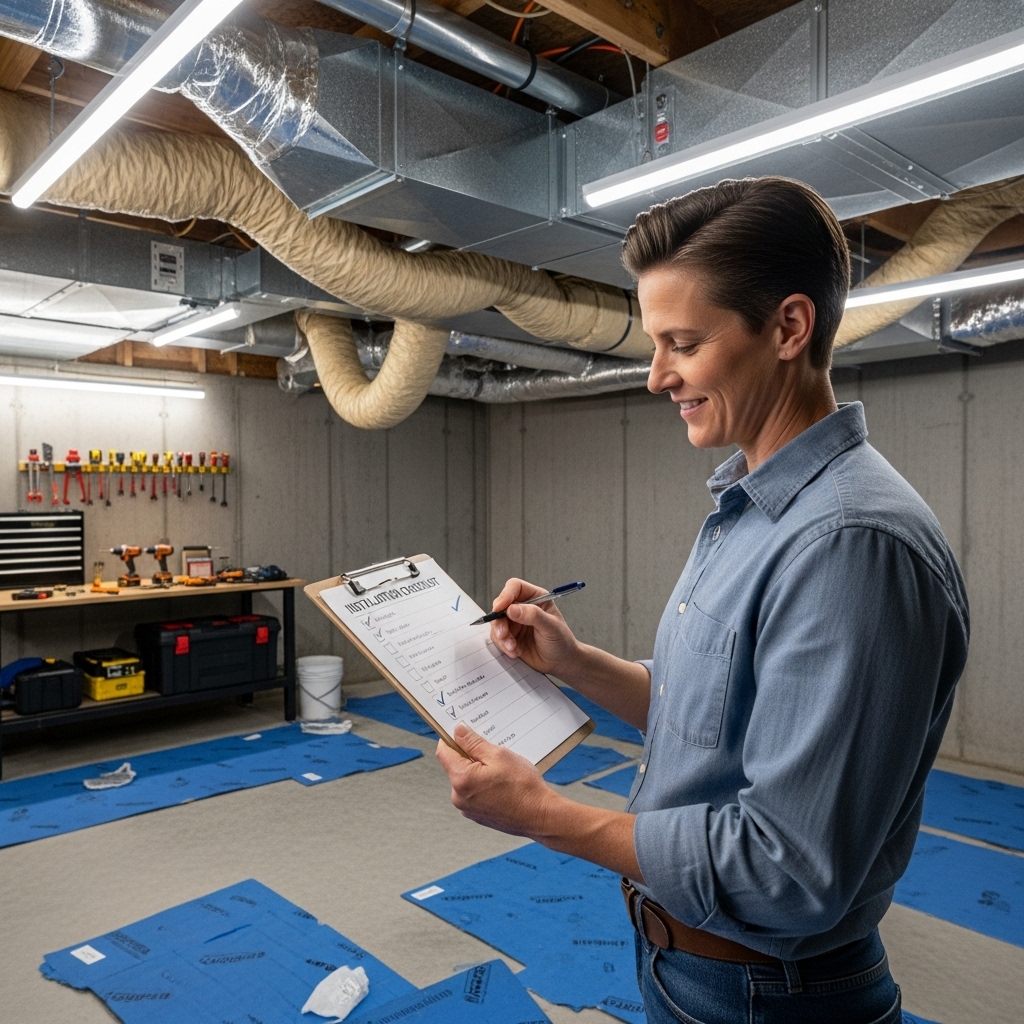
A successful duct project starts long before the first register is cut. For Somerville homeowners, a thorough checklist helps you prepare your space, align expectations, and verify performance after the work is complete. This detailed guide walks you step-by-step through planning, design, materials, installation, verification, and maintenance so you can approach your project with confidence. If you want expert guidance at any stage, speaking with a local professional about air duct installation can help you adapt this checklist to the specific layout and comfort goals of your New Jersey home.
Every property is unique, especially across Somerville’s mix of historic homes and newer builds. That diversity calls for a flexible framework: begin with foundational tasks that apply to any project, then tailor details as you learn more about your home’s structure, ventilation needs, and access points. The result is a clear path from initial assessment to a clean, balanced, and efficient duct system.
Phase 1: Planning and Initial Assessment
Before any design work begins, capture a snapshot of your home’s current conditions. This establishes a baseline for airflow needs, access, and overall feasibility.
- Document your comfort concerns: list rooms that feel drafty, noisy, too warm, or too cool.
- Collect home details: square footage, number of stories, attic and basement access, and insulation or air sealing improvements already completed.
- Identify existing duct locations: note trunk routes, returns, and register locations if a system is already in place.
- Check for potential obstacles: plumbing stacks, structural beams, masonry walls, and tight soffits can influence routing.
- Discuss household routines: quiet hours, work-from-home schedules, and pet considerations help plan daily work windows.
Phase 2: Load Calculations and Design
A room-by-room load analysis and duct design prevent guesswork and lay the groundwork for balanced comfort. Expect your designer to review building envelope characteristics, window orientation, and infiltration considerations specific to your home.
- Request a formal load calculation to determine airflow requirements for each room.
- Confirm sizing guidance for trunks and branches, including equivalent length limits for flexible runs.
- Plan return air strategy with enough returns to reduce pressure imbalances and noise.
- Finalize register locations to avoid drafts, furniture conflicts, or blocked pathways.
- Discuss zoning for multi-story or expansive floor plans to improve temperature consistency.
Phase 3: Material Selection and Specifications
Materials play a major role in durability, acoustics, and maintenance. A good specification pairs materials with placement and support methods that protect airflow.
- Choose rigid metal for trunks and high-static sections when possible for smooth airflow and durability.
- Use flexible duct sparingly for short final runs; support at regular intervals and avoid sharp bends.
- Consider duct board where appropriate for built-in insulation and noise control; ensure meticulous fabrication and sealing.
- Specify insulation levels for all runs in unconditioned spaces to reduce thermal losses and condensation risk.
- Define sealing standards, including mastic and UL-listed tape for long-term leakage control.
Phase 4: Pre-Installation Home Preparation
Preparing your home helps the crew work efficiently and minimizes disruption. A clean, accessible workspace also leads to better-quality results.
- Clear areas around the air handler, mechanical closet, and planned duct routes.
- Protect furnishings and flooring with coverings; ask your installer about their standard protection methods.
- Secure pets and plan for temporary noise and occasional dust from cutting and fastening.
- Coordinate parking and access to attics, crawlspaces, and basements.
- Review daily schedules and identify any quiet hours or blackout periods.
Phase 5: Installation Best Practices
During installation, craftsmanship and attention to detail make the difference between an average system and one that performs reliably for years.
- Verify that duct sizes match the design and that routes are kept as straight and short as practical.
- Minimize elbows, transitions, and flexible runs to reduce resistance.
- Support flexible ducts at correct intervals to prevent sagging and kinks.
- Seal all joints at plenums, takeoffs, boots, and seams with mastic or approved tapes.
- Insulate ducts in unconditioned spaces, ensuring vapor barriers are correctly installed where required.
- Install balancing dampers where indicated to fine-tune airflow later.
- Place registers and grilles flush and square, avoiding conflicts with trim or furnishings.
Phase 6: Testing, Balancing, and Documentation
Verification ensures the system behaves as designed. Thorough testing identifies small issues before they become chronic comfort complaints.
- Perform duct leakage testing to check the integrity of sealing.
- Measure airflow at key registers and adjust dampers to achieve balance.
- Confirm quiet operation by listening for whistling or rattling and checking for vibration isolation near the air handler.
- Review insulation coverage and look for gaps, compression, or missing vapor barriers.
- Collect documentation: final layout, test results, and photos of concealed runs.
Phase 7: Post-Installation Walkthrough
Before the crew leaves, request a detailed walkthrough. This is your opportunity to learn how to operate and maintain the system.
- Confirm register locations, damper positions, and access panels for future service.
- Discuss filter types and recommended replacement intervals based on your household.
- Review maintenance tips and any warranty procedures.
- Note who to contact if you observe unusual noise, temperature swings, or condensation.
Phase 8: Maintenance and Continuous Improvement
Even a perfectly installed system benefits from ongoing care. Small habits deliver big comfort and efficiency dividends over time.
- Replace filters on schedule and keep returns clear of obstructions.
- Periodically inspect accessible ducts for loose connections, crushed flex, or missing insulation.
- Address building envelope upgrades—air sealing and insulation—as they can reduce strain on the system.
- Schedule professional checkups to verify airflow and sealing remain within targets.
Somerville-Specific Considerations
Local housing stock and climate inform a few priorities worth emphasizing in this region:
- Attic conditions: Hot summers increase attic temperatures; prioritize insulation and sealing to stabilize supply air.
- Basement moisture: Damp basements call for careful insulation and vapor barrier strategies around ducts.
- Historic charm: Older homes may require creative routing to preserve details while still delivering balanced airflow.
- Seasonal swings: Design for humidity management and consistent comfort from January cold to July heat.
Mid-Project Checkpoints
As work progresses, pause for quick quality checks to confirm the installation aligns with the plan:
- Are trunk sizes and branch diameters consistent with the design?
- Are flexible runs kept short and supported? Any tight bends that should be corrected?
- Are joints sealed at every connection, including boots and registers?
- Is insulation complete and uncompromised?
- Have potential noise sources near the air handler been addressed?
Quality and Performance Tips
To extract maximum comfort and efficiency, incorporate these best practices during layout and finishing:
- Avoid placing returns too close to supplies to prevent short-circuiting airflow.
- Use lined sections or acoustic strategies near the blower to reduce transmission of sound.
- Balance supplies and returns by floor and zone to limit pressure imbalances.
- Label dampers and key access points for faster future service.
Frequently Asked Questions
How do I know the design is right for my home? A formal load calculation and a documented duct layout are the best indicators. Ask your installer to explain the airflow targets and how the layout supports them.
Can I keep using existing registers and grilles? Often, yes. If their locations and sizes match the new design, reusing them can be practical. If they cause drafts or noise, relocating or resizing may be beneficial.
What if my home has limited access? Skilled installers can often work within tight attics, crawlspaces, and finished areas. The design may rely on compact chases or creative soffits to preserve aesthetics while maintaining performance.
Do I need zoning? Zoning can improve comfort in multi-level homes or layouts with large temperature differences. It is best considered during the design phase so ducts, dampers, and controls work cohesively.
How is leakage controlled? Through mastic at seams, UL-listed tapes where appropriate, and careful mechanical fastening. Verification testing confirms the result.
What maintenance should I plan on? Replace filters as recommended, keep returns clear, and schedule periodic inspections. Visual checks for loose connections or damaged insulation can catch small issues early.
Putting It All Together
With a clear checklist, you can move step by step from initial assessment to verification and long-term care. Organize documents, ask questions during the walkthrough, and keep photos of concealed runs for your records. If you would like personalized help tailoring this checklist to your home, consult a local specialist experienced in air duct installation. A focused plan reduces surprises, supports balanced airflow, and sets your Somerville home up for year-round comfort.
