Professional dryer vent installation services in Somerville, New Jersey bring specialized knowledge, precise tools, and time‑tested methods to a task that affects everyday comfort and home safety. Whether you are moving into a newly renovated townhouse or updating an older single‑family home, the right vent path helps your dryer work as designed. Correct routing, durable materials, and well‑sealed joints create smooth airflow so loads dry faster and moisture exits outdoors where it belongs. If you are exploring your options, start by understanding what a complete service visit includes and why choosing expert dryer vent installation is the most reliable path to consistent performance.
What professional service really means
Professional service is a combination of planning, craftsmanship, and verification. Planning begins with listening to your needs: Where is the laundry located? Is there an existing vent? What type of exterior wall or roof system does the home have? The installer then proposes a route that balances directness and accessibility, counts elbows, and targets the fewest possible bends. Craftsmanship appears in clean openings, snug joints, and stable supports. Verification is the final critical step: running the appliance, measuring or observing airflow, and confirming that the exterior damper opens fully.
Why the right materials matter
The main vent run should be rigid metal with a smooth interior surface. Smooth ducting reduces friction so the dryer moves air easily, helping the appliance maintain safe temperatures and dry loads more efficiently. The short connector behind the dryer must resist kinking when the machine is pushed back into place. Proper connectors and elbows keep the interior clear of protrusions where lint would otherwise collect, and foil tape rated for ductwork seals joints without intruding into the airstream.
Step‑by‑step: a typical installation
- Site assessment: The technician examines the laundry space, confirms dryer model and outlet size, surveys the exterior for a termination location, and notes obstacles.
- Route design: They minimize length and elbows, calculating equivalent length to stay within manufacturer guidelines.
- Penetration prep: A pilot hole confirms the path is free of wiring and plumbing before cutting the full opening.
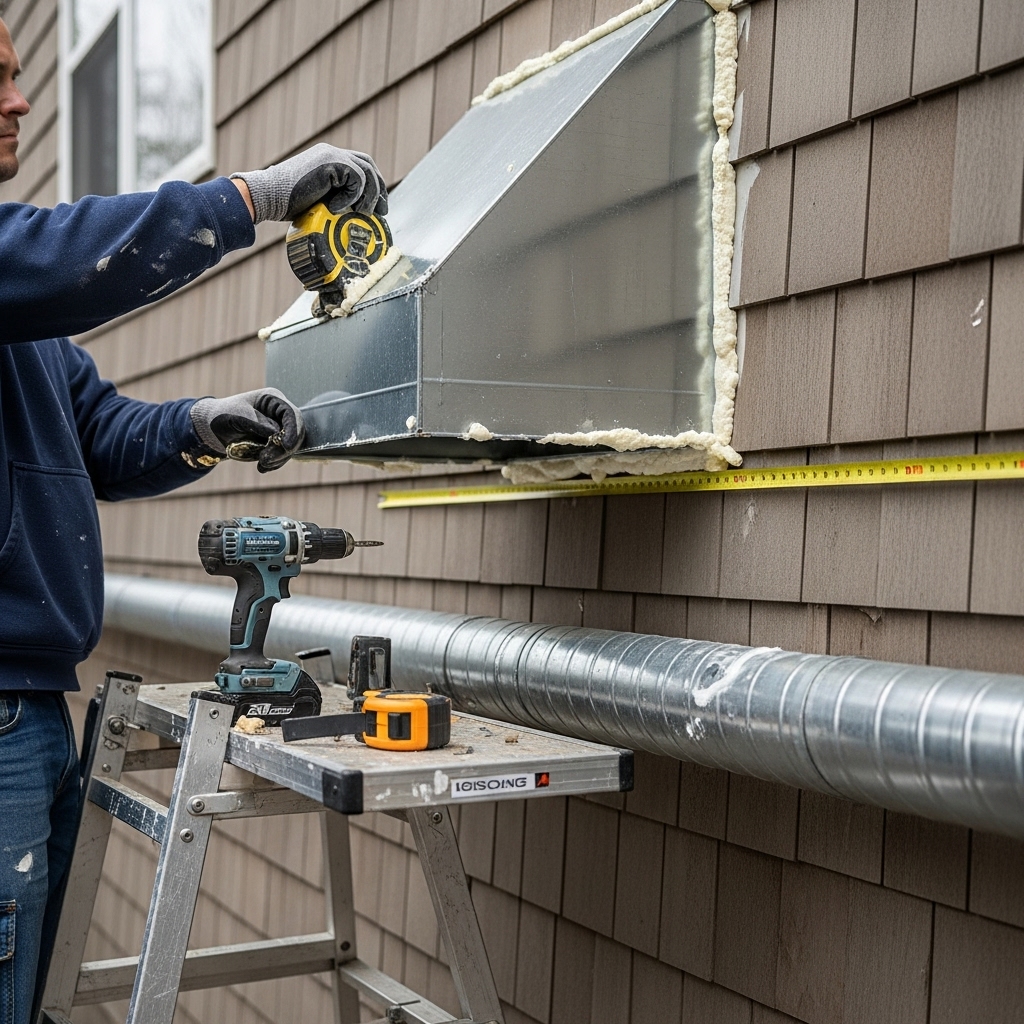
- Termination installation: A dedicated hood with a back‑draft damper is mounted, sealed, and tested for free movement.
- Duct assembly: Rigid sections are cut to length, fitted, sealed with approved tape, and supported at proper intervals.
- Appliance connection: A UL‑listed transition connector joins the dryer to the rigid duct without crushing or kinking.
- Commissioning: The dryer runs on a warm cycle while the exterior damper is checked for full opening and steady exhaust.
Somerville homes: unique considerations
Somerville’s residential mix includes historic homes with thick masonry and newer construction with tighter building envelopes. Each presents specific challenges. Masonry requires careful coring and sealing to keep the facade protected. Tight envelopes demand precise cuts and thoughtful sealing to maintain energy performance. Seasonal weather also plays a role; winter winds and summer humidity influence termination placement and routine maintenance intervals.
When replacement is the best option
If your current system uses flexible foil or plastic ducting inside walls, runs longer than recommended, or terminates improperly in an attic or crawlspace, replacement is the safest path. Signs of trouble include extended dry times, visible lint around the exterior hood, musty odors in the laundry room, and a damper that barely opens during operation. Professional installers can re‑route the system with rigid duct and better support to restore airflow and reliability.
Performance benefits you can feel
- Shorter cycles and more consistent drying across different fabric types.
- Lower operating temperatures at the dryer outlet due to improved airflow.
- Reduced lint accumulation inside the duct thanks to smooth walls and secure joints.
- Quieter operation with fewer rattles and vibrations from loose or poorly supported sections.
Health and indoor air quality considerations
Ventilation keeps moisture and heat out of your living spaces. When a vent leaks or terminates indoors, humidity can rise in nearby rooms, encouraging microbial growth and lingering odors. A professional installation prevents those problems by directing exhaust outside and sealing the route so conditioned indoor air is not lost around the duct path.
Important choices during design
Two decisions matter most: the termination location and the route geometry. Termination placement should balance directness with protection from wind and debris. Route geometry should minimize elbows and avoid tight radii. Where vertical runs are necessary, proper supports maintain alignment and reduce vibration. In unconditioned spaces, insulating the duct may help discourage condensation.
Middle checkpoint: partner with specialists
If you are weighing DIY versus hiring help, remember that a specialist who performs dryer vent installation daily brings consistency and speed. They have the right hole saws, masonry bits, flashing know‑how, and sealing methods to deliver a clean finish the first time, reducing the chance of callbacks or hidden airflow losses.
How pros verify success
Verification is more than feeling for warm air. Technicians observe the exterior hood to confirm full damper travel, listen for whistling that signals restriction, and check that joints remain cool and vibration‑free. They will also demonstrate how to inspect the termination and explain warning signs that suggest the duct needs cleaning.
Maintenance after installation
- Empty the lint screen after each load, and occasionally wipe the screen housing to remove residue.
- Look at the exterior hood monthly to make sure the damper opens freely and debris has not accumulated.
- Schedule periodic duct cleaning aligned with your laundry volume, pets, and household size.
- Note any changes in dry time or odor and arrange an inspection if performance shifts.
Frequently asked questions
How long does a professional installation take? Most straightforward sidewall routes are completed within a few hours, including planning, cutting, routing, sealing, and testing. Roof routes or masonry penetrations take longer due to access and sealing steps.
Is rigid duct always required? Rigid duct is strongly preferred for the main run because it maintains shape and supports efficient airflow. A short, approved transition is used behind the appliance for serviceability.
What if my laundry is in the center of the house? Professionals design vertical or multi‑directional routes that remain within manufacturer limits for equivalent length and use supports to keep the duct aligned.
Can I vent into an attic or garage temporarily? Dryer exhaust must terminate outdoors. Indoor termination allows moisture and lint to collect in the home, creating performance and safety issues.
Do I need to be home during the entire visit? It is helpful to be available for the initial walkthrough and final test so you can review the route and learn basic maintenance tips.
How do storms affect the termination? After severe weather, a quick look at the exterior hood ensures the damper moves freely and windblown debris has not blocked the opening.
Simple homeowner preparation
- Clear the area around the dryer for safe movement and access.
- Provide the dryer’s model number so the installer can check venting recommendations.
- Identify the likely exterior exit point and ensure it is accessible from outside.
- Plan for a brief operational test at the end of the visit.
Your next step
A thoughtfully installed vent transforms your laundry routine. With the right materials, a direct route, and meticulous sealing, you will notice shorter cycles, steadier performance, and a cooler, quieter laundry area. To get those results with confidence and care, schedule professional dryer vent installation and enjoy dependable airflow in every season in Somerville.
