A proactive maintenance program for your kitchen exhaust hood in Somerville, New Jersey protects your kitchen from fire hazards, improves air quality, and keeps equipment running efficiently. Maintenance is not a single event—it is a cycle of daily habits, weekly tasks, and periodic deep service that together control grease from the hood canopy to the rooftop fan. If your team wants a benchmark for maintenance quality or occasional support during peak seasons, consider coordinating with local kitchen exhaust hood cleaning experts who can help align your routine with industry best practices.
The core of maintenance is consistency. By setting schedules, tracking completion, and documenting results, you can predict needs, avoid emergencies, and pass inspections with confidence. This guide outlines a complete maintenance framework tailored to commercial kitchens operating in and around Somerville.
Daily Maintenance Habits
- Wipe the hood interior with a degreaser-safe towel at closing
- Verify baffles are properly seated and visually clean
- Empty or check grease cups and wipe surrounding surfaces
- Look and listen for unusual fan noise during operation
- Log daily checks in a simple sheet near the hood
These small habits compound. When the hood never carries yesterday’s film into today, weekly and monthly tasks are faster and more effective.
Weekly Tasks: Filters and Canopy
- Lock out the fan power
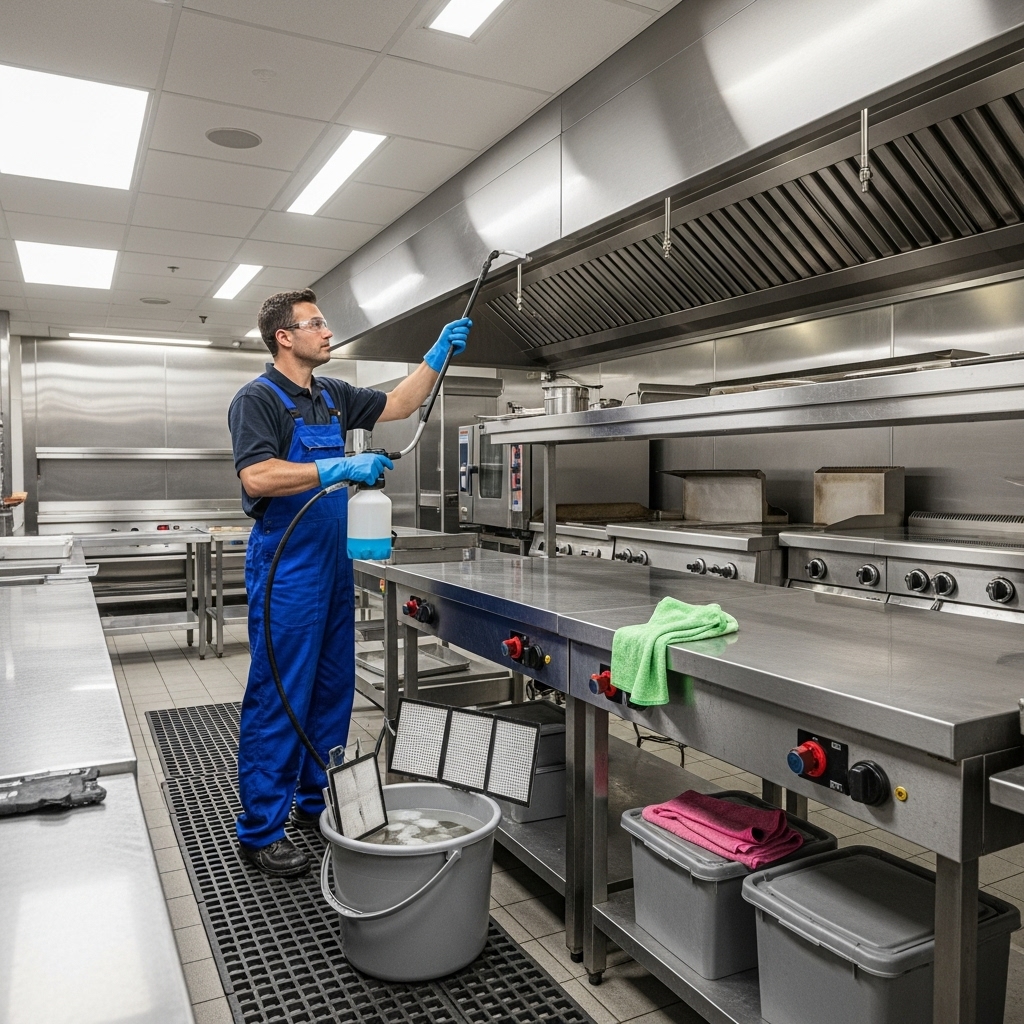
- Remove baffle filters and soak in the appropriate degreaser
- Scrub both sides with a stiff nylon brush; rinse with hot water
- Degrease the canopy and plenum, allow dwell time, agitate, and rinse
- Dry and reinstall baffles with correct orientation
- Update the log and note any parts wearing out
Weekly work preserves airflow and captures grease at the source. If baffles are bent or welds are cracked, replace them promptly to prevent bypass.
Monthly Checks: Access and Airflow
- Open accessible panels and check for residue or pooling
- Test belt tension and inspect for wear or cracking
- Confirm roof grease containment is not saturated
- Check light lenses and hood seams for tackiness
- Review logs to see if intervals should be adjusted
Monthly checks bridge the gap between routine and deep service, helping you spot trends and plan proactively.
Quarterly to Semiannual Deep Service
Schedule deep maintenance to address plenum interiors, duct runs, the fan bowl and wheel, and the roof area. Use foaming degreasers, agitation, and thorough rinsing with proper runoff control. Replace belts if they are near the end of their service life, verify pulley alignment, and refresh absorbent media in rooftop containment.
Somerville Seasonal Considerations
Somerville’s seasonal shifts affect maintenance planning. High summer heat increases fan load and may require more frequent belt checks. Winter conditions can slow rooftop access and increase safety requirements. Build your calendar around these realities so deep service happens on time and under safe conditions.
Inventory and Equipment
- Commercial degreaser compatible with stainless and galvanized metal
- Foaming sprayer or pump sprayer with adjustable nozzles
- Nylon brushes, scrapers, non-abrasive pads, and microfiber towels
- Plastic sheeting and absorbent mats for containment
- Hot water access and buckets for rinsing
- Fan hinge kit, belt replacements, and basic hand tools
Keep supplies organized and labeled. Train staff on chemical safety, PPE, and lockout procedures to reduce incidents.
Process Control and Quality Standards
Define what “clean” means. A white towel should come away free of tacky residue when wiped along the hood interior and plenum. Duct surfaces viewed through access panels should appear clean and dry, and the fan wheel should be free of visible buildup. Belts should be tightened to specification, and the roof area should be free from grease sheen, with fresh absorbent media in place.
Documentation and Compliance
Place a service label near the hood with dates of weekly and deep services. Maintain a digital or paper log with photos. Document deficiencies like missing access panels or compromised gaskets and schedule repairs quickly. Well-kept records make inspections smoother and help you prove a consistent maintenance program.
Training and Culture
Maintenance is a culture as much as a checklist. Train cooks and dish staff to notice sounds, smells, and visual cues that suggest issues. Celebrate on-time tasks and clean inspections. Rotate responsibilities so multiple people can perform each task to the same standard, reducing risk if schedules change.
Common Issues and Preventive Actions
- Clogging baffles: Increase soaking time, rotate spare sets, and set reminders
- Grease on the roof: Replace containment media more frequently and clean spills promptly
- Fan vibration: Check wheel balance and belt condition; verify the hinge allows safe tilt
- Persistent odors: Inspect plenum edges and duct elbows for hidden residue
- Water marks under the hood: Reseal access panels and confirm rinse practices
Optimizing Your Schedule
Use actual data from your logs to refine intervals. If filters stay clean after a week, try extending to ten days. If odors emerge sooner than expected, tighten the cycle. Your goal is a rhythm that keeps the system safe without unnecessary downtime.
Mid-Cycle Verification
Between deep services, perform a quick verification: inspect baffles under bright light, check a few duct sections, spin the fan by hand with lockout active, and confirm roof containment. If you find tacky residue or saturated media, move up your deep service date. If you want a professional midpoint check and tune-up, coordinate with experienced professional kitchen exhaust hood cleaning teams who can provide photos and recommendations.
Waste Handling and Environmental Care
Capture rinse water and grease in dedicated containers and dispose of them according to municipal rules. Do not allow wastewater to enter storm drains. Store used absorbents in sealed bags and coordinate with your waste service provider for proper disposal. Keep a spill kit accessible and train staff in its use.
Budgeting Time and Labor
Even without discussing specific costs, you can plan labor hours and shift coverage for maintenance. Schedule weekly filter soaks during slow periods, and align deep services with off days or low-volume windows. Clear planning helps avoid rushed jobs that can compromise results.
Working With Vendors
Establish clear expectations with any vendors who assist with maintenance. Require photos, service labels, and notes on parts and access. Ask for recommendations on improving access and shortening service time. The stronger your partnership, the more predictable your maintenance outcomes will be.
FAQ
How often should we perform deep maintenance? Many kitchens schedule quarterly or semiannual deep work, but adjust based on cooking volume, menu, and documented buildup.
Can our team handle all maintenance? Teams can manage daily, weekly, and some monthly tasks. For ducts, fans, and rooftop work requiring specialized tools or access, consider professional support.
What are signs that maintenance is overdue? Persistent odors, visible grease on baffles, smoke spillage, fan vibration, and saturated roof media signal it is time for service.
Do we need access panels? Yes. Access panels allow safe, thorough cleaning of duct runs and elbows. Add panels where needed to meet best-practice spacing.
How can we prevent roof damage? Replace containment media regularly, clean spills promptly, and verify the fan hinge prevents strain on wires and the curb.
What documentation should we keep? Maintain logs with dates, photos, and notes on issues, plus a label near the hood showing the last service.
What if our schedule slips? Use your logs to reschedule quickly and add a mid-cycle check to verify conditions. Do not wait for an inspection to catch up.
Build a Reliable Maintenance Rhythm
With a clear plan, trained staff, and diligent records, your Somerville kitchen can sustain safe, clean, and efficient exhaust performance all year. When seasonal volume spikes or tough buildup calls for extra hands, bring in trusted kitchen exhaust hood cleaning services to keep your maintenance program on track and your operation inspection-ready.
Keep Your Somerville Kitchen Running Strong
If you want confidence that your maintenance standards match the demands of a busy commercial kitchen, schedule time to review your current condition, photos, and logs with a knowledgeable partner. Set practical intervals, assign responsibilities, and verify results with simple tests and pictures. For dependable execution and documented outcomes, collaborate with local kitchen exhaust hood cleaning services and keep your operation clean, safe, and prepared for every inspection.
