Professional inspection of a kitchen exhaust hood system in Somerville, New Jersey is the backbone of safe, efficient cooking operations. A thorough inspection looks beyond the hood’s shiny exterior to verify airflow, grease control, access, and fan performance throughout the entire pathway from canopy to rooftop discharge. Whether you operate a high-volume fryer line, a charbroiler-focused concept, or a mixed menu, a structured inspection helps you target cleaning precisely where it matters most. If your team needs outside help to bring inspections and cleanings to the same professional standard, consider reputable kitchen exhaust hood cleaning providers who can assess and clean in one coordinated service visit.
Inspection is not guesswork. It uses defined criteria, consistent tools, and documented evidence. By creating a repeatable process, managers can compare results across seasons and ensure critical issues are addressed before they turn into downtime or safety incidents. The following guide outlines a pro-level inspection routine tailored to the conditions and expectations common in Somerville.
Inspection Objectives and Scope
The primary objectives are to verify cleanliness, ensure adequate airflow, confirm mechanical integrity, and document compliance with industry standards. The scope includes the hood canopy, filter bank, plenum, duct interiors, access panels, fan assembly, grease containment, and the roof area around the discharge. Inspections also consider staff practices—like filter rotation and daily wipe-downs—that influence grease accumulation over time.
Preparation and Safety
Start by locking out the fan and labeling controls. Gather PPE, lighting, a mirror for tight spaces, a camera or mobile device, and simple tools to open access panels. If rooftop inspection is planned, ensure safe access, appropriate footwear, and fall protection as needed. Schedule inspections during downtime so you can open panels, measure belt tension, and listen for bearing noise without disrupting service.
Visual Survey: Hood and Plenum
Using bright task lighting, scan the hood interior, seams, and corners for grease film or tackiness. Inspect the plenum behind the baffles; a clean plenum indicates that baffles are working and service intervals are appropriate. Check light lenses for residue and heat damage. Verify labels or service tags are current and legible so inspectors can see your maintenance history at a glance.
Filter Bank Condition
Remove a sample of baffles to assess both sides. Look for deformed blades, broken welds, or heavy residue packed inside channels. Confirm the airflow arrows or channels are oriented correctly when reinstalled. Clogged or damaged baffles restrict airflow, increase smoke migration, and stress the fan motor.
Duct Access and Interior Cleanliness
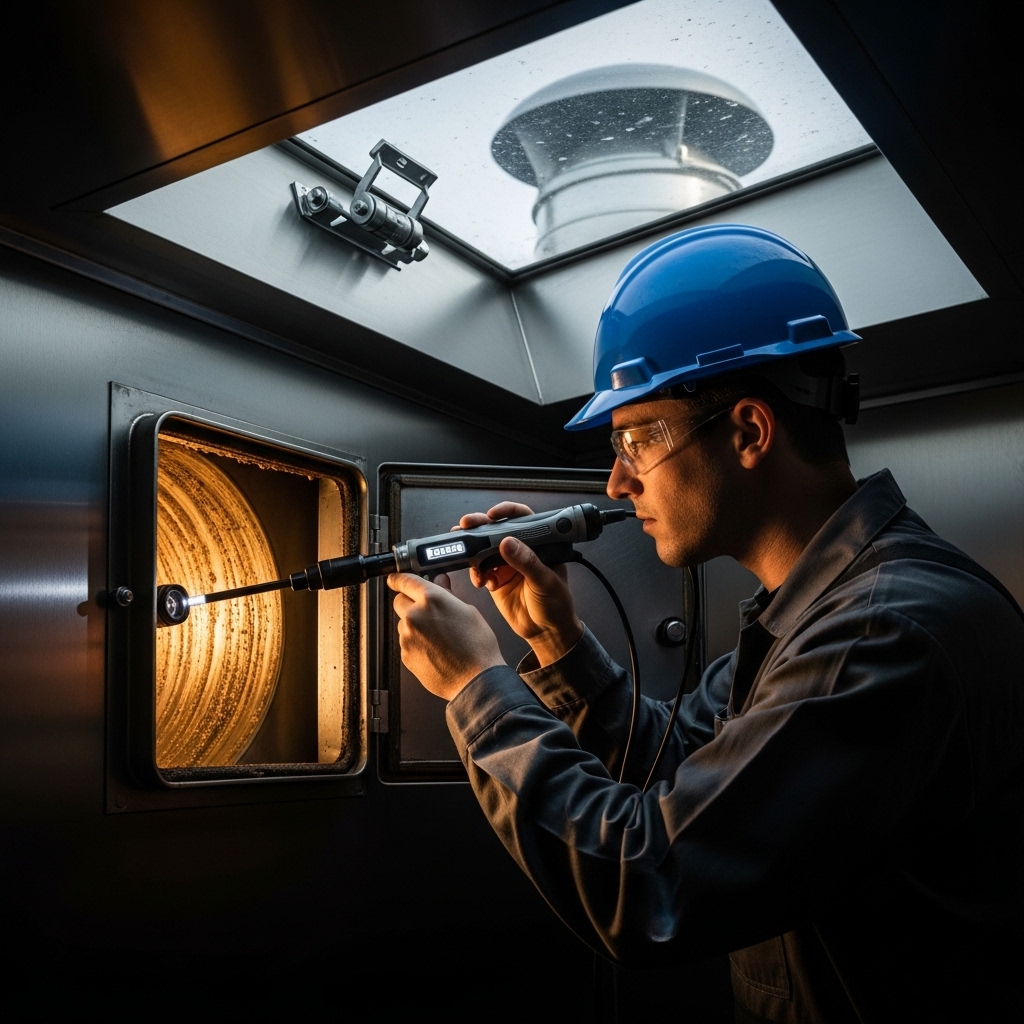
Open access panels, inspect gaskets, and use a mirror or camera to see around elbows and transitions. Look for shiny metal with no tacky residue. If the duct surface transfers grease to a white towel, schedule cleaning. Pay close attention to horizontal runs and low points where condensate and grease can pool. Note any missing access panels and plan upgrades to meet best-practice spacing for safe maintenance.
Fan Assembly: Belts, Bearings, and Wheel
On the roof, verify a hinge kit is installed so the fan can tilt safely. Inspect the bowl and wheel for buildup, and check belt wear and alignment. Spin the wheel by hand with power locked out to feel for rough bearings or wobble. Inspect wiring for strain and weatherproofing. Confirm that grease containment is present, properly positioned, and not saturated.
Airflow and Noise Diagnostics
After reassembling the system, restore power and start the fan. Listen for unusual vibration or rubbing. Verify airflow at the hood by observing capture of steam or smoke during a controlled test. A sudden drop in capture or a change in sound can indicate belt slippage, blocked ducts, or wheel imbalance. Document baseline readings and notes so you can compare at the next inspection.
Cleaning Readiness Assessment
The inspection should end with a clear go/no-go decision for cleaning. If residue is present on duct walls, the fan bowl has visible buildup, or baffles fail a light test, schedule cleaning. Indicate whether additional access panels or parts are required to complete the job. When the inspection reveals a significant scope, it’s efficient to coordinate inspection and service together through an experienced professional kitchen exhaust hood cleaning team so deficiencies are corrected promptly.
Documentation Standards
Use time-stamped photos of all major components: hood interior, plenum, filters, duct sections, fan wheel, and roof area. Keep a written checklist noting pass/fail criteria, belt tension, and any parts replaced. Place a service label near the hood documenting the date and the inspector’s initials. Good records are invaluable during health and fire inspections and create a baseline for continuous improvement.
Somerville Seasonal Considerations
Weather and business cycles in Somerville, New Jersey can influence inspection timing. Plan roof work with seasonal safety in mind, and allow extra time in winter. If summer volume increases grease production, shorten inspection intervals. Capture seasonal variations in your records so decisions are driven by evidence rather than guesswork.
Training and Team Engagement
Inspection quality improves when staff understand the why behind the process. Share photos of clean versus dirty conditions, explain the risks of restricted airflow, and teach simple daily habits that keep the system in better shape. Encourage cooks to report unusual smells, smoke behavior, or vibration so issues are flagged early.
Common Findings and Corrective Actions
- Clogged baffles: Implement weekly soaks and verify airflow orientation
- Residue in plenum: Extend dwell time during cleaning and use proper agitation
- Greasy duct elbows: Add access panels and improve rinsing technique
- Fan belt wear: Replace belts and check pulley alignment regularly
- Saturated roof media: Replace absorbents and clean roof surfaces promptly
Quality Criteria After Cleaning
Post-clean inspection should find bare metal, clean baffles that pass light, smooth fan operation, and a tidy roof area with fresh containment media. Access panels should be sealed and drip-free, and the system should capture smoke effectively during a test run. Place updated labels and archive photos for your records.
FAQ
How often should inspections occur? Frequency varies by cooking volume and menu. Many kitchens inspect monthly at a basic level and schedule comprehensive inspections quarterly or in tandem with deep cleans.
What tools improve inspections? Bright LED lights, mirrors, a camera or borescope, belt tension gauges, and simple hand tools for access panels all help you see and measure conditions accurately.
Do I need a hinge kit? Yes. A hinge allows safe fan tilting, prevents wire strain, and makes cleaning and inspection more thorough and less hazardous.
What documentation do inspectors look for? Service labels, logs with dates and findings, and clear photos of cleaned components are standard. Keep them organized and accessible.
Why does the hood still smell after service? Odors may persist if plenum edges, duct elbows, or the fan bowl still harbor residue. Verify those areas and confirm airflow is sufficient.
Who should perform comprehensive inspections? Experienced managers can conduct basic surveys, but deep inspections involving duct interiors and fan assemblies are often best handled by trained professionals.
From Inspection to Action
A strong inspection program does more than assign a pass or fail—it guides action. Use your findings to schedule targeted cleaning, order parts, add access panels, and adjust staff routines. In a busy Somerville kitchen, this cycle of inspection and response keeps your system safe, compliant, and efficient throughout the year. When you are ready to align inspection and service in a single visit, engage trusted kitchen exhaust hood cleaning services that bring the right equipment, documentation, and expertise to your operation.
Somerville Readiness and Continuous Improvement
Make inspection part of your brand standards. Set a calendar, keep simple charts of findings, and celebrate improvements, such as reduced residue reports or faster capture of smoke during tests. Over time, you will see fewer emergency fixes, better air quality on the line, and smoother inspections when authorities visit.
Partnering for Reliability
Whether you self-perform basic checks or outsource the entire process, the key is consistency, documentation, and swift corrective action. With a clear procedure and the right partners, your Somerville kitchen can maintain a clean, safe exhaust system that supports your menu and your team every day.
Schedule Help for a Safer Kitchen
If you want professional eyes on your system and a deep cleaning to match, schedule a visit with local specialists who know Somerville kitchens and seasonal demands. With documented results, clear photos, and thorough service, your team can focus on cooking while experts manage the exhaust pathway. For dependable results and smooth inspections, coordinate with experienced kitchen exhaust hood cleaning services and keep your operation inspection-ready.
