Running a busy commercial kitchen in Somerville, New Jersey demands a precise, repeatable process for keeping your exhaust hood, ducts, and rooftop fan clean. Without a structured checklist, tasks get missed, grease builds up, and fire risk escalates. This comprehensive checklist turns best practices into step-by-step actions that any well-trained team can follow. If you prefer to compare your in-house program with a professional benchmark, explore local kitchen exhaust hood cleaning resources so you can align your routine with the same standards used by dedicated service providers.
The goal is not only a clean-looking hood but also a safer workspace, stronger airflow, better odor control, and fewer emergency repairs. By using this checklist at closing or during scheduled maintenance windows, you will control buildup before it becomes a hazard. Assign responsibility, track completion, and document results so your next health or fire inspection goes smoothly.
Pre-Shift and Closing Tasks
- Wipe the hood canopy interior with a degreaser-safe towel
- Confirm baffles are seated properly and not visibly clogged
- Empty and clean grease cups or trays
- Check light lenses for film and wipe clean
- Verify fan noise is normal and airflow is steady during operation
These quick touches control daily residue and make deep cleaning easier. They also help your cooks notice issues early, like a loose baffle or a belt beginning to squeal.
Weekly Filter and Surface Cleaning
- Lock out power to the fan at the disconnect or breaker
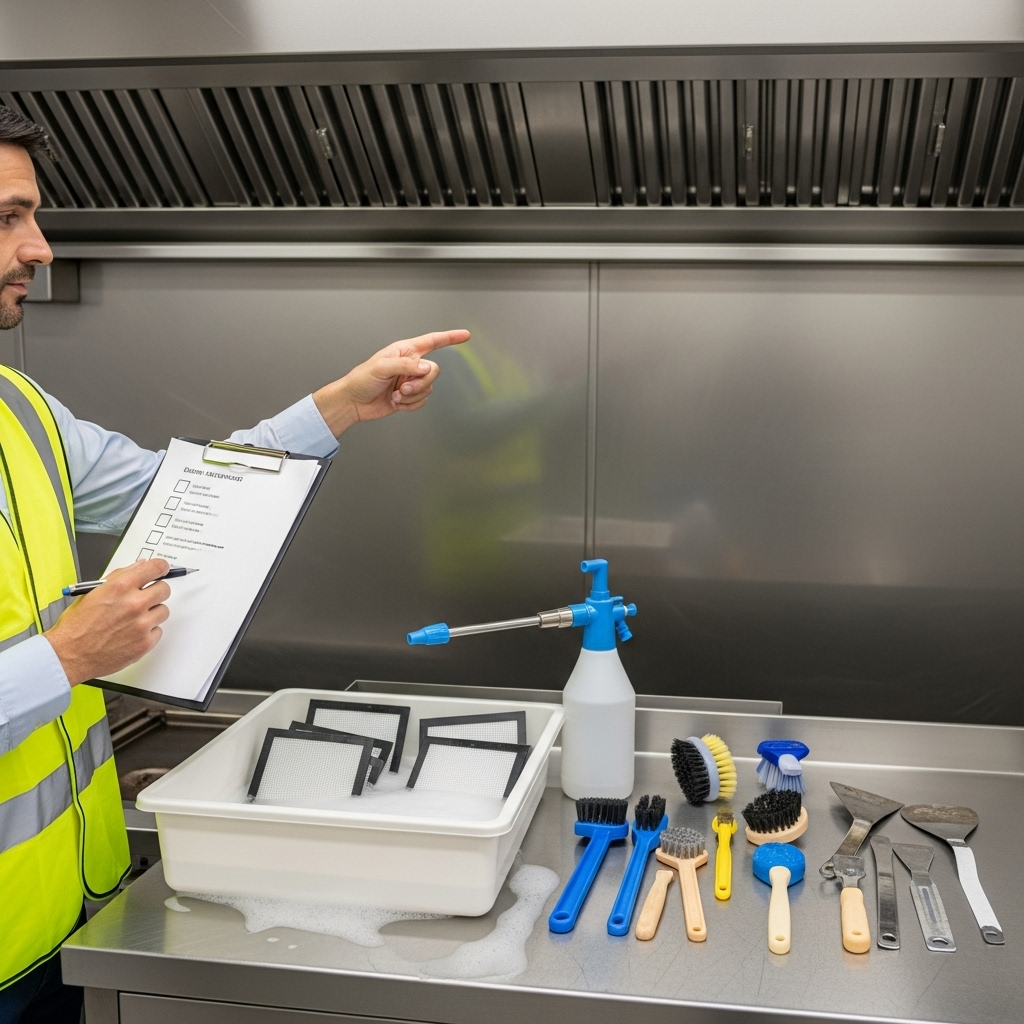
- Remove baffle filters and soak them in a degreaser solution per the label
- Scrub both sides with a stiff nylon brush and rinse with hot water
- Degrease the hood interior and plenum, agitate, and rinse
- Dry filters thoroughly before reinstalling in the correct airflow direction
- Record the date, team member, and any issues discovered
Weekly attention prevents airflow restriction and reduces cooking odors. Documenting the work also creates a service history your manager can reference when scheduling quarterly or semiannual duct cleaning.
Quarterly to Semiannual Deep Cleaning
- Open all duct access panels and verify gaskets are intact
- Apply foaming degreaser to duct interiors and agitate to loosen buildup
- Rinse with hot water while capturing runoff and preventing overspray
- Inspect fan blades, bowl, and housing; remove grease deposits
- Check and adjust belt tension; inspect pulleys and motor mounts
- Replace grease containment media on the roof
- Photograph before-and-after conditions for records
These steps are essential for code compliance and long-term system health. If you find areas that remain inaccessible, plan to install additional cleanouts so the entire duct run can be maintained properly.
Rooftop and Exterior Controls
- Verify a hinge kit allows safe fan tilt without straining wires
- Clean the fan discharge and verify backdraft damper operation
- Inspect the roof membrane around the curb for grease damage
- Replace saturated absorbent pads in grease containment
- Ensure all panels and lids are seated and sealed against weather
Roof safety is critical. Use proper footwear and fall protection as needed, especially in winter or rain. Keep absorbents in stock so you can change them before saturation and avoid roof staining or leaks.
Supplies and Tools Inventory
- Commercial kitchen degreaser compatible with stainless and galvanized surfaces
- Foaming sprayer or pump-up sprayer with adjustable nozzles
- Nylon brushes, scrapers, and non-abrasive pads
- Microfiber towels and absorbent mats
- Plastic sheeting and tape to protect equipment
- Hot water access for rinsing
- Fan hinge kit, belt replacements, and basic hand tools
Keep a restocking cadence so your team never runs short on critical items. Label chemicals clearly and store them according to the manufacturer’s instructions and workplace safety guidelines.
Somerville-Specific Considerations
Local seasons affect your cleaning schedule. High summer heat increases fan workload, while winter ice can make rooftop access difficult. Build extra time into your plan for weather, and train your team on winter safety when accessing the roof. Align your deep cleans with anticipated inspection windows so your documentation and photos are fresh.
The 10-Point Mid-Cycle Audit
- Is the hood interior free of visible grease film?
- Do baffles pass light clearly when held up to a bright source?
- Are access panels sealed and drip-free after cleaning?
- Does the fan start smoothly, with normal noise and vibration?
- Is the grease containment media on the roof clean and properly seated?
- Are belts within manufacturer tension range and free from cracking?
- Do you have photos of plenum and duct interiors showing clean metal?
- Is there a dated label or log near the hood documenting the last service?
- Have employees been trained on chemical handling and PPE?
- Is waste water disposed of according to local rules?
This audit helps managers quickly gauge whether the system is trending toward a safe, clean state or needs attention sooner than scheduled.
Process Details for Consistency
Consistency is the hallmark of a reliable checklist. Apply degreaser from the bottom up to prevent streaking, allow proper dwell time, and agitate with the right pad or brush for the surface. Rinse from the top down to carry residue into your containment, then dry to prevent spotting. Reinstall baffles with airflow arrows or channels oriented correctly and confirm they are fully seated.
Quality Assurance and Documentation
Take clear, well-lit photos of the hood interior, plenum, duct access openings, and the rooftop fan. Print or archive copies with time stamps. Add a service label near the hood with the date and initials of the team lead. These simple steps demonstrate diligence during inspections and make future cleanings faster by showing exactly where buildup tends to occur.
Common Pitfalls and How to Prevent Them
- Skipping the fan or rooftop area, which leads to overflow and roof damage
- Rushing dwell time so grease does not fully release
- Using abrasive tools that scratch stainless finishes
- Forgetting to lock out the fan before cleaning
- Neglecting to replace damaged baffles or worn belts
Refining your routine around these pitfalls will save time and reduce risk. Make it a habit to review near-miss incidents so the checklist evolves with your operation.
When to Bring in Specialists
Heavy buildup, poor access, and persistent odors are signs that a deeper approach is needed. Complex ducts, multiple fans, or unusual noise and vibration can also indicate the need for specialist tools and experience. In these cases, supplement your internal checklist by coordinating with experts in professional kitchen exhaust hood cleaning who can address the full system end-to-end and validate results.
Training for Your Staff
Build short, engaging training modules that cover PPE, chemical handling, lockout procedures, and the exact order of operations. Shadow new team members as they run the checklist, and sign off only when they demonstrate competence. Keep laminated copies of the checklist at the hood along with emergency contacts and a map of access panels.
FAQ
How often should we clean our hood and ducts? Frequency depends on cooking volume and menu. Many operations clean baffles weekly and schedule duct and fan service quarterly or semiannually, but adjust based on actual grease accumulation.
Are wash-down hoods enough? Wash-down features help, but manual degreasing is still needed to address seams, corners, and duct interiors. Always verify with a hands-on inspection.
What if we cannot access a duct section? Plan to add code-compliant access panels so every elbow and transition can be cleaned. Inaccessible areas accumulate grease and raise risk.
Can we use any degreaser? Use a commercial product compatible with stainless and galvanized metal. Follow label directions for dilution and dwell time, and never mix chemicals.
How do we handle rooftop grease? Replace absorbent media before saturation, clean spills promptly, and check for membrane damage. Maintain a hinge kit and secure the fan after service.
What documentation is required? Keep a log with dates, photos, and notes on deficiencies. Post a label near the hood showing service completion for inspectors.
Why does smoke hang in the kitchen? Check for clogged baffles, belt slippage, or fan issues. If airflow is weak, inspect for duct blockages or worn pulleys.
Is it okay to clean during operating hours? It is safer and more effective to schedule during downtime when the fan can be locked out and equipment protected.
Seasonal Scheduling Strategy
In Somerville, plan deep cleans ahead of high-traffic months and before major events. Build in roof safety protocols for winter and stock extra absorbents for summer when grease production rises. Review photos each season to see if your intervals are still appropriate.
Manager’s Final Review
At the end of every cycle, a manager should verify that the hood and ductwork pass a white towel test, the fan runs smoothly, and all panels are secure. Confirm logs are updated and photos stored. If any section appears marginal, schedule a touch-up immediately rather than waiting for the next planned service.
Make Your Somerville Kitchen Inspection-Ready
A disciplined checklist keeps your business safe, efficient, and compliant. Use it to train staff, track progress, and prove performance during inspections. When your team needs extra support or equipment for tough buildup, coordinate with trusted kitchen exhaust hood cleaning services to keep your Somerville operation ready for the next rush and the next review.
