Keeping a commercial kitchen safe and efficient in Somerville, New Jersey begins with understanding how to do kitchen exhaust hood cleaning the right way. A clean exhaust system controls grease, smoke, and odors while protecting your team and guests from fire hazards. In this detailed guide, you will learn how to plan, clean, and verify results for your hood, filters, ducts, and rooftop fan so your operation stays compliant with NFPA 96 guidelines and local health expectations. If you ever decide the task is better handled by specialists, you can always explore kitchen exhaust hood cleaning to ensure a deep, compliant result from trained professionals who work with commercial systems daily.
Before you begin, decide whether you are doing a routine wipe-down or a full degreasing and duct cleaning. The more grease buildup, the more comprehensive your plan should be. A well-structured approach includes site preparation, electrical and gas safety, chemical selection, application methods, rinse and recovery processes, detailed inspection, and documentation. Working methodically will help keep your team safe, the workspace organized, and the final results consistent week after week.
Know Your Exhaust System Components
An exhaust system is more than a shiny hood. It includes the canopy, filters or baffles, plenum, vertical or horizontal ducts, fan, and grease containment. Each part must be addressed to control fire risk. The hood canopy catches airborne grease and heat, the filters capture droplets, the plenum and ducts move contaminated air, and the fan expels it to the outside. If any section is ignored, grease can migrate and create a hidden hazard that might not be visible during a quick check from the kitchen line.
Map your system end-to-end. Identify all access panels, cleanouts, fan hinges, grease traps, and rooftop containment. Note where overspray could damage wiring, lights, or sensitive equipment. Photograph the system before starting so you have a reference point for reassembly and documentation.
Safety First: Electrical, Gas, and Work Area Controls
Always lock out the power to the hood and fan before cleaning. If your fan has a disconnect switch, confirm it is off and tagged. For gas appliances, turn off pilot lights and protect open flames. Cover cooking equipment, pilot assemblies, and exposed electrical outlets. Place non-slip mats around your work zone and position wet-floor signs. Personal protective equipment should include chemical-resistant gloves, safety glasses or a splash face shield, and appropriate clothing that covers arms and legs.
Ventilation matters, even while cleaning. If you must work during downtime when the HVAC is off, allow for extra air movement so vapor from degreasers does not linger. Never mix cleaning products; stay with one compatible line of degreaser and follow the label. Keep a first-aid kit and eye-wash access available, and train your team on emergency steps before starting work.
Tools and Supplies Checklist
- Degreaser rated for commercial kitchens and exhaust metals
- Low-pressure sprayer or foaming applicator with adjustable nozzles
- Scrapers with plastic and metal blades to address different surfaces
- Non-abrasive pads and stiff nylon brushes for baffles and plenums
- Absorbent pads and plastic sheeting to protect equipment and floors
- Food-safe plastic wrap or tape for sealing areas during dwell time
- Buckets, microfiber towels, and scouring pads
- Hot water source for rinsing and final wipe-down
- Ladders or platforms with proper footing
- Rooftop access gear, fan hinge kit, and grease containment replacement media
Pre-Clean Setup and Containment
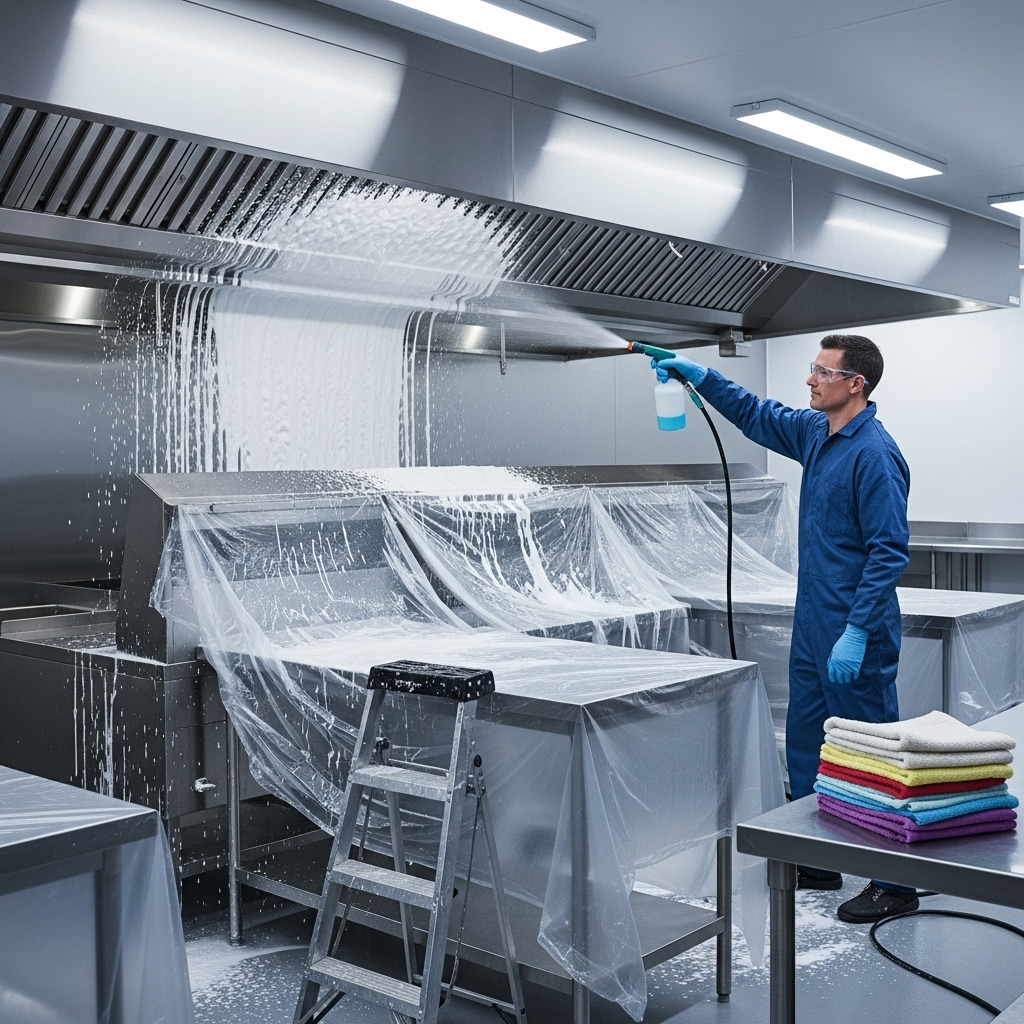
Create a contained workspace. Tape plastic sheeting around the hood to direct runoff into a collection bin or bucket. If you have a wash-down hood, verify the drain path is open and bucketed. Remove baffle filters and place them in a soaking bin with a compatible degreaser diluted per the label. Isolate any nearby outlets or lights with plastic and tape. Cover prep tables and adjacent equipment to avoid cross-contamination from overspray and grease drip.
At this stage, it helps to plan the order of operations: hood interior, filters, plenum, ducts, and fan. Work top-down so that anything loosened above does not re-soil what you just cleaned.
Cleaning the Hood Interior
Apply degreaser to the hood canopy and plenum surfaces. Use a foamer to increase dwell time on vertical sections. Allow the product to sit long enough to break down grease but not so long it dries. Agitate with non-abrasive pads, then rinse with warm water. For heavy buildup on seams or rivets, use a small brush to dig out grease deposits. Avoid gouging the metal, and always rinse down into the containment you set up earlier.
Pay special attention to seams and corners where air turbulence causes grease to accumulate. Remove and clean light lenses if they are designed for it and rated for wet cleaning. Wipe dry with microfiber cloths so condensation does not drip when the system restarts.
Restoring Baffle Filters
Baffles are your first line of defense against grease. After soaking, scrub each baffle on both sides using a stiff nylon brush. Flush with hot water to push grease out from channels. If a baffle rattles, is bent, or has broken welds, tag it out and replace it with a manufacturer-approved unit. Reinstall only completely clean and dry baffles to ensure airflow and fire safety.
Plenum, Ducts, and Access Panels
Open all accessible panels. Apply degreaser and brush vigorously along the direction of airflow to lift stubborn deposits. Use scrapers cautiously to avoid damaging galvanized or stainless surfaces. Rinse thoroughly and capture runoff. Properly sealed access panels help you reach elbows and transitions where grease collects. If you find areas with poor access, plan an upgrade by adding code-compliant cleanouts at logical intervals so future cleaning is safer and faster.
Rooftop Fan and Grease Containment
On the roof, verify the fan has a hinge kit so it can safely tilt without straining electrical connections or the curb. Remove accumulated grease from the fan bowl, housing, and blades. Degrease and rinse carefully while ensuring water does not enter the motor. Replace worn belts and tighten fasteners. Check grease containment media and replace saturated absorbents. Clean the roof surface to prevent slip hazards and protect the roof membrane from deterioration caused by grease.
Documentation and Verification
After cleaning, document the date, areas serviced, chemicals used, and any deficiencies. Photograph the hood interior, filter bank, duct access points, and fan assembly. If you maintain an inspection log, place a signed label near the hood indicating completion. Documentation helps demonstrate diligence during a health or fire inspection and guides your next service interval.
Frequency and Scheduling
Cleaning frequency depends on menu, volume, and equipment. High-volume fryers and charbroilers produce more grease vapor than light sauté lines. Many establishments set a schedule for daily wipe-downs, weekly filter cleaning, and quarterly to semiannual duct and fan service. In Somerville, New Jersey, align your cadence with local fire code enforcement so you are prepared for seasonal traffic and inspections.
Common Mistakes to Avoid
- Using the wrong chemical concentration, which can damage finishes or leave residue
- Skipping the fan or rooftop area, allowing grease to pool and overflow
- Neglecting to protect appliances and floors from runoff
- Failing to lock out the fan, which can pull degreaser mist into the ducts
- Rushing dwell time, leading to poor results and repeated work
- Not replacing damaged baffles or worn belts promptly
Mid-Process Quality Check
Before reassembling, inspect each section under bright light. Touch-test suspect spots with a white towel—if residue transfers, clean again. Spin the fan by hand to verify smooth operation, confirm belt tension, and check set screws. Ensure access panels are sealed and drip-free. If needed, conduct a brief run test with the fan on to verify airflow and listen for vibration. If you prefer outside help at this stage or want a professional deep clean beyond your team’s scope, consider partnering with local experts who specialize in professional kitchen exhaust hood cleaning so nothing is missed.
Grease Disposal and Environmental Care
Handle waste responsibly. Do not pour greasy wash water into storm drains. Capture and dispose of it according to municipal rules. Store used absorbent media and contaminated towels in sealed bags and partner with your waste hauler for proper handling. Keep a spill kit on hand for unexpected overflows, and train staff on where to find it and how to use it safely.
Post-Clean Reassembly and Start-Up
When reassembling, align baffles in the correct airflow direction. Remove all protection from appliances and floors, wipe surfaces, and restore power. Verify the fan runs smoothly and that there are no unusual odors or rattles. Monitor the first cooking cycle closely in case residual moisture drips or a belt needs a final tension check.
Training Your Team
Develop a simple training module that covers safety, chemical handling, process steps, and documentation. Cross-train at least two people. Keep laminated step-by-step guides near the hood so anyone on the closing shift can follow the process. Encourage employees to log observations—like hot spots, unusual noises, or odors—that could indicate issues upstream in the system.
Building a Culture of Cleanliness
A consistently clean hood is a visible signal to staff and inspectors that your kitchen is serious about safety. It also helps equipment last longer and improves air quality, which can make shifts more comfortable and productive. Pair deep cleaning with daily wipe-downs and weekly baffle washes so major services go faster and you minimize downtime.
FAQ
How often should a commercial hood be cleaned? The proper frequency depends on your menu, cooking volume, and the rate of grease accumulation. Many operators plan quarterly or semiannual duct and fan service, with more frequent filter cleaning. Always follow local fire code and manufacturer recommendations.
What degreaser should I use? Choose a product rated for stainless or galvanized steel that is compatible with your hood’s finish. Follow the label for dilution and dwell time, and never mix chemicals.
Can my staff do all the work? Teams can handle routine wipe-downs and filter cleaning. For ducts and fans, trained professionals are recommended due to access, safety, and compliance requirements.
Do I need access panels? Yes. Access panels allow you to reach elbows and long runs of ductwork. Properly located and sealed panels are essential for complete cleaning.
What if my fan does not have a hinge? Install a hinge kit so the fan can tilt for cleaning and maintenance without damaging wiring or the roof curb. It is safer and often required by code.
How do I prevent roof damage? Keep grease containment in good condition and replace absorbent media before saturation. Clean spills promptly and verify the roof membrane is intact after each service.
Why does my hood still smell after cleaning? Odors can linger in overlooked areas like the plenum edges, duct elbows, or saturated grease traps. Reinspect and degrease those sections, and confirm the fan is moving sufficient air.
What records should I keep? Maintain a log with dates, areas cleaned, chemicals used, and before-and-after photos. Post a service label near the hood to verify completion for inspectors.
Somerville Best Practices and Seasonal Tips
In Somerville, New Jersey, seasonal changes can affect your schedule. Summer traffic may boost cooking volume and grease production, while winter conditions can make rooftop access more challenging. Plan additional time for roof safety during icy weather, and consider aligning deep cleans with slower seasonal windows to minimize disruption. Keep a close eye on baffle condition if your menu features heavy frying or charbroiling, as these create dense vapors that quickly load filters.
Troubleshooting Persistent Problems
If smoke lingers in the kitchen, verify baffles are installed correctly and not clogged. Check for loose belts or worn pulleys that reduce fan speed. If grease drips from the hood, look for saturated plenum seams or a blocked drain path in a wash-down system. Vibration can point to imbalanced fan blades or buildup on the wheel. Address these issues promptly to prevent compounded problems.
Quality Standards for a Finished Clean
Your surfaces should be free of visible grease, with no tacky residue on a white towel test. Fan blades should be clear of buildup, belts properly tensioned, and the roof area clean and dry. Access panels must be sealed, and the system should start smoothly and run quietly. Filters should pass light clearly when held up, indicating open air channels.
Long-Term Planning
Set a calendar of recurring tasks: daily wipe-downs, weekly baffle soaks, monthly quick inspections, and quarterly or semiannual duct and fan service. Combine this calendar with health inspection dates and internal audits so nothing slips through the cracks. Over time, your log will reveal whether you can extend intervals or need to tighten them based on real conditions in your kitchen.
Get Reliable Service in Somerville
If your team wants confidence that every inch of your system is addressed and documented, connect with local experts who focus on safety, compliance, and results. Schedule a conversation to review your current condition, photos, and target timelines, and then plan a service window that fits your hours. For a thorough result backed by specialized equipment and trained technicians, request support from trusted kitchen exhaust hood cleaning services and keep your Somerville kitchen safe, efficient, and inspection-ready.
